Smog Certificate Cost: What Really Drives the Price
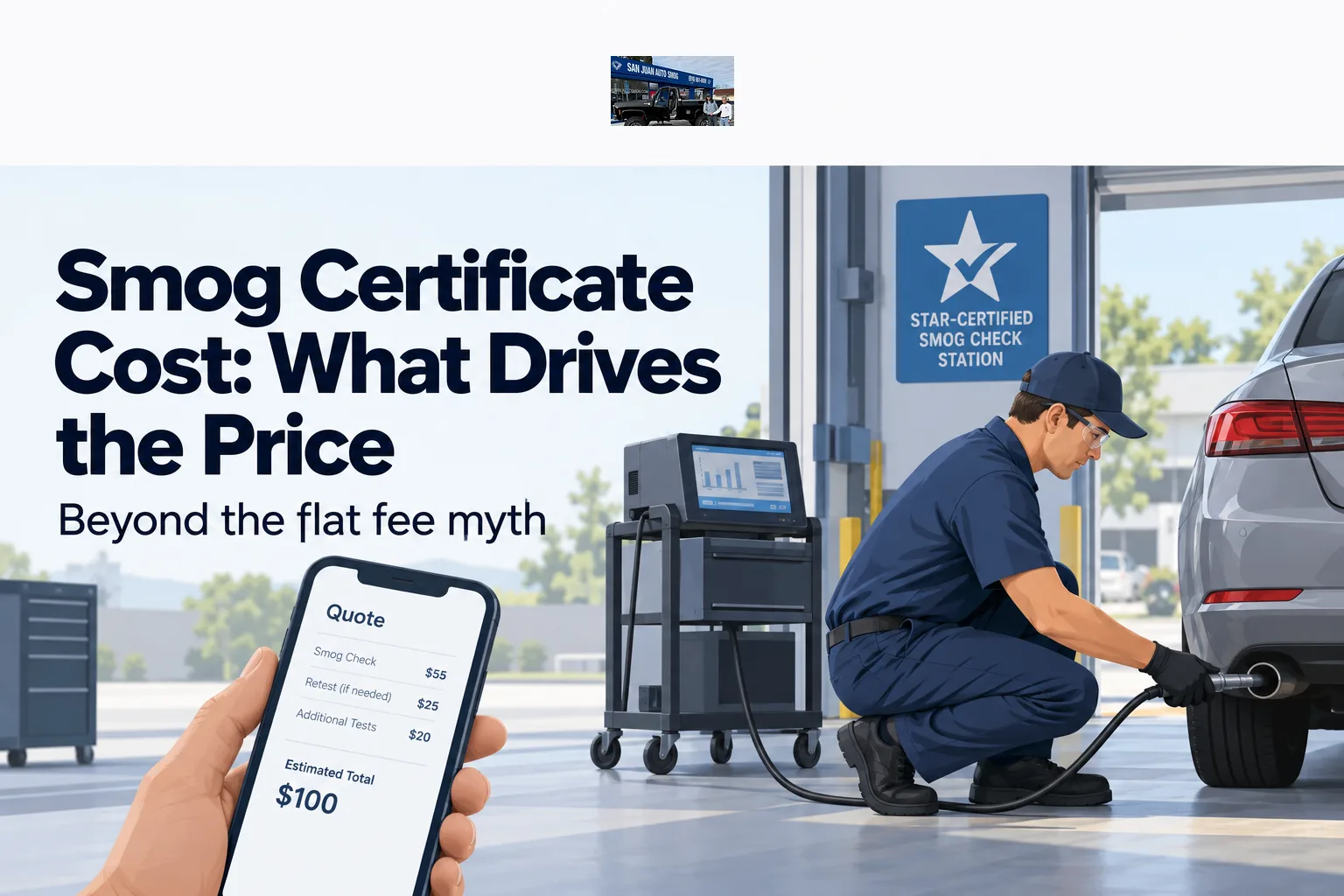
There's no single sticker price on a smog certificate in California. What you pay depends on your vehicle's year, its engine type, and whether it needs a basic test or a directed STAR test. Pricing at San Juan Auto Smog depends on vehicle type, so the fastest way to get an exact number is to text (916) 961-6009 for a quick quote before you come in.
What you're actually paying for is the test itself: the equipment, the state-mandated procedure, and the certificate the DMV needs to process your registration. Bundle the smog check with a full-synthetic oil change, though, and the combined cost drops by $45 compared to booking each one separately.
Here's what moves the price, which failures cost more to fix than to test, and how long that certificate stays good once you've got it in hand.
Key Takeaways
- Smog certificate cost varies by vehicle type, not a single flat fee — text ahead for a quote on your specific car.
- Older and modified vehicles, RVs, and heavy trucks usually take longer to test and should be scheduled by appointment.
- Bundling a smog check with an oil change saves $45 versus paying for each separately — see the combo coupon for details.
- A STAR smog certificate has a submission window set by the DMV, so don't let it sit once you get it.
- Most family-related title transfers in California don't require a new smog inspection at all.
Table of Contents
Why Are Smog Checks So Expensive?
They're not uniformly expensive — the price reflects the equipment, certification, and labor your specific vehicle needs, not a padded markup. A STAR-certified station runs calibrated emissions analyzers, performs a directed test when your DMV notice requires one, and issues a certificate the state accepts for registration. That overhead sits behind every test, which is why cost shifts with vehicle type instead of staying flat across every car that pulls in.
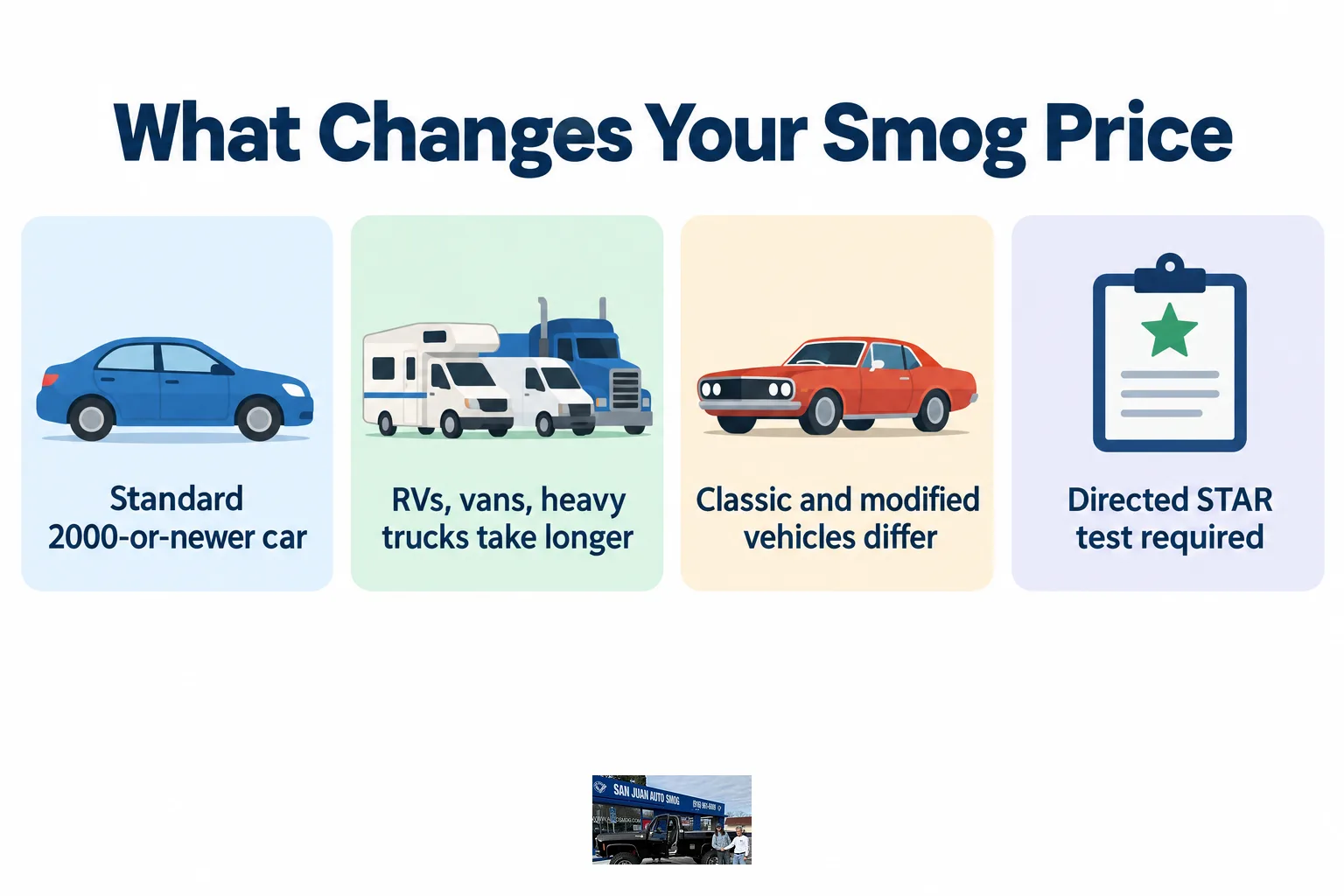
Does vehicle type change the price?
Yes. A standard 2000-or-newer car walking in for a routine test is usually the fastest and most predictable to price. RVs, vans, heavy trucks, and many diesel vehicles take longer — up to about an hour for an RV — simply because of the extra time it takes to test them properly, and scheduling and cost reflect that. Classic and modified vehicles follow a different, age-specific procedure, which is another reason appointments are recommended for anything 1999 or older.
What Will Fail a CA Smog Test?
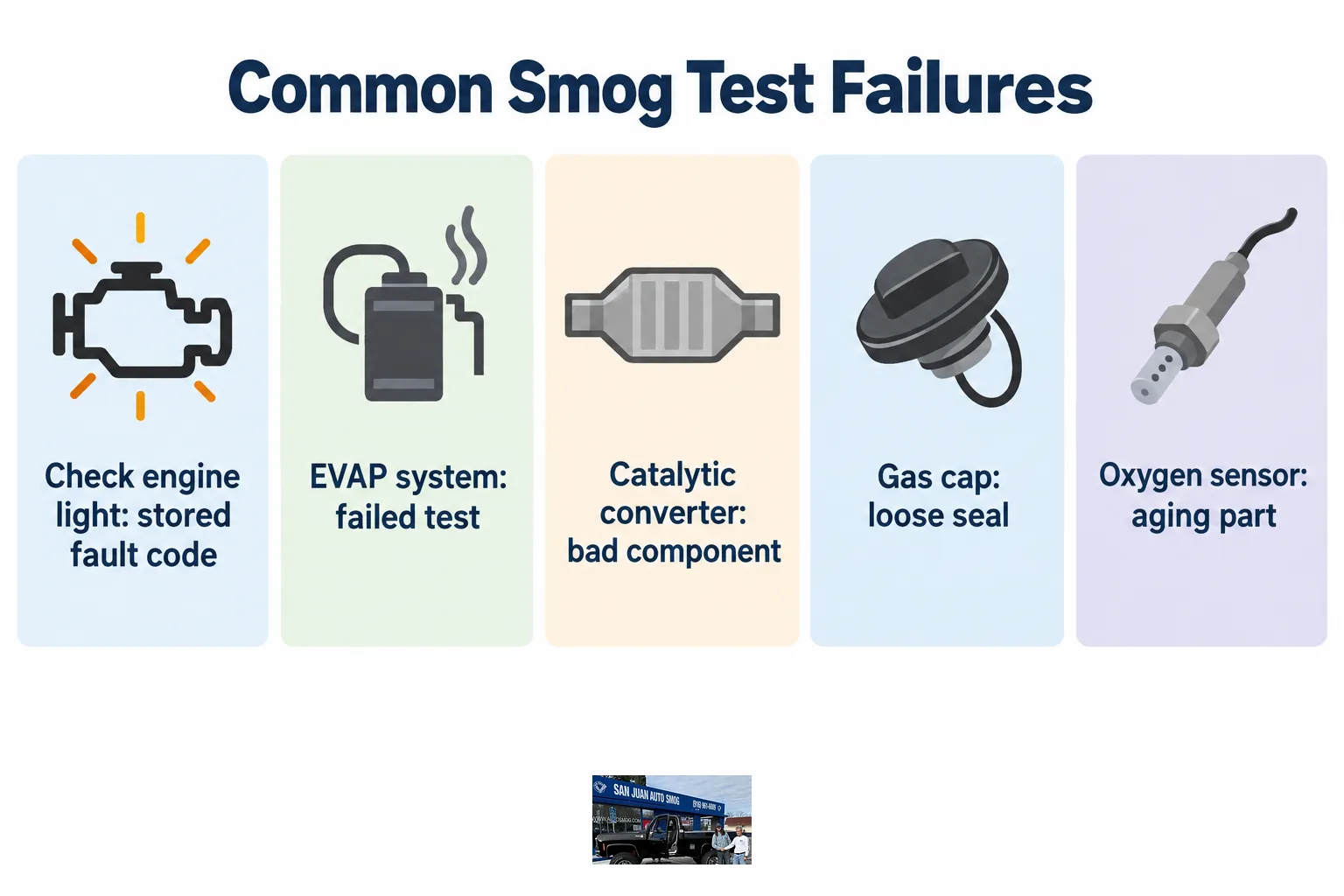
Most failures trace back to the emissions control system, not the engine itself — a lit check engine light, a failed EVAP system, a bad catalytic converter. Any stored fault code tied to emissions will fail the test even if the car drives perfectly fine. A loose gas cap, an aging oxygen sensor, or incomplete readiness monitors after a recent repair can just as easily stop a car from passing.
Can a failed test be fixed and retested?
Yes, and figuring out which system actually failed comes before spending a dollar on parts. A proper diagnosis narrows the repair to the real cause instead of guessing, which is covered in more detail on the smog failure diagnosis page. For 2000-and-newer vehicles, a free retest within 60 days is included, except on select promotions that exclude it.
How Long Is a STAR Smog Good For in California?
Once issued, a smog certificate has a limited submission window before the DMV treats it as expired for registration purposes. California's Department of Motor Vehicles requires the certificate to be submitted within that window of the test date, so timing your renewal close to the deadline matters more than getting it done early. If your DMV notice specifically calls for a STAR station, make sure wherever you test is STAR-certified — a standard station's certificate won't satisfy a directed test requirement.
What happens if the window passes before I register?
The certificate stops being valid for registration, and you're back to square one with a new test. That's a cost worth avoiding. Scheduling the test a week or two before your renewal deadline, rather than months ahead, keeps the certificate usable when you actually need it.
Can I Transfer the Title of My Car in California Without a Smog Inspection?
Often, yes. Several title transfers in California skip the new smog certificate requirement, particularly transfers between close family members. Vehicles under a certain age, some out-of-state moves, and specific low-mileage transfers can also qualify for an exemption, but the rules hinge on the situation, not just the vehicle.
How do I know if my transfer qualifies?
Check the current exemption categories before assuming you're covered — the rules get updated periodically. The smog check exemptions page and the change of ownership smog check page both break down which transfers typically skip the inspection and which still need one.
- Confirm your vehicle's year and engine type. This determines whether you need a basic test, a directed STAR test, or an exemption review.
- Text (916) 961-6009 for a quote. Pricing depends on vehicle type, so a quick message gets you an accurate number before you drive over.
- Book ahead for older, modified, or larger vehicles. RVs, vans, heavy trucks, and 1999-and-older cars need more time, so an appointment avoids a wasted trip.
- Ask about the smog + oil combo. If an oil change is due anyway, doing both in one visit saves $45 over booking them separately.
Get a Straight Answer on Your Smog Certificate Cost
San Juan Auto Smog is a STAR-certified smog check station at 4701 San Juan Ave in Fair Oaks, serving drivers across Carmichael, Sacramento, Citrus Heights, Orangevale, and Gold River. Walk-ins are welcome for 2000-and-newer vehicles, while older cars, RVs, vans, heavy trucks, and oil changes are best scheduled with an appointment so there's enough time to do the job right.
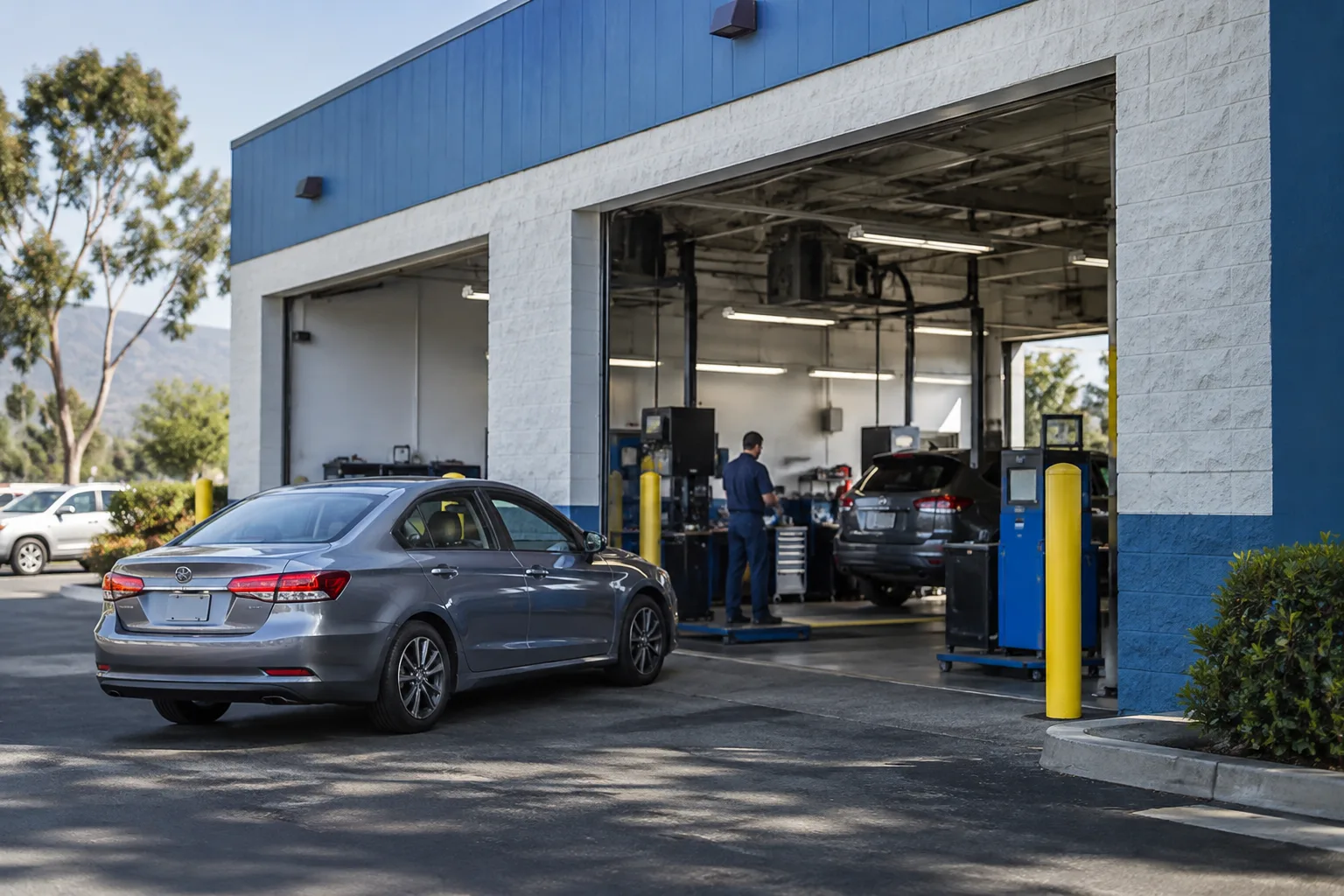
Pricing stays transparent and depends on your specific vehicle, and the shop has completed more than 35,000 services since 2018 with a 4.7 rating across over 2,130 reviews.
Text or call (916) 961-6009 for a quote on your vehicle, or start with the STAR-certified smog check page to see what's included.
Frequently Asked Questions
Does the cost of a smog check depend on my vehicle's model year?
Yes. Older vehicles, modified vehicles, and vehicles requiring a directed STAR test typically take more time and planning than a routine 2000-or-newer test, which affects both scheduling and price.
Is there a separate fee for the smog certificate itself?
The certificate is issued as part of a passing test rather than billed as a separate line item, but pricing still depends on vehicle type, so text ahead for a specific quote.
What happens if my car fails and needs a retest?
For 2000-and-newer vehicles, a free retest within 60 days is included except on select promotions that exclude it, so a failed test doesn't automatically mean paying full price twice.
Do walk-ins pay more than scheduled appointments?
Walk-ins are welcome for 2000-and-newer vehicles at the same transparent pricing as scheduled visits; appointments are simply recommended for older, larger, or diesel vehicles that need more time.
Is a STAR station required for every vehicle?
Only vehicles whose DMV renewal notice specifically requests a STAR station need one for that directed test; otherwise, any licensed smog check station can perform the inspection.
Can I save money by combining my smog check with an oil change?
Yes — the smog check and full-synthetic oil change combo takes $45 off compared to booking the two services separately.
More articles
- High-Mileage Vehicle Inspection in Fair Oaks: What to Check and Why
- Ford F-150 Maintenance Service in Citrus Heights
- San Juan Auto Smog vs Californiaemissionscheck: A Fair Comparison
- Weekend Oil Change Appointments in Orangevale
- Where to Get a Diesel or RV Smog Check Near Sacramento
- When to Rotate Camry Tires and Change Filters