San Juan Auto Smog vs Californiaemissionscheck: A Fair Comparison
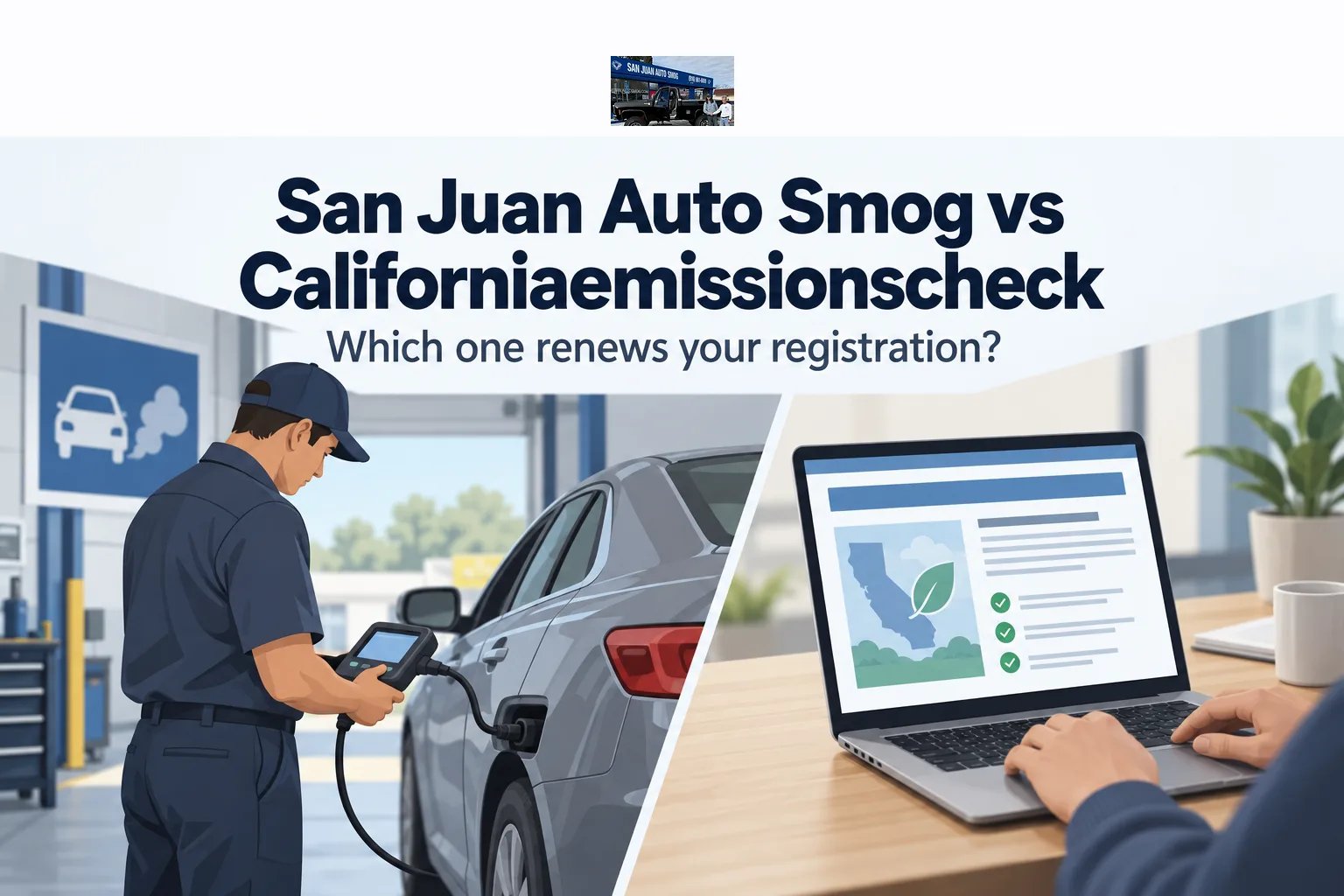
A technician has to plug into your car and run the test — that's the whole difference between San Juan Auto Smog and a site like Californiaemissionscheck. San Juan Auto Smog is a STAR-certified test-and-repair station in Fair Oaks. Californiaemissionscheck reads like a reference page about the state's smog rules. Useful for background, sure. But it can't put a passing certificate on your record.
People searching “san juan auto smog vs californiaemissionscheck” are usually trying to figure out which one actually gets their registration renewed. Short answer: one explains the rules, the other performs the test the DMV requires.
Below is the difference laid out plainly, followed by the specific questions drivers ask most — who needs testing, what help exists if a car fails, and how to check a vehicle's smog history before you ever show up at a station.
- A smog certificate has to come from a physical STAR-certified station — an information site can't issue one.
- Walk-ins are accepted for 2000-and-newer vehicles at a STAR-certified smog check station.
- 1999-and-older vehicles, RVs, vans and heavy trucks take longer to test, so booking ahead matters.
- The $1200 number some searches turn up doesn't match California's actual repair-assistance program.
- You can pull a vehicle's smog test history for free through the state before paying for anything.
Table of Contents
What's the real difference between San Juan Auto Smog and Californiaemissionscheck?
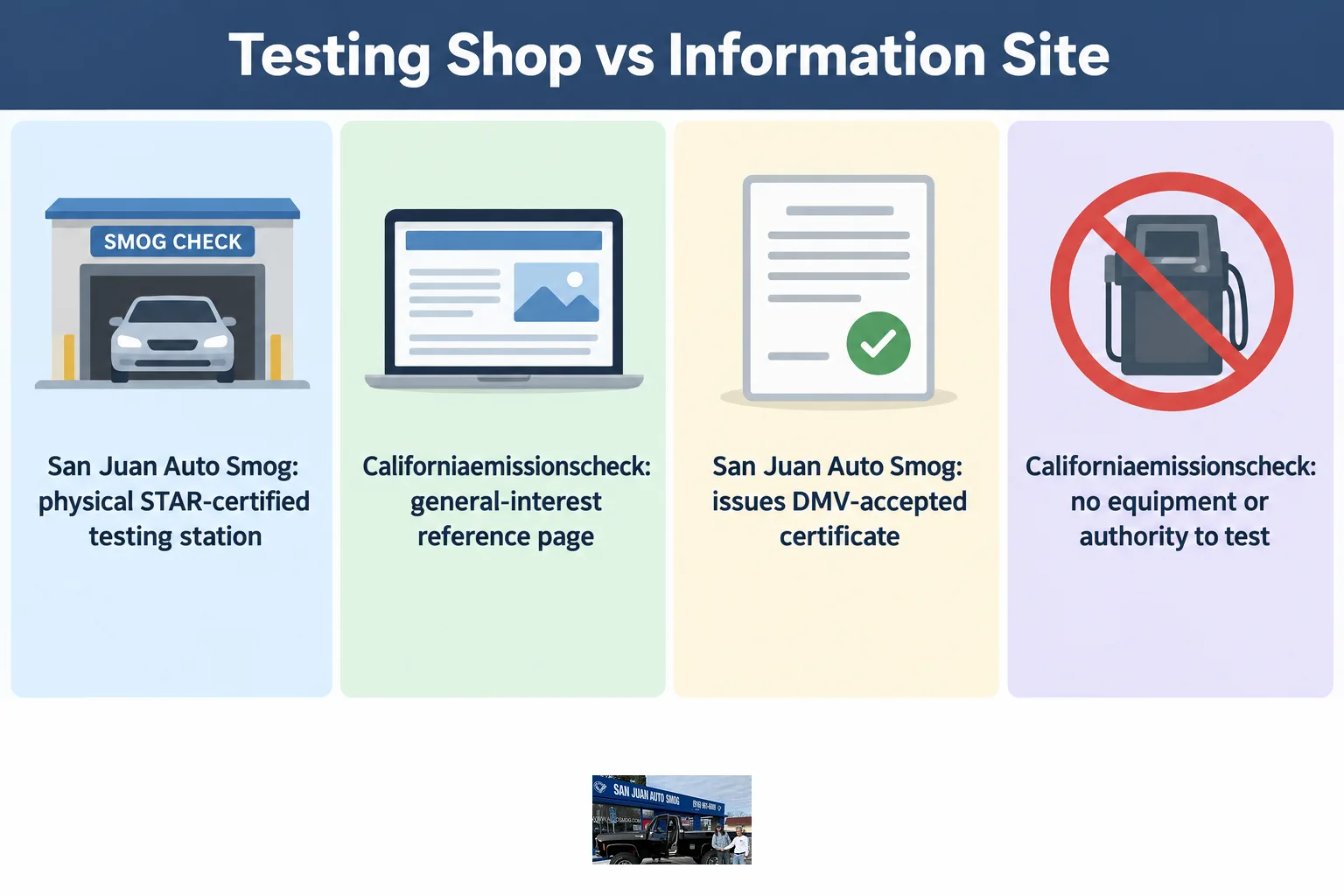
One is a hands-on testing shop; the other is a general-interest page about smog rules. A site explaining California's emissions requirements can be a fine starting point if you want to understand why a test is required or what a STAR designation means. But it has no equipment, no technician, and no authority to issue a certificate. The DMV only accepts results transmitted electronically from a licensed station after an actual test is run.
Do you need to visit a physical location either way?
Yes, no way around it. Read all you want beforehand — the certificate your registration renewal needs still comes from a station that physically tests the vehicle and reports the result to the state.
Is one more trustworthy than the other?
Trustworthiness for a pass/fail result comes down to the station's certification, not how a website is written. Confirm any station you visit is STAR-certified before you go, especially if your DMV renewal notice specifically calls for one.
Which vehicles need a smog check in California?
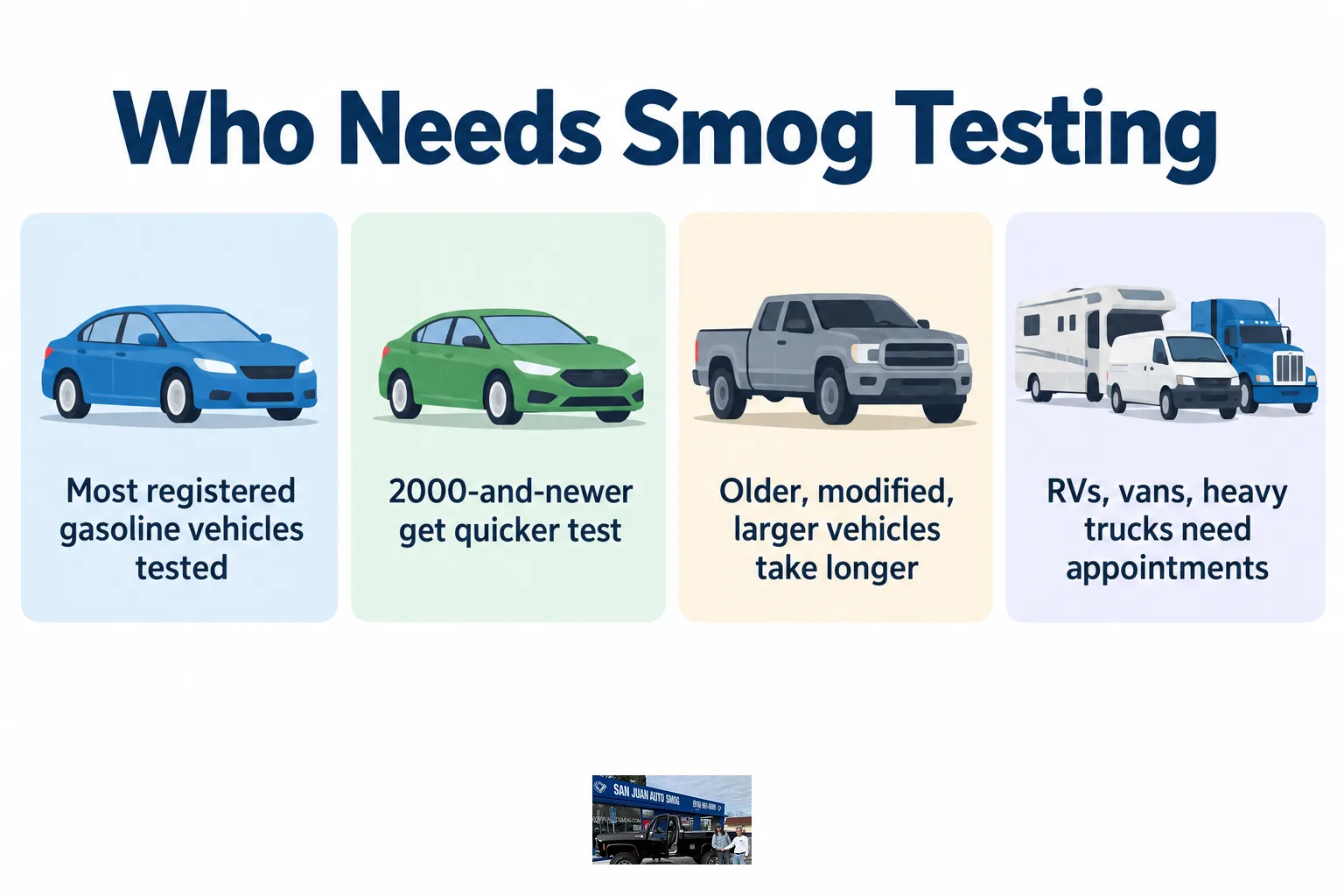
Most registered gasoline vehicles need periodic smog testing, and your vehicle's model year and type decide how the test is run. Newer vehicles generally get a quicker, more standardized test. Older, modified, or larger vehicles follow a different procedure and usually take more time at the station.
Do all 2000-and-newer cars need a STAR station?
Many DMV renewal notices flag a specific vehicle for a STAR station — sometimes because of its emissions history, sometimes just random selection. If your notice says STAR, the station performing the test has to carry that certification. Walk-ins are generally fine for cars from 2000 forward.
What about RVs, vans and heavy trucks?
These vehicles, along with many diesel vehicles, do get tested, but the process runs longer than a standard passenger car check. RV and motorhome smog testing works best with an appointment so the station can plan for the extra time. Same goes for 1999-and-older vehicles — see testing for older vehicles for what to expect.
Will CA give you $1200 if your car doesn't pass smog?
No — California doesn't hand out a flat $1200 for a failed smog test. What does exist is a repair-assistance mechanism run through the state's Bureau of Automotive Repair, aimed at qualifying owners who can't afford the repairs needed to pass. The assistance amount and eligibility rules are set and updated by the Bureau of Automotive Repair directly. Trust whatever is posted on their site at the time you apply — not a figure circulating online.
What does the Consumer Assistance Program actually cover?
It's generally built around helping with repair costs for vehicles that fail testing, and in some cases offers a retirement option instead of repair. Eligibility depends on income and vehicle criteria set by the Bureau of Automotive Repair. Check current terms directly with them before assuming a specific dollar amount applies to your situation.
Ready for Your Next Smog Test in Fair Oaks?
San Juan Auto Smog is a STAR-certified smog check station at 4701 San Juan Ave in Fair Oaks. Walk-ins are welcome for 2000-and-newer vehicles, and appointments are recommended for 1999-and-older cars, RVs, vans, and heavy trucks. Pricing stays transparent and depends on vehicle type, and pairing your smog test with a full-synthetic oil change saves $45 compared to booking each separately.
If you landed here comparing an information site to an actual test station, the next move is simple: book the real thing.
Get started with a smog check and oil change combo and handle both in one visit.
Frequently Asked Questions
How can I find my car's smog history for free in California?
California's Bureau of Automotive Repair provides a free vehicle inspection history lookup by VIN or license plate on its website, showing past smog test results without needing to visit a station first.
Where to get car smog test in California?
Look for a STAR-certified station near you, since many DMV renewal notices specifically require one. Stations that test 2000-and-newer vehicles typically accept walk-ins, while older vehicles, RVs, and heavy trucks are better scheduled with an appointment.
Does an informational site like Californiaemissionscheck count as my official test?
No. Reading about requirements is useful preparation, but only a licensed testing station can run the actual test and transmit a passing result to the DMV.
What if my check engine light is on before a smog test?
A lit check engine light generally causes an automatic failure on 2000-and-newer vehicles, since it signals the onboard computer has detected a problem. Get the underlying issue diagnosed before testing so you're not wasting a trip.
Can I get a smog check and an oil change done in one visit?
Many stations that handle both services can combine them into a single appointment. That saves a trip and often costs less than booking each one separately.
More articles
- Weekend Oil Change Appointments in Orangevale
- Where to Get a Diesel or RV Smog Check Near Sacramento
- When to Rotate Camry Tires and Change Filters
- Power Steering Fluid Top-Off in Fair Oaks: How to Check and Add Fluid
- How Much Should a Smog Check Cost in California?
- Independent Mechanic Multi-Point Check in Orangevale