Power Steering Fluid Top-Off in Fair Oaks: How to Check and Add Fluid

Check the reservoir against its marked range, using the hot or cold reference that matches the engine’s condition. If the level is below MIN, add only the fluid specified in your owner’s manual, and never fill above MAX.
Reservoir locations and fluid requirements vary by vehicle. Check your owner’s manual to identify the correct reservoir and fluid before you begin.
This guide explains how to locate the reservoir, check the level, and recognize signs that the fluid may be low or leaking.
Key Takeaways
- Use the reservoir’s markings and the correct hot or cold reference to decide whether fluid is actually low.
- Find the reservoir by checking your owner’s manual, since some vehicles use electric power steering and have no fluid reservoir.
- Harder steering, whining or screeching sounds, and fluid stains can point to low fluid or a leak that needs attention.
- Top-off costs depend on the vehicle and what the inspection finds; routine maintenance can also include a full-synthetic oil change.
Table of Contents
How to Check Your Fluid?
Use the fluid type listed in your owner’s manual, since the correct specification depends on your vehicle. Check the level against the reservoir’s marks or dipstick, using the hot or cold range that matches the engine’s condition.
-
Identify the Required Fluid Type
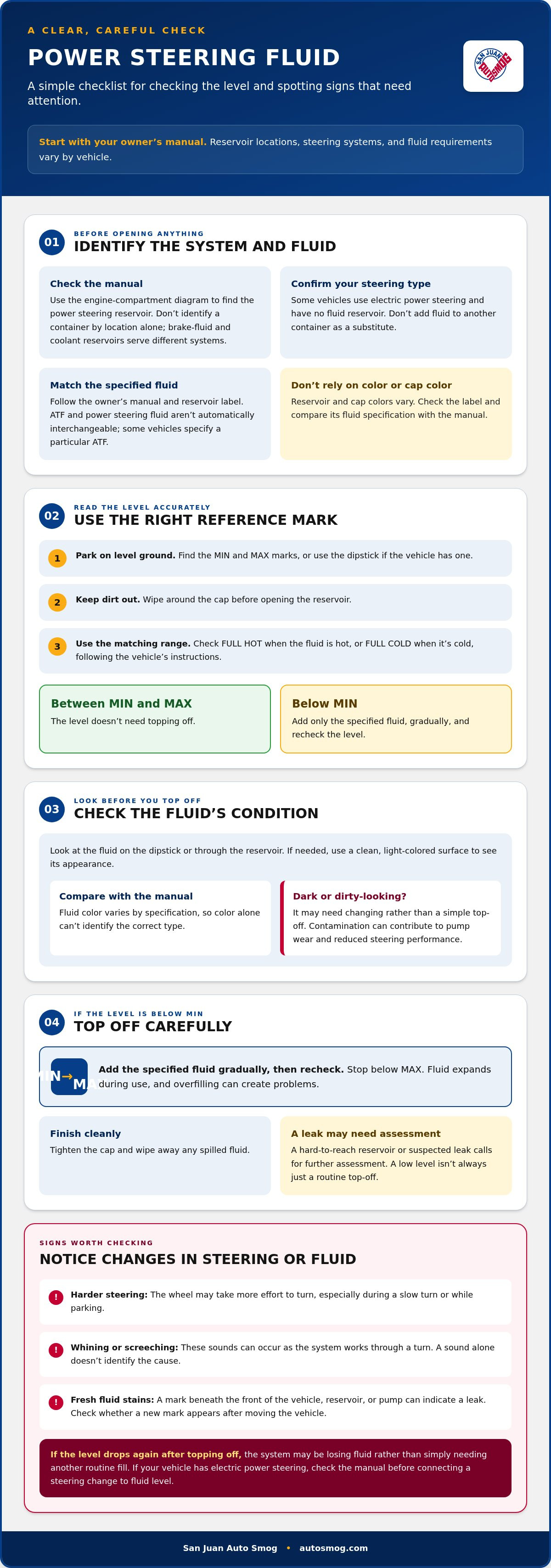
Check your owner’s manual for the power steering fluid specification before opening a container. Match the named fluid and specification exactly, as requirements vary by vehicle. Don’t choose fluid based only on its color or assume transmission fluid is interchangeable. If the reservoir cap also lists a specification, compare it with the manual and follow the vehicle-specific instructions.
-
Read the Reservoir Marks or Dipstick
Park on level ground and locate the reservoir’s MIN and MAX marks, or remove the dipstick if your vehicle has one. Wipe around the cap before opening it to keep dirt out of the system. Check the level against the correct mark: use FULL HOT when the fluid is hot and FULL COLD when it’s cold. If the level is between MIN and MAX, it doesn’t need topping off.
-
Inspect the Fluid Condition and Color
Look at the fluid on the dipstick or through the reservoir, using a clean, light-colored surface if needed to see its appearance. Compare the sample with the fluid’s normal appearance described in your manual; color varies by specification, so color alone can’t identify the correct type. Dark, dirty-looking fluid should be changed rather than treated as a simple low-level top-off, because contamination can contribute to pump wear and reduced steering performance.
- If the level is below MIN, add the specified fluid gradually and recheck the dipstick or reservoir marks. Stop below MAX, since fluid expands during use and overfilling can create problems. Tighten the cap and wipe away any spilled fluid. Take leftover or drained automotive fluids to a certified collection center; CalRecycle and the EPA explain how to recycle used oil and fluids properly. A Fair Oaks multi-point inspection can help assess fluid levels as part of broader vehicle maintenance.
Locating the power steering fluid reservoir
Start with your owner’s manual, since engine-bay layouts vary by vehicle. It can also help you distinguish a hydraulic steering reservoir from other fluid containers.
Use only the fluid specified for your vehicle. ATF and power steering fluid aren’t automatically interchangeable; the owner’s manual or reservoir label identifies what’s suitable.
A straightforward top-off involves locating the reservoir, checking its level, and adding fluid carefully. A hard-to-reach reservoir or suspected leak calls for further assessment.
Some newer vehicles use electric power steering and have no pump or fluid reservoir. Check your manual before searching the engine bay.
- Check the engine-compartment diagram in your owner’s manual for “power steering.” Use it to identify the correct container before removing a cap. A nearby brake-fluid or coolant reservoir serves a different system, so don’t identify it by location alone.
- Check the cap and reservoir for a label. A power steering reservoir may have a black cap and a white or yellow container, but colors vary. Look for wording such as “power steering” or a fluid specification, then compare it with your manual.
- Determine whether your vehicle has hydraulic or electric power steering. Hydraulic assistance uses fluid and typically has a reservoir connected to the steering system. Electric power steering may have no pump or reservoir, so don’t add fluid to another container as a substitute.
- Confirm the correct fluid information before opening the cap. Never assume automatic transmission fluid, or ATF, can replace power steering fluid. Some vehicles specify a particular ATF, while others require a different fluid. Follow your vehicle’s manual and reservoir label.
If the diagram or reservoir label is difficult to interpret, a Fair Oaks multi-point inspection can include a check of accessible fluid levels and components.
After checking or servicing the power steering fluid, clean the surrounding area if needed and tighten the reservoir cap to help prevent leaks and contamination.
Symptoms of low power-steering fluid
- Notice whether the steering wheel becomes harder to turn, especially during a slow turn or while parking. Low fluid can reduce steering assistance, making the wheel take more effort to turn. Compare how it feels with its normal response rather than forcing it through resistance. If your vehicle has electric power steering, it may not use fluid, so check the manual before linking a change in steering to the fluid level.
- Listen for whining or screeching as you turn the steering wheel. These sounds can occur when power steering fluid is low, particularly when the system is working through a turn. Note when the noise happens, such as while backing into a driveway or turning at low speed. A sound alone doesn’t identify the cause, but checking it alongside a low reservoir reading can help clarify what to inspect next.
- Look for fresh fluid stains on the ground beneath the front of the vehicle. A stain below the power steering reservoir or pump can indicate a leak. Check the same parking area again after moving the vehicle to see whether a new mark appears. Don’t assume a low level only needs topping off: fluid loss can point to a leak that needs repair. It’s also worth entering your VIN in NHTSA’s recall lookup, since steering components are sometimes covered by a safety recall with a free fix.
- Check the reservoir when steering feels heavier or a new whining sound appears. Use the vehicle’s marked hot or cold range and compare the reading with MIN. If it’s below MIN, add only the specified fluid and recheck the level. Then watch for returning symptoms or fresh stains. If the level drops again after topping off, the system may be losing fluid rather than simply needing another routine fill.
How much does a power steering fluid top-off cost in Fair Oaks?
The cost depends on your vehicle and what a fluid check reveals. A simple top-off differs from work to identify a leak or address contaminated fluid. Your manual determines the correct fluid, while the amount needed and access to the reservoir affect the work involved.
- Share your vehicle’s make, model, and year when requesting a quote. These details help identify the steering system and specified fluid. Some vehicles have hydraulic power steering with a reservoir, while electric power steering has no fluid reservoir to top off. Identifying the system helps avoid treating a different maintenance concern as a fluid top-off.
- Ask what the estimate includes. California’s Bureau of Automotive Repair explains your right to a written estimate before work begins. Checking the fluid level, adding the correct fluid, and investigating a low reading are separate tasks. The estimate should explain whether it covers only the top-off or also an assessment of visible leaks or dark, dirty fluid. Reservoir location and access can also affect the work involved.
- Describe symptoms that may affect the work needed. A whining sound while turning, heavier steering, or a fresh fluid stain can point to fluid loss or another concern. Adding fluid may restore the level temporarily, but a recurring drop suggests a leak that needs attention. A top-off alone won’t address the cause of ongoing fluid loss.
- Compare the estimate with the actual finding before approving additional work. The cost depends on the vehicle, fluid type and quantity, reservoir access, and whether the inspection finds a leak or contamination. The price depends on the case and is given after a quote request; those vehicle and condition factors shape the estimate.
For a broader check of fluid levels and visible maintenance concerns, schedule a Fair Oaks multi-point inspection.
Power steering fluid between the reservoir's MIN and MAX lines does not need topping off; fluid below MIN should be replenished without exceeding MAX. Use these marks to determine whether adding fluid is necessary, rather than treating every estimate as requiring a top-off. A reading within the indicated range means no additional fluid is needed, while replenishment should stop at or below MAX.
San Juan Auto Smog: Full-Synthetic Oil Change
San Juan Auto Smog offers full-synthetic oil changes to help keep routine vehicle maintenance on track. If you’ve noticed a low power steering fluid level, remember that an oil change doesn’t fix a leak or replace the steering fluid specified for your vehicle. During every oil change, gloves, protective seat covers, and disposable floor mats are used. San Juan Auto Smog offers full-synthetic oil changes, with a multi-point inspection, fluid check, and tire rotation available as options. A fluid check can help assess fluid levels and visible concerns that may need attention.
Routine maintenance is also a useful time to review your vehicle’s service needs, especially if it’s older or has higher mileage. If a smog inspection is due, a STAR-certified smog check may fit alongside your maintenance visit. San Juan Auto Smog is a STAR-certified Test & Repair station (license RC303707). The DMV smog inspection page explains when a vehicle needs one. An oil change alone doesn’t ensure a vehicle will pass its smog inspection.
See details about San Juan Auto Smog’s full-synthetic oil change, or contact the shop with questions about scheduling. Smog checks on 2000 and newer vehicles don’t need an appointment, but please book ahead for oil changes and for smog checks on 1999 and older vehicles, RVs, vans, and heavy trucks.
Keep your next maintenance step straightforward
Make a brief note of the fluid reading and the date you checked it. If the level changes again, that record gives a technician useful context for assessing the steering system. Follow your owner’s manual maintenance schedule and consider other routine care due around the same time.
For a power steering fluid top-off in Fair Oaks, the right next step depends on what your vehicle needs. San Juan Auto Smog can help with routine maintenance, including a Full-Synthetic Oil Change, and emissions testing through its STAR-Certified Smog Check or Older Vehicle Smog Check for vehicles from 1999 and older.
Contact San Juan Auto Smog to discuss your vehicle’s maintenance needs. A clear next step can make caring for your vehicle feel more manageable.
Frequently Asked Questions
How do I check and top off power steering fluid safely?
Use your vehicle’s manual to identify the correct fluid and checking procedure. Add fluid in small amounts, then recheck the level to keep it within the reservoir’s marked range. After closing the cap, turn the steering wheel back and forth to circulate the fluid. Keep track of the level afterward; another drop can be useful information during a follow-up inspection.
What are the signs of low power steering fluid or a leak?
Steering that takes more effort, whining or screeching during turns, and fluid stains beneath the vehicle can indicate low fluid or a leak. Note when the noise or heavier steering occurs, such as while parking, and where the vehicle was parked when you saw a stain. This context can help distinguish a one-time observation from a recurring change worth investigating.
Is it safe to drive with low power steering fluid?
Low fluid can make steering harder, so turning the wheel may take more effort. If steering feels unusually difficult or you hear a new whining sound, don’t treat a top-off as a lasting fix. Check the level and look for signs of fluid loss. A repeated drop or persistent change in steering needs assessment before you rely on the vehicle for routine trips.
How long does a power steering fluid top-off take?
A straightforward top-off involves locating the reservoir, checking its level, and adding fluid carefully. A hard-to-reach reservoir or suspected leak calls for further assessment.
More articles
- How Much Should a Smog Check Cost in California?
- Independent Mechanic Multi-Point Check in Orangevale
- Car Warranty and Oil Changes: What You Pay Out of Pocket
- Seasonal vehicle maintenance in Sacramento to protect your car's value
- How Far Ahead to Book a Used Car Check in California
- Student car maintenance checklist Carmichael students can use