How Much Should a Smog Check Cost in California?
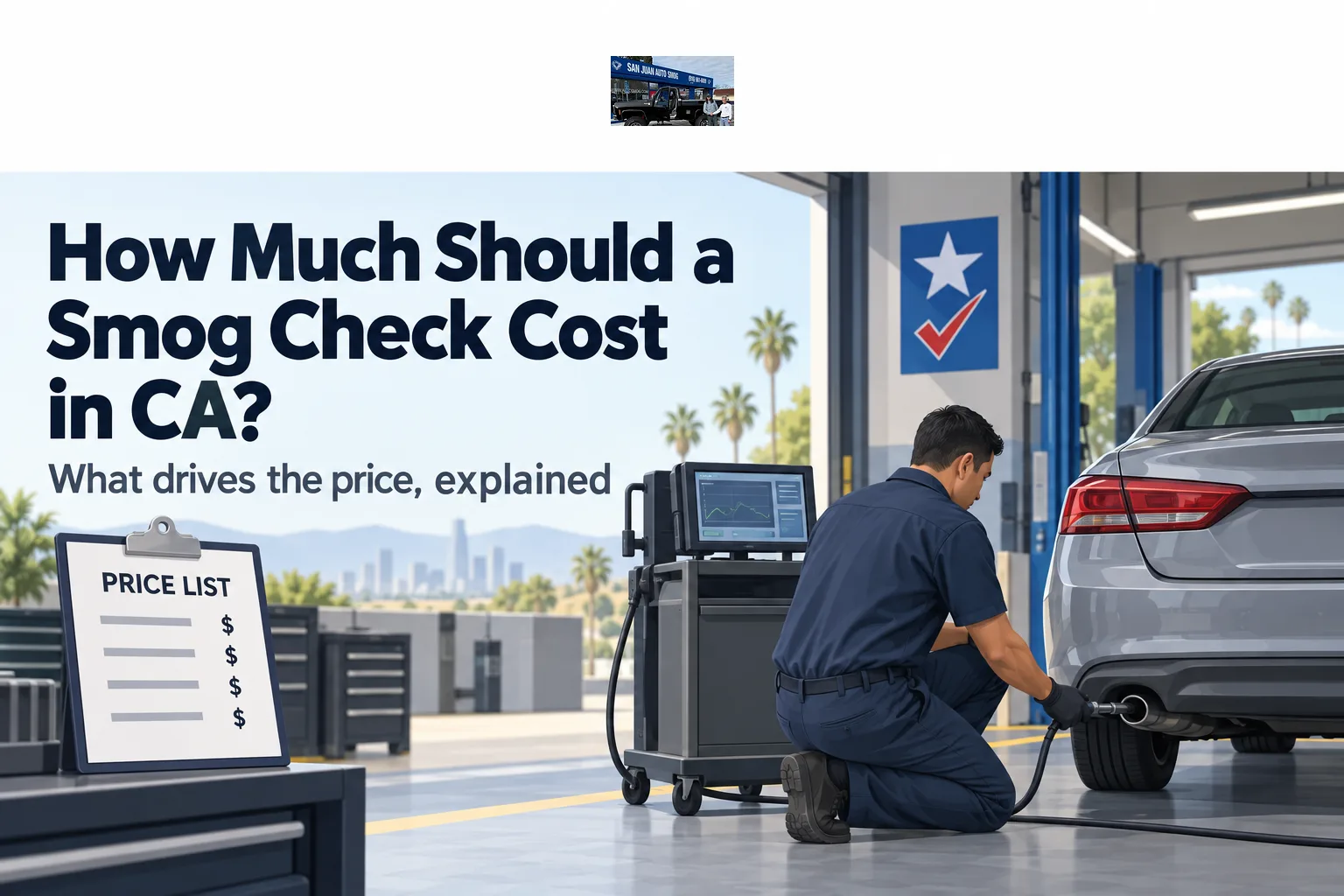
A California smog check should cost enough to cover a STAR-certified station's equipment, the technician's time, and the state certificate fee — nothing more, nothing mysterious. There's no single statewide number. Price depends on your vehicle's model year, whether it runs gas or diesel, and whether your DMV renewal notice requires a STAR station.
Drivers typing this into Google are usually juggling three questions at once: what's fair to pay, whether California hands out money when a car fails, and what actually causes a failure in the first place. All three shape what you end up paying to get your registration renewed.
Here's each one, plainly, so you know what a fair quote looks like before you hand over your keys.
Key Takeaways
- Smog check pricing varies by vehicle type and whether a STAR station is required, so always ask for a quote before you book — see what sets the price on this local pricing breakdown.
- California does not hand drivers a flat $1,200 for a failed smog check; repair or retirement help runs through a state-administered assistance program with its own eligibility rules.
- Older, modified, and gross-polluter vehicles often cost more to test because they take longer and require extra procedure steps.
- A check engine light, a loose gas cap, and a failing catalytic converter are among the most common reasons a car doesn't pass.
- Bundling a smog check with an oil change in one visit is one of the simplest ways to lower the total cost of a routine service day.
Table of Contents
How Much Should I Pay for a Smog Check in California?
A fair price reflects your vehicle type and the kind of test it needs, not a single fixed statewide rate. California doesn't set an official smog check price — stations set their own rates, and the test itself can be a basic test-only check or a longer “directed” test if your DMV notice specifically requires a STAR-certified station. A 2015 sedan and a 1998 pickup aren't priced the same, because the older vehicle often needs a different test procedure.
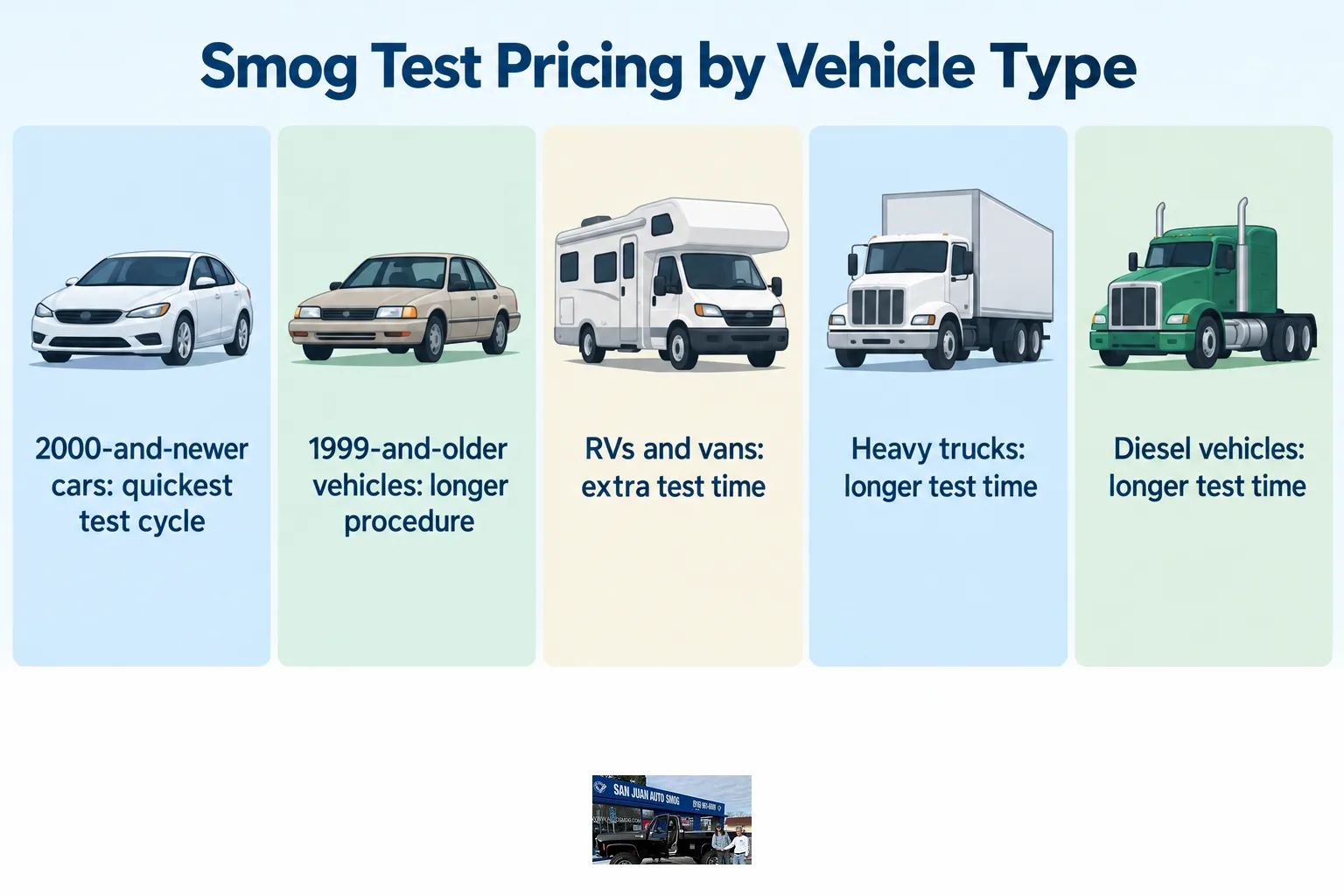
Does the price change by vehicle type?
Yes. A standard passenger car built in 2000 or later usually moves through the quickest test cycle. Vehicles from 1999 and earlier, RVs, vans, heavy trucks, and many diesel vehicles take longer to test, and pricing reflects that extra time.
Is a STAR station more expensive?
Not inherently. But if your registration notice specifically requires a STAR-certified station, a cheaper non-STAR option isn't on the table for that test. The fair comparison is between STAR stations in your area, not STAR versus non-STAR.
Will CA Give You $1200 if Your Car Does Not Pass Smog?
No — there's no flat $1,200 payout for failing a smog check. The idea usually comes from a garbled version of California's Consumer Assistance Program, administered through the state's Bureau of Automotive Repair. The program can help eligible, lower-income vehicle owners cover a share of repair costs or retire a vehicle that's a repeat gross polluter — but it isn't a cash reward for simply failing the test.
What is the Consumer Assistance Program?
It's a state program, not a shop program, built to ease the cost of emissions-related repairs or vehicle retirement for owners who qualify. Eligibility and current dollar amounts are set by the Bureau of Automotive Repair, so the only reliable way to check what you'd actually get is through that agency directly. If your car's flagged as a repeat gross polluter, a gross polluter retest is often the next practical step before you look into assistance.
Why Are Smog Checks So Expensive?
The price reflects calibrated equipment, trained labor, and the state certificate fee — not a markup on a simple errand. A smog check runs on tailpipe analyzers and onboard diagnostic readers that need regular calibration and certification just to stay STAR-eligible. Add technician time, the state-mandated certificate, and sometimes a longer directed test, and the price stops looking arbitrary.
What drives the price beyond the test itself?
Vehicle complexity is the biggest variable. A car with stored trouble codes or incomplete readiness monitors may need extra diagnostic time before it can even be tested properly. Reviewing how California's smog check program actually works makes it clearer why a thorough test costs more than a quick glance under the hood.
What Will Fail a CA Smog Test?
Most failures trace back to the check engine light, the catalytic converter, or the evaporative emissions system. These are the systems California's test is built to catch, and each one fails for a specific, identifiable reason — not at random.
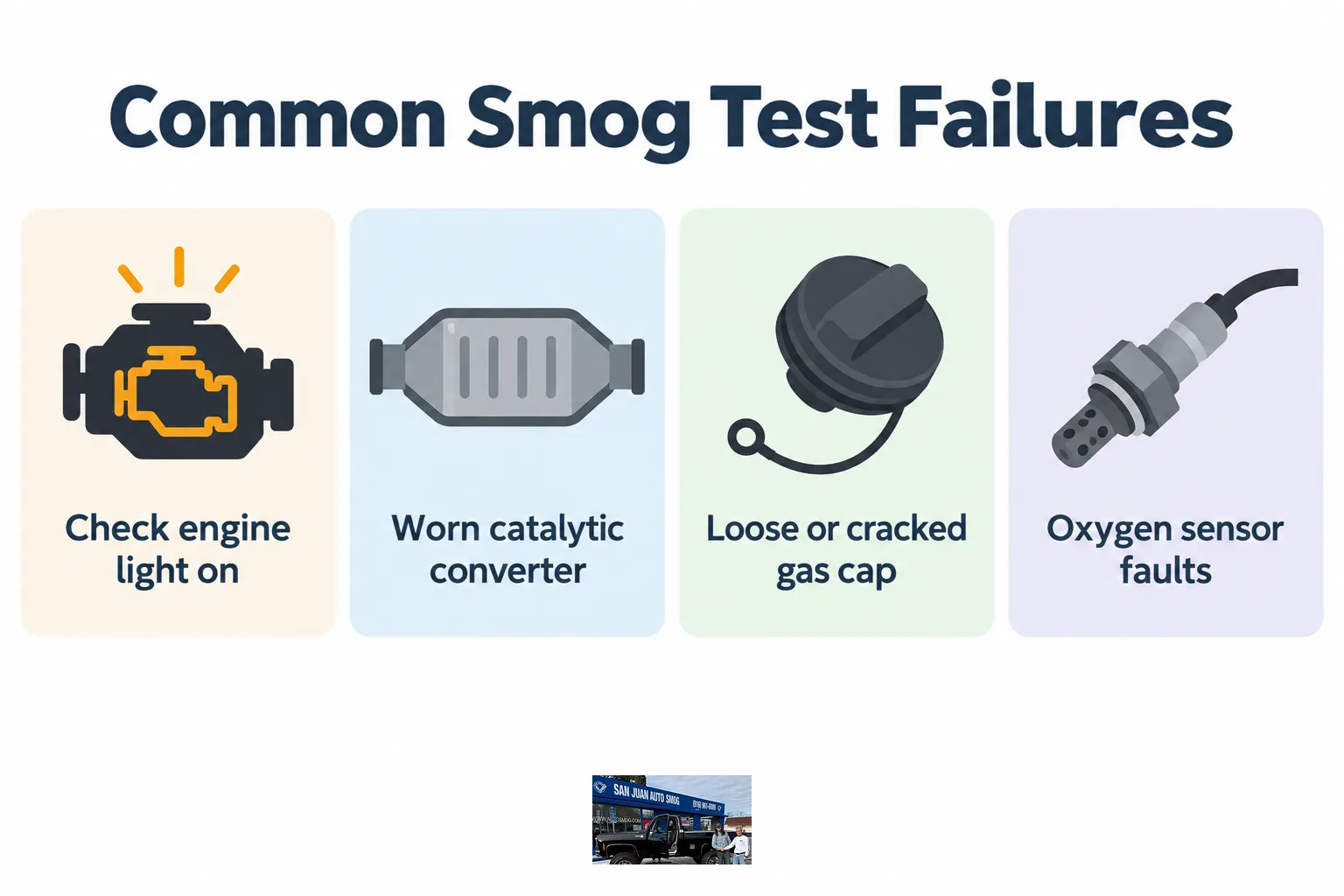
- A check engine light that's on, or one or more readiness monitors not yet “ready,” which keeps the test from completing at all.
- High hydrocarbon or carbon monoxide readings, often pointing to a worn catalytic converter or a fuel-mixture problem.
- A loose, cracked, or missing gas cap, which can trip an EVAP system leak code.
- Oxygen sensor faults that throw off the engine's fuel-trim readings.
- Visible tampering with emissions equipment, which is an automatic failure regardless of tailpipe numbers.
Can a loose gas cap really fail a smog check?
Yes. The EVAP system is designed to be sealed, and a gas cap that doesn't seat properly can trigger a code that fails the whole test — even when nothing else is wrong with the car. If your vehicle's already failed, a proper smog failure diagnosis narrows down the cause before you spend money guessing.
Get a Clear Smog Check Price Before You Book
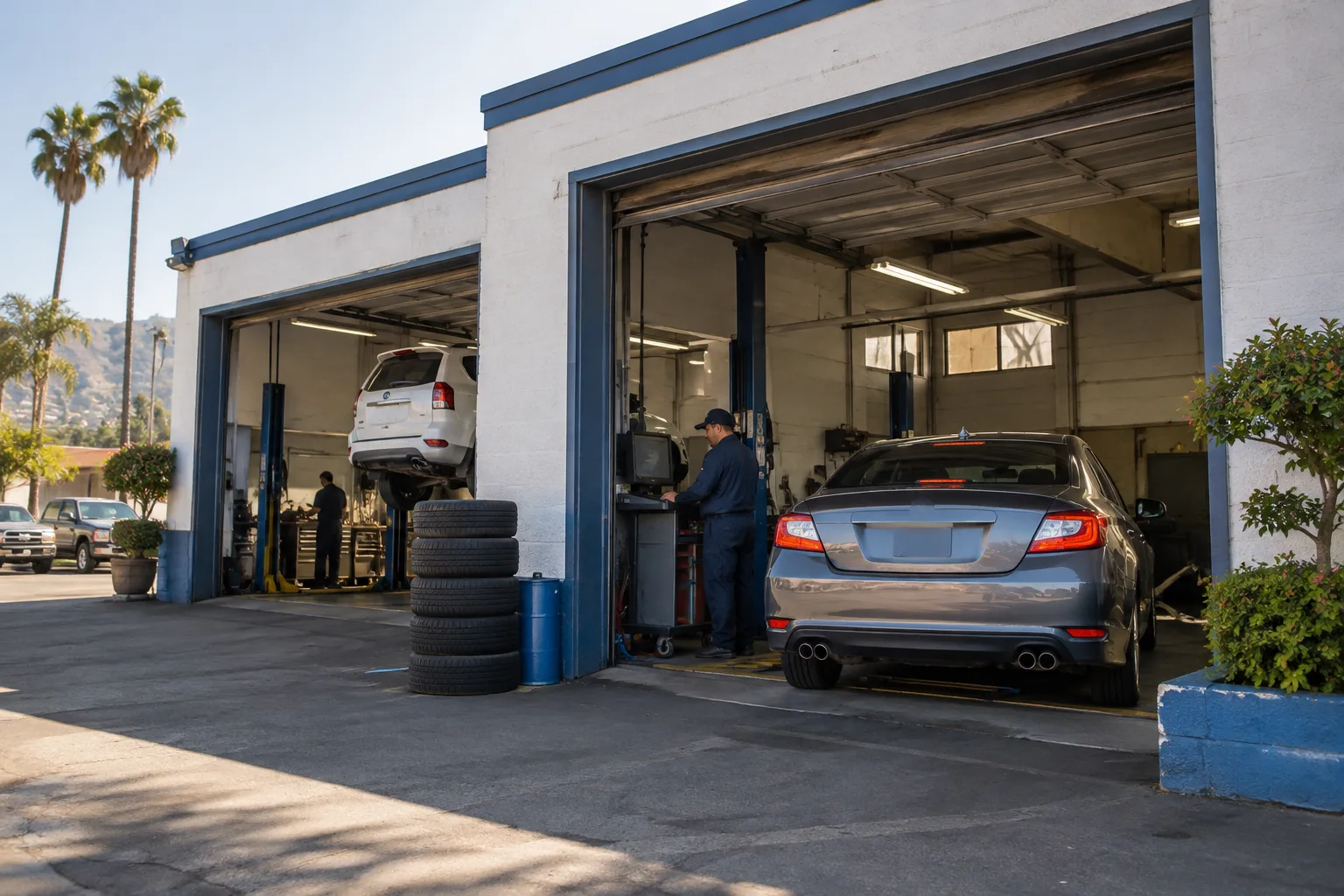
San Juan Auto Smog is a STAR-certified smog check station at 4701 San Juan Ave in Fair Oaks, CA, rated 4.7 from 2,128 reviews across platforms, with more than 35,000 services completed since 2018. Walk-ins are welcome for 2000-and-newer vehicles, and an appointment's recommended for 1999-and-older vehicles, RVs, vans, and heavy trucks — those just take longer to test correctly.
Pricing depends on vehicle type, so a quick text to (916) 961-6009 gets you a straight answer before you drive over. Pairing the smog check with a full-synthetic oil change in the same visit also knocks $45 off the combined price compared to booking each one separately.
Start with a STAR-certified smog check and find out exactly where your car stands before the registration deadline creeps up.
Frequently Asked Questions
How much should I pay for a smog check in California?
Pricing depends on your vehicle's model year, whether it's gas or diesel, and whether your DMV notice requires a STAR-certified station. There is no single statewide rate, so getting a quote for your specific vehicle before you book is the most reliable way to know what's fair.
Will California give me money if my car fails smog?
Not automatically, and not a flat amount. The state's Consumer Assistance Program can help eligible, lower-income owners with repair costs or vehicle retirement, but it requires meeting specific criteria set by the Bureau of Automotive Repair.
Why are smog checks so expensive?
The cost covers calibrated testing equipment, trained labor, the state certificate fee, and additional diagnostic time for vehicles with stored trouble codes or incomplete readiness monitors. It isn't a flat fee for a quick procedure.
What will fail a California smog test?
Common causes include an illuminated check engine light, incomplete readiness monitors, high tailpipe emissions from a worn catalytic converter, a faulty gas cap or EVAP leak, and failed oxygen sensors. Visible tampering with emissions equipment also results in an automatic failure.
Does an older car cost more to smog check?
Often, yes. Vehicles from 1999 and earlier typically require a different test procedure and more time than a standard 2000-and-newer test, which can affect the price.
Can I save money by combining a smog check with an oil change?
Yes. Doing both in one visit is generally cheaper than booking a smog check and an oil change separately, and it saves a second trip.
More articles
- Car Warranty and Oil Changes: What You Pay Out of Pocket
- How Far Ahead to Book a Used Car Check in California
- Student car maintenance checklist Carmichael students can use
- Preparing a Car for a First-Time Driver in Fair Oaks
- Oil Change in Fair Oaks, CA: Pricing & Packages
- Best Smog Check Shop Near Citrus Heights, CA