How Far Ahead to Book a Used Car Check in California
Book your used car check the day you and the seller agree on a price. Not next week, not after financing clears — now. Inspection slots and STAR-certified smog appointments can fill up within a day or two, and once a smog certificate is issued, the clock starts ticking toward the title transfer. Wait too long and you may have to retest.
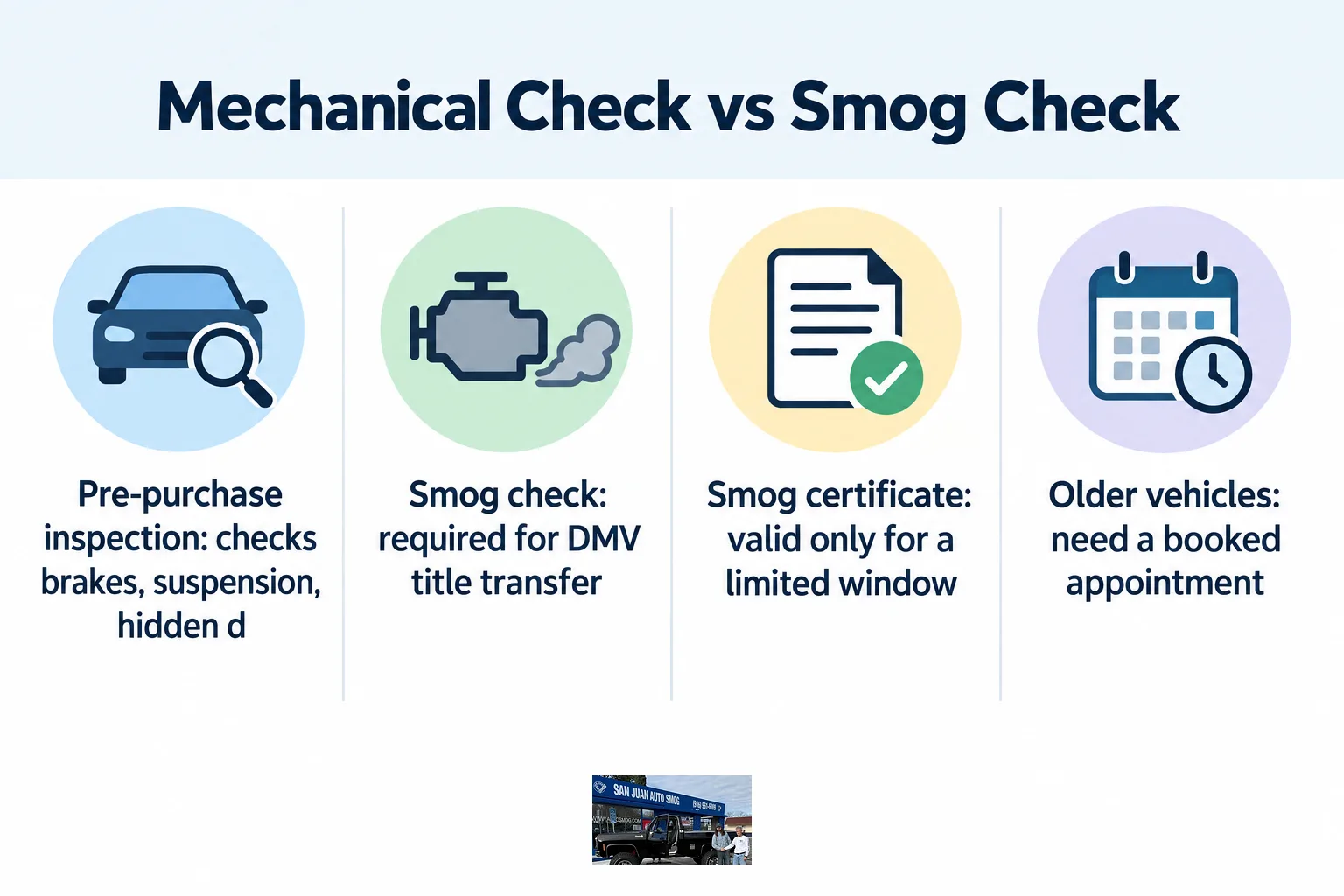
Most of the confusion comes from mixing up two separate checks. A mechanical pre-purchase inspection looks at the car's condition. The smog check required for change of ownership is a DMV and Bureau of Automotive Repair requirement. They run on different clocks. A buyer who books only one of them often ends up back at the DMV counter holding paperwork that no longer counts.
Key Takeaways
- Book the mechanical inspection and the smog check within a day or two of agreeing on a price, before financing or DMV deadlines start pressing.
- A pre-purchase inspection and a smog check are two different things; a passing smog certificate says nothing about brakes, suspension, or hidden damage.
- The smog certificate used for a title transfer only counts for a limited window, so testing too early can mean testing again — see change of ownership smog check requirements for what applies to your sale.
- There is no single statewide “$3,000 rule” for used cars; the number people mean usually comes from a different context entirely, not California's smog or title process.
- 2000-and-newer vehicles can often be tested as walk-ins, but 1999-and-older cars, RVs, vans, and heavy trucks need an appointment booked ahead of the sale date.
Table of Contents
How Far Ahead Should You Book a Used Car Check in California?
Book it the moment a deal looks likely, not after it's final. A motivated seller may not want to wait a week for an inspection slot. And a smog certificate issued too far ahead of the sale can expire before the paperwork gets filed. The safest order: agree on a price in principle, book the inspection and smog check within a day or two, then close the sale once both results are in hand.
What slows the timeline down most?
Two things, usually. A shop that can't fit in an older or modified vehicle without extra lead time. And a buyer who books the inspection but forgets the smog check needs its own appointment. 1999-and-older vehicles, RVs, vans, heavy trucks, and many diesels are best scheduled ahead rather than walked in — they simply take longer to test properly.
How Do You Do a Pre-Purchase Inspection on a Used Car?
You hire an independent inspector or shop to check the car's mechanical condition before you commit to buying it, separate from any smog testing. The logistics sound more complicated than they are once you know the order of operations.
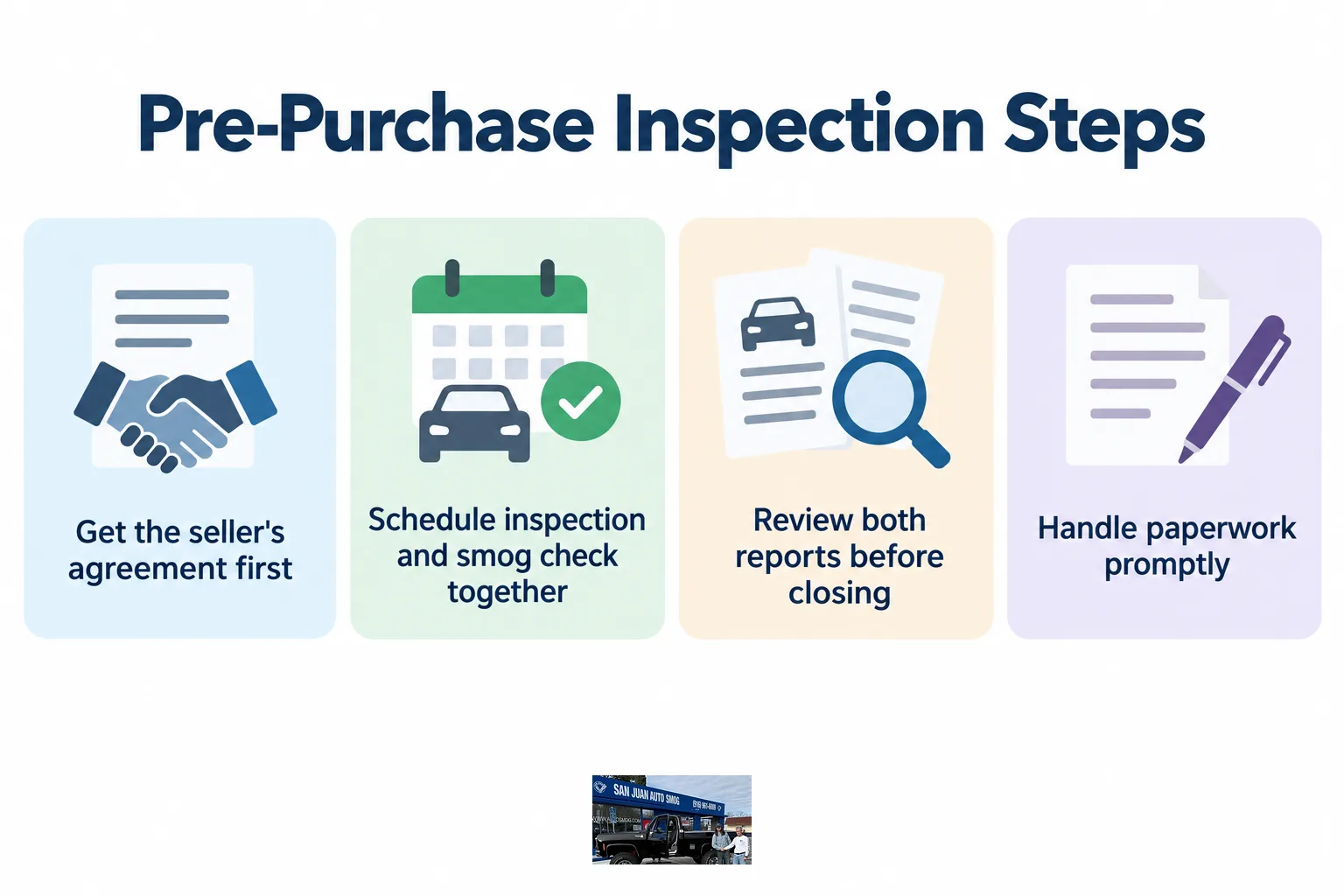
- Get the seller's agreement first. Confirm they'll allow an inspection before you pay a deposit or sign anything binding.
- Schedule the inspection and the smog check close together. If the car is 2000 or newer, a walk-in smog slot is often available the same day; older vehicles need a booked appointment.
- Review both reports before closing. A clean mechanical report paired with a failed smog — or the reverse — changes the negotiation.
- Handle the change-of-ownership paperwork promptly. Once you have a passing smog certificate, move on the title transfer rather than letting it sit.
How do pre-purchase inspections work, logistically?
The buyer or their inspector meets the car at a shop or at the seller's location. The inspector checks fluids, brakes, suspension, tires, and looks for signs of prior damage. Most hand over the report the same day. None of this includes the emissions test required for the DMV transfer — that's a separate, state-mandated step with its own rules, covered in more detail in a guide to pre-purchase inspections in Fair Oaks.
What Is the “$3,000 Rule” for Cars?
There's no single, statewide “$3,000 rule” that applies to used car sales or smog checks in California. The phrase gets tossed around online for a handful of unrelated things: insurance total-loss thresholds, informal rules of thumb about repair cost versus a car's value, or confusion with smog-specific repair cost assistance programs, which have their own dollar figures and eligibility rules set by the state.
What should you check instead?
Skip the round number you saw somewhere and get a written repair estimate if the car fails inspection or smog. Compare that estimate to the car's actual value before deciding whether to walk away. If a vehicle fails its emissions test, knowing exactly what failed beats any flat dollar rule.
How Long Is a Smog Check Good for When Selling a Car in California?
A smog certificate used for a title transfer is only valid for a limited window after it's issued — not indefinitely. Test too early relative to the actual sale and DMV filing date, and the certificate can lapse before the paperwork goes through. That means paying for another test.
Who should order the smog check, buyer or seller?
California generally puts the seller on the hook for providing a valid smog certificate at the time of sale, though the exact requirements and exemptions shift depending on the vehicle's age and the transaction type. The specifics for your situation are laid out on the change of ownership smog check page, worth a read before you schedule anything.
What Are the New Laws in California Regarding Used Cars in 2026?
California periodically adjusts which vehicles are exempt from smog testing and under what conditions, and 2026 brings changes worth checking before you buy or sell. Don't guess at details that shift year to year — confirm the current exemption rules directly instead of relying on last year's assumptions.
Where can you check what applies to your sale?
Start with the page built specifically around the current rule changes: California smog check exemptions in 2026. Reading it before you book an inspection can save you from scheduling a test the car doesn't need — or missing one it does.
Get Your Used Car Checked Before the Sale Closes
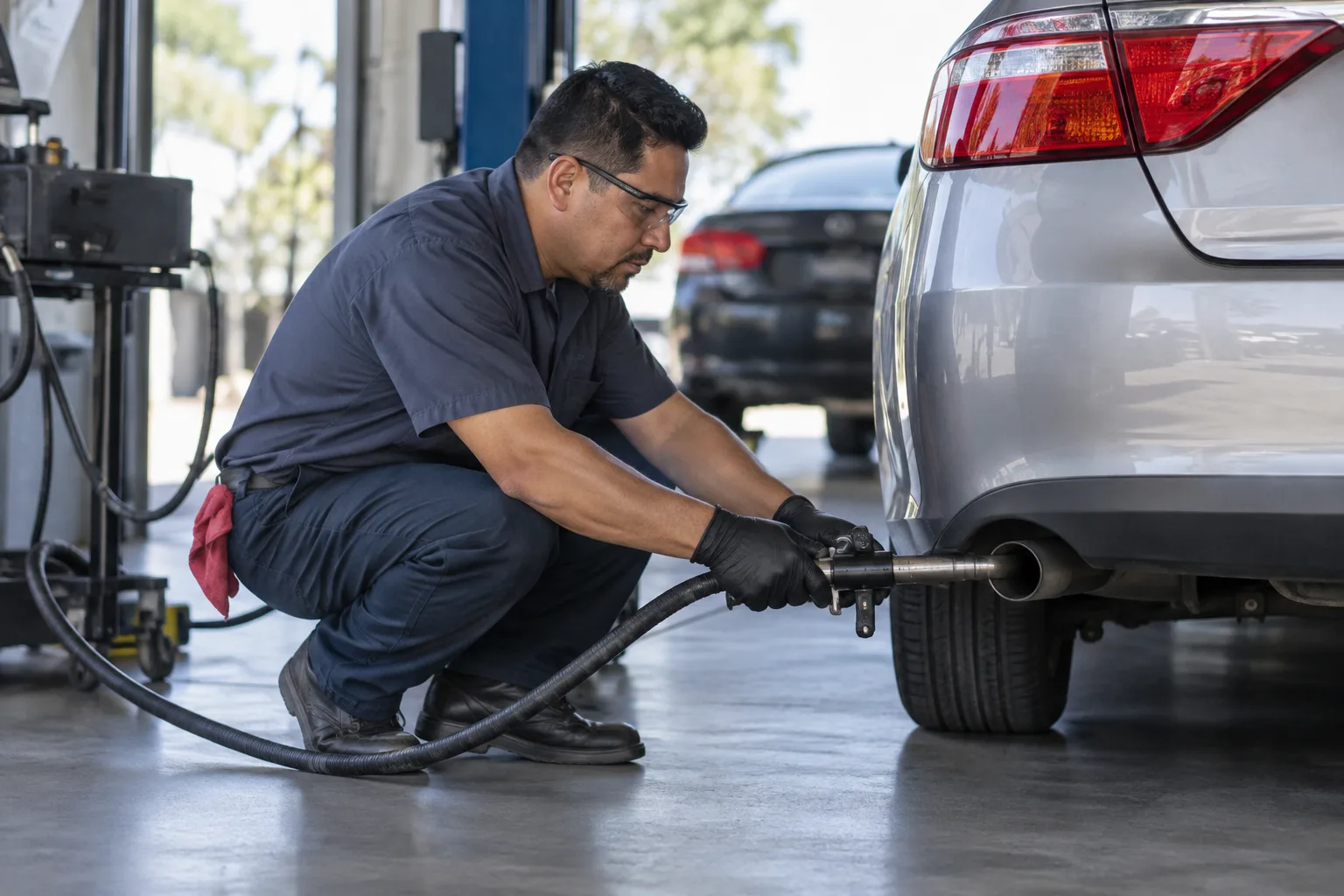
San Juan Auto Smog runs a STAR-certified smog check station at 4701 San Juan Ave in Fair Oaks. Walk-ins are welcome for 2000-and-newer vehicles, and appointments are recommended for 1999-and-older cars, RVs, vans, and heavy trucks. Pricing is transparent and depends on vehicle type, so a quick text to (916) 961-6009 gets you a straight quote before you commit to a purchase timeline.
If the car you're buying also needs an oil change before you drive it home, bundling the two saves money and a second trip — the combo runs $45 off compared to booking each separately. Start with the STAR-certified smog check page to see what to bring and how the appointment works.
Frequently Asked Questions
Do I need an appointment for a smog check on a used car I'm buying?
If the car is 2000 or newer, walk-ins are generally welcome. For 1999-and-older vehicles, RVs, vans, heavy trucks, or many diesels, book an appointment so the station can plan for the extra time those tests take.
Can the seller get the smog check instead of me as the buyer?
Yes, and in many California used car sales the seller is the one responsible for providing a valid smog certificate at the time of transfer. Confirm who's handling it in writing before you finalize the deal.
What happens if the smog certificate expires before the sale closes?
If too much time passes between the test and the DMV filing, the certificate may no longer be valid for the transfer, and the vehicle would need to be retested. That's why booking the smog check close to the actual closing date matters more than booking it early.
Does a passing pre-purchase inspection mean the car will also pass smog?
No. A mechanical inspection and an emissions smog check look at different systems, and a car can pass one and fail the other. Treat them as two separate steps in the buying process, not one combined check.
Is there a discount if I need both a smog check and an oil change before buying a car?
Combining a smog check with a full-synthetic oil change in one visit is typically cheaper than booking the two separately, since the combo pricing bundles them together. Ask about current combo pricing when you schedule.
More articles
- Student car maintenance checklist Carmichael students can use
- Preparing a Car for a First-Time Driver in Fair Oaks
- Oil Change in Fair Oaks, CA: Pricing & Packages
- Best Smog Check Shop Near Citrus Heights, CA
- Is There a Shop That Does Smog Check and Oil Change Together?
- How Long Does a Smog Check Usually Take?