How Long Does a Smog Check Usually Take?
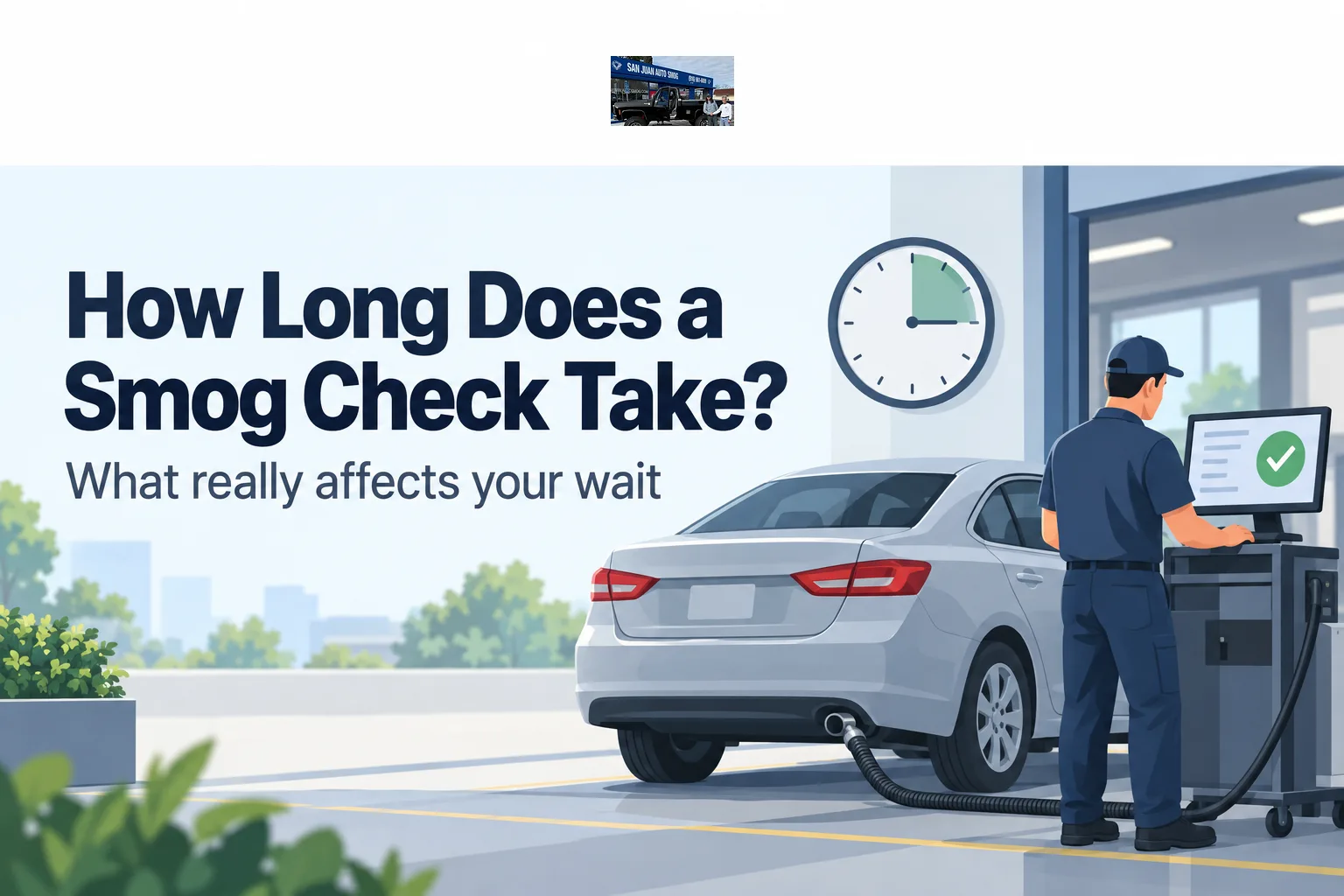
A smog check usually takes well under an hour once your vehicle is on the machine. That's the short answer. The honest one is that total visit time depends on what you're driving and how busy the station is the moment you pull in. The test itself — hooking up the OBD reader, checking the gas cap and emissions equipment, printing the result — is quick and mechanical. What stretches a visit is everything around it: how many cars are ahead of you, whether your vehicle needs an appointment instead of a walk-in, and whether something under the hood needs attention before it can pass.
If you're trying to plan your morning or lunch break around this errand, the factors below matter more than any single number a website gives you.
Key Takeaways
- The test itself is short; queue length and vehicle type are what actually change your total time at the station.
- 2000-and-newer vehicles can usually walk in without an appointment, which is the fastest path for most drivers.
- 1999-and-older vehicles, RVs, vans, and heavy trucks take longer to test and should book ahead — see older vehicle smog check scheduling for what to expect.
- A failed test adds the most time of all, since it means diagnosis and repair before a retest is possible.
- Combining your smog check with an oil change in one visit saves a second trip, not necessarily time on this one.
Table of Contents
How long does a smog check usually take?
For most 2000-and-newer vehicles, the testing portion itself is brief — the bigger variable is how many vehicles are ahead of you. A technician connects to the car's onboard diagnostics, checks the gas cap, visually inspects emissions-related components, and runs the required test sequence. None of that takes long on its own. What turns a 20-minute visit into an hour-long one is almost always the line, not the test.
Does the test take longer for certain vehicles?
Yes. Vehicles without full OBD-II systems — generally 1999 and older — need a different test method that takes more hands-on time, which is why an appointment is recommended for them instead of a walk-in. RVs, vans, heavy trucks, and many diesel vehicles also run longer because of their size and testing requirements. Booking an RV or heavy truck smog check ahead of time matters more for those categories than it does for a standard passenger car.
What happens if my car fails?
A failed test is the single biggest time factor. It shifts the job from "test and done" to "diagnose, repair, and retest." If your vehicle fails, a focused look at smog failure diagnosis can help pin down the cause before you spend time guessing. If it fails at a Test-Only station, California's Consumer Assistance Program may help cover repair costs for eligible drivers — eligibility details are at bar.ca.gov/cap. Either way, plan for a second visit if repairs are needed. No shop can know in advance whether a given car will pass.
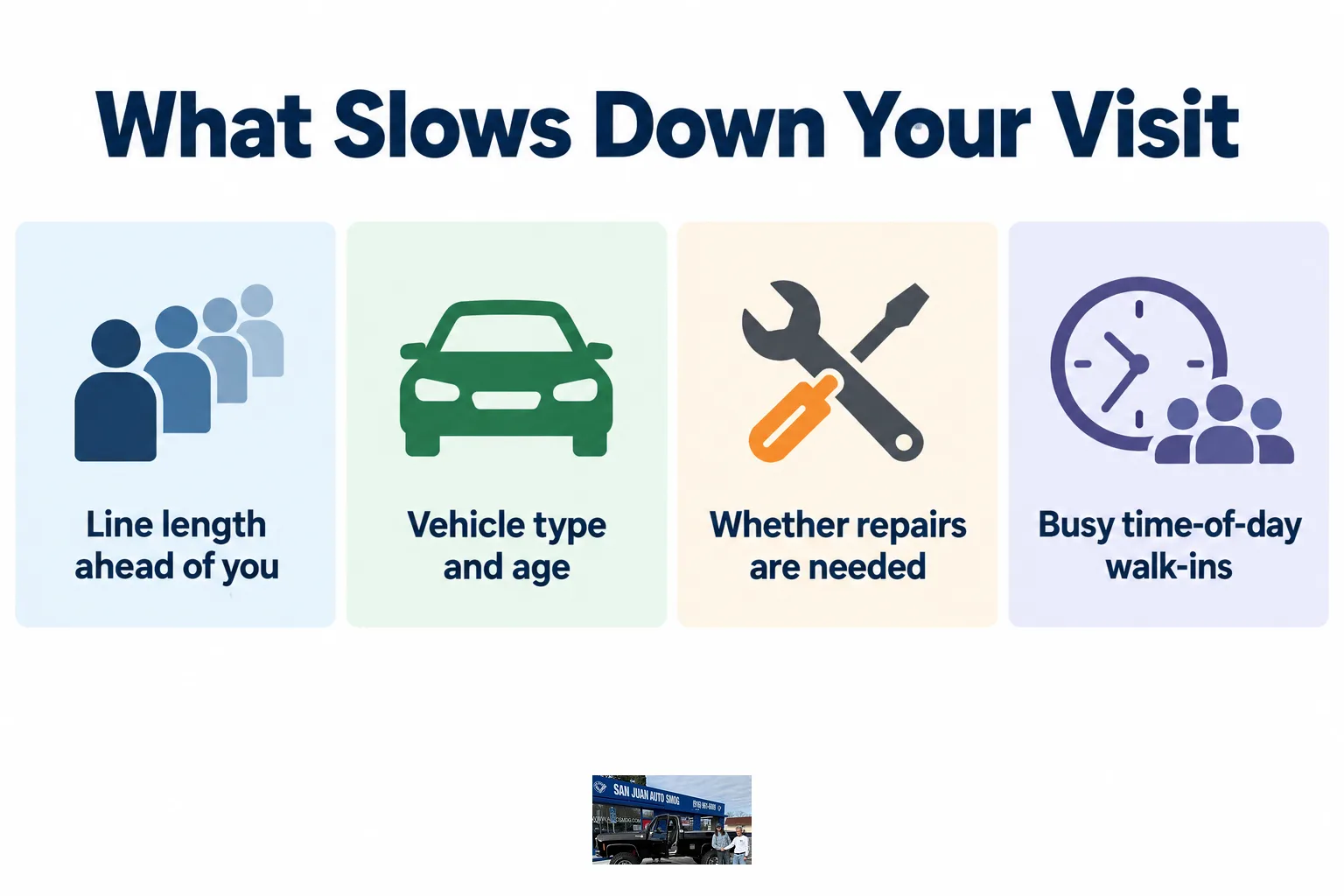
What makes a smog check take longer?
Line length, vehicle type, and whether repairs are needed are the three real variables. Everything else — paperwork, printing the certificate, payment — only adds a few minutes on top.
Does time of day matter?
Walk-in volume tends to follow normal errand patterns: mornings before work, lunch hours, and the days right before a DMV registration deadline are busier. If your schedule is flexible, a midweek midday slot outside of lunch rush usually beats a Monday morning or a weekend before the end of the month.
Should I walk in or book an appointment to save time?
Walk in if your 2000-or-newer vehicle just needs a standard test; book ahead for anything older, larger, or diesel. Walk-ins are welcome for 2000-and-newer vehicles, which covers most daily drivers headed in for a routine DMV renewal test. For anything outside that — a 1999-or-older car, an RV, a van, a heavy truck, or a diesel vehicle — an appointment is the better route, since those tests take more setup and technician time.
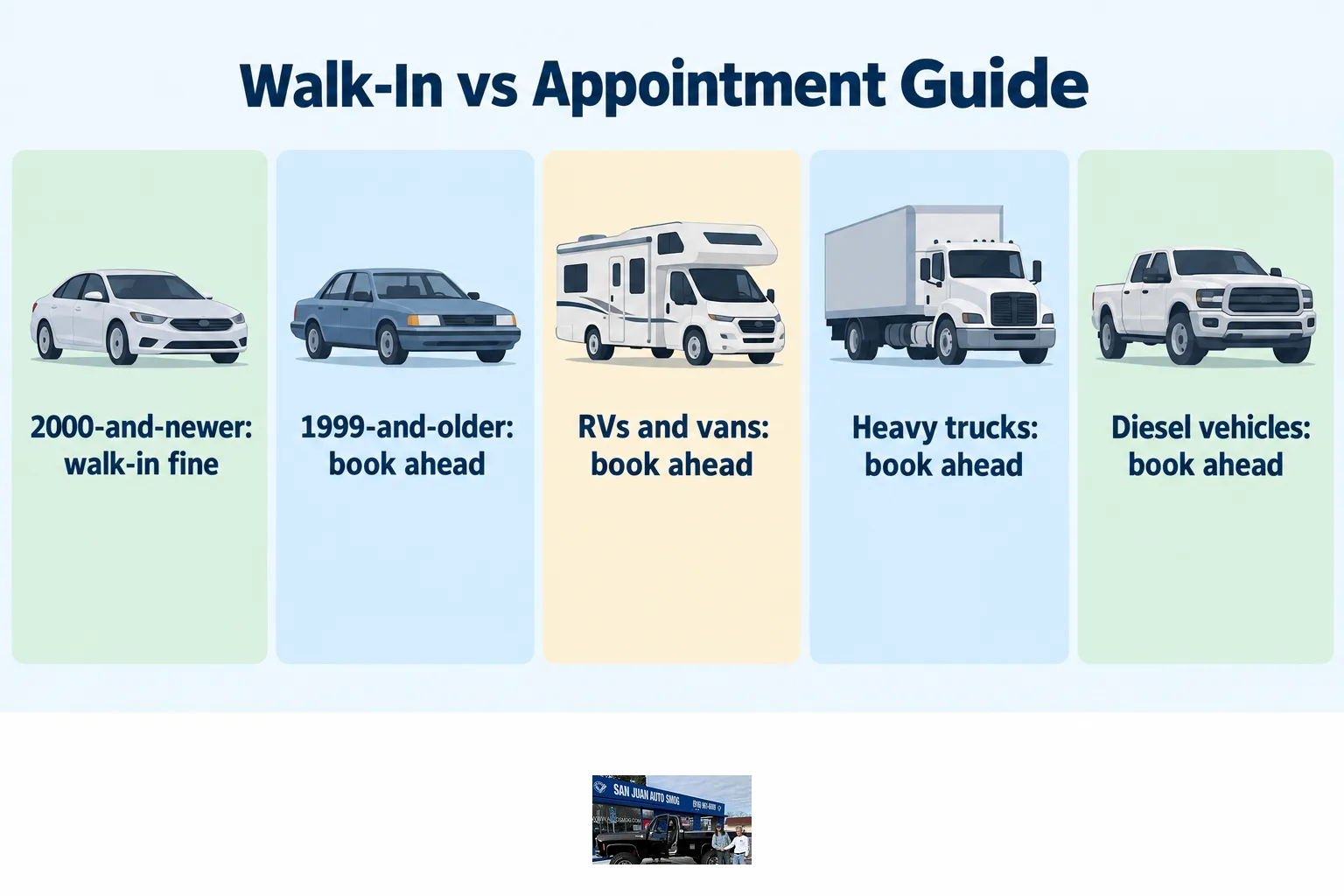
- Check your vehicle's model year. 2000 and newer generally means walk-in is fine; 1999 and older means call or book ahead.
- Confirm if your DMV notice requires a STAR station. If it specifies a directed test, you'll need a STAR-certified station regardless of your vehicle's age.
- Decide if you want an oil change the same day. Combining the two into one visit means one trip instead of two, even if the combined visit itself runs a bit longer.
How long does a smog and oil change combo take?
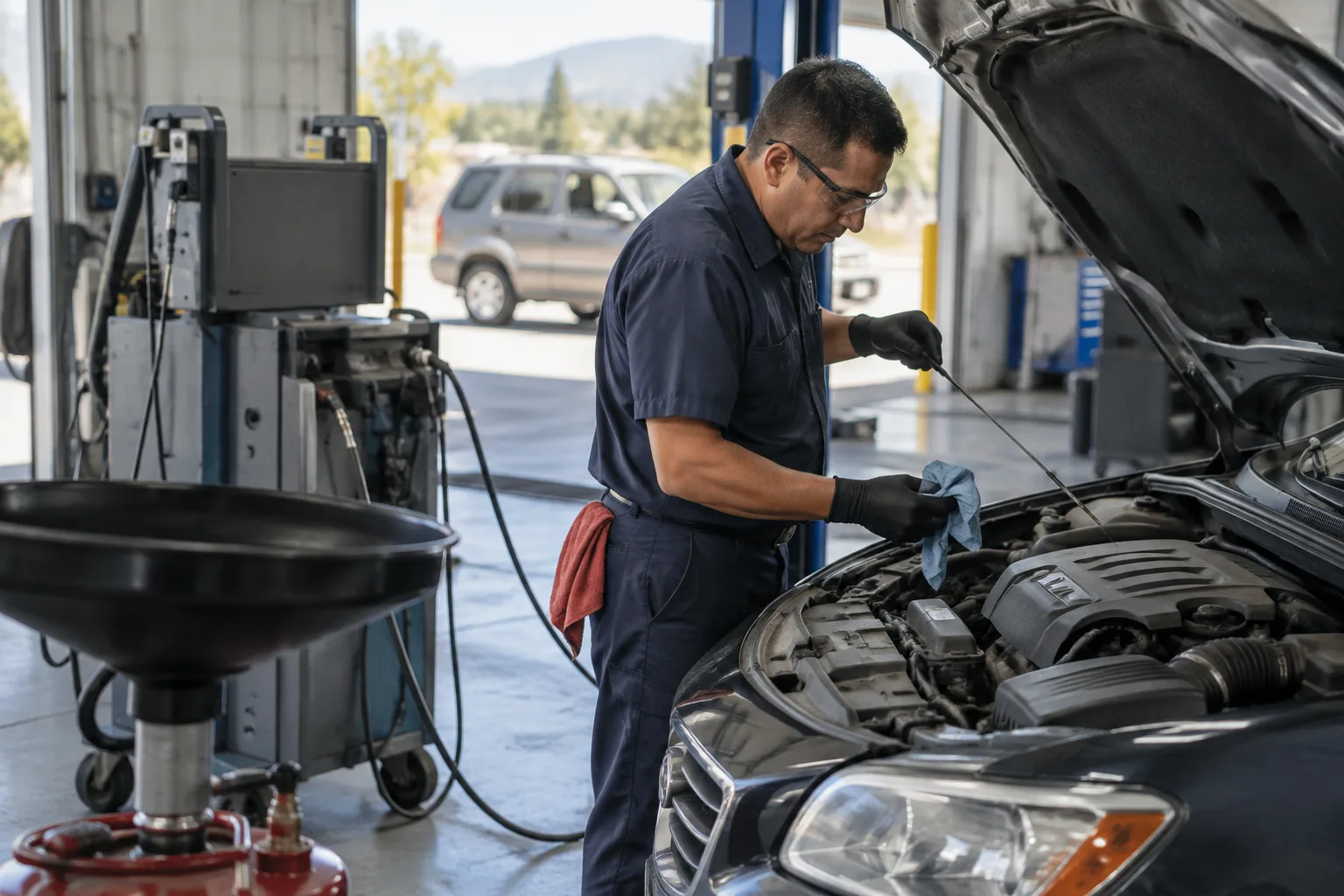
Doing both in one visit takes longer than a smog check alone, but shorter than two separate trips. An oil change adds its own chunk of service time on top of the smog test — draining and replacing fluid, swapping the filter, and in some packages a tire rotation or brake inspection. The combo isn't faster minute for minute than doing each separately. What it saves is the second drive back.
Is the combo worth it if I'm short on time?
If your oil change is coming due anyway, pairing it with your smog check turns two errands into one stop. That's the real time savings here, not a quicker combined service. The smog + oil combo also comes with $45 off versus booking the two separately, though it's one coupon per visit, can't be stacked with other offers, and certificate or state fees are separate.
Take the Next Step With Your Smog-Test Report
San Juan Auto Smog is a STAR-certified smog check station, which means it can handle both routine tests and the directed tests some DMV notices require. Walk-ins are welcome for 2000-and-newer vehicles, and an appointment is recommended for 1999-and-older cars, RVs, vans, heavy trucks, and oil changes, so the technician has the right setup ready before you arrive. Pricing is transparent up front, and if your vehicle doesn't pass, a free retest within 60 days is included for 2000-and-newer vehicles outside of select promotions.
Skip the guesswork on timing: book your STAR-certified smog check and ask about same-visit oil change options when you schedule.
Frequently Asked Questions
How long does a smog check usually take?
The testing portion itself is brief for most 2000-and-newer vehicles. Total visit time depends mainly on how many cars are ahead of you and whether your vehicle needs a specialized test.
Do older cars take longer to smog check?
Yes. 1999-and-older vehicles use a different test method that takes more hands-on time, which is why an appointment is recommended instead of a walk-in.
Can I walk in without an appointment?
Walk-ins are welcome for 2000-and-newer vehicles. Older vehicles, RVs, vans, heavy trucks, and diesel vehicles should call or book ahead.
What happens if my car fails the smog check?
A failed test means the vehicle needs diagnosis and repair before it can be retested, which adds a separate visit. California's Consumer Assistance Program may help cover repair costs for eligible drivers after a failed Test-Only smog; check eligibility at bar.ca.gov/cap.
Does combining a smog check with an oil change take longer?
Yes, a combined visit takes longer than a smog check alone since an oil change has its own service steps. But it replaces a second separate trip and comes with $45 off versus booking each individually.
Does time of day affect how long I'll wait?
Walk-in traffic tends to pick up during typical errand windows like mornings, lunch hours, and the days before a DMV deadline. A midweek midday visit outside peak times is often quicker.