Car Warranty and Oil Changes: What You Pay Out of Pocket
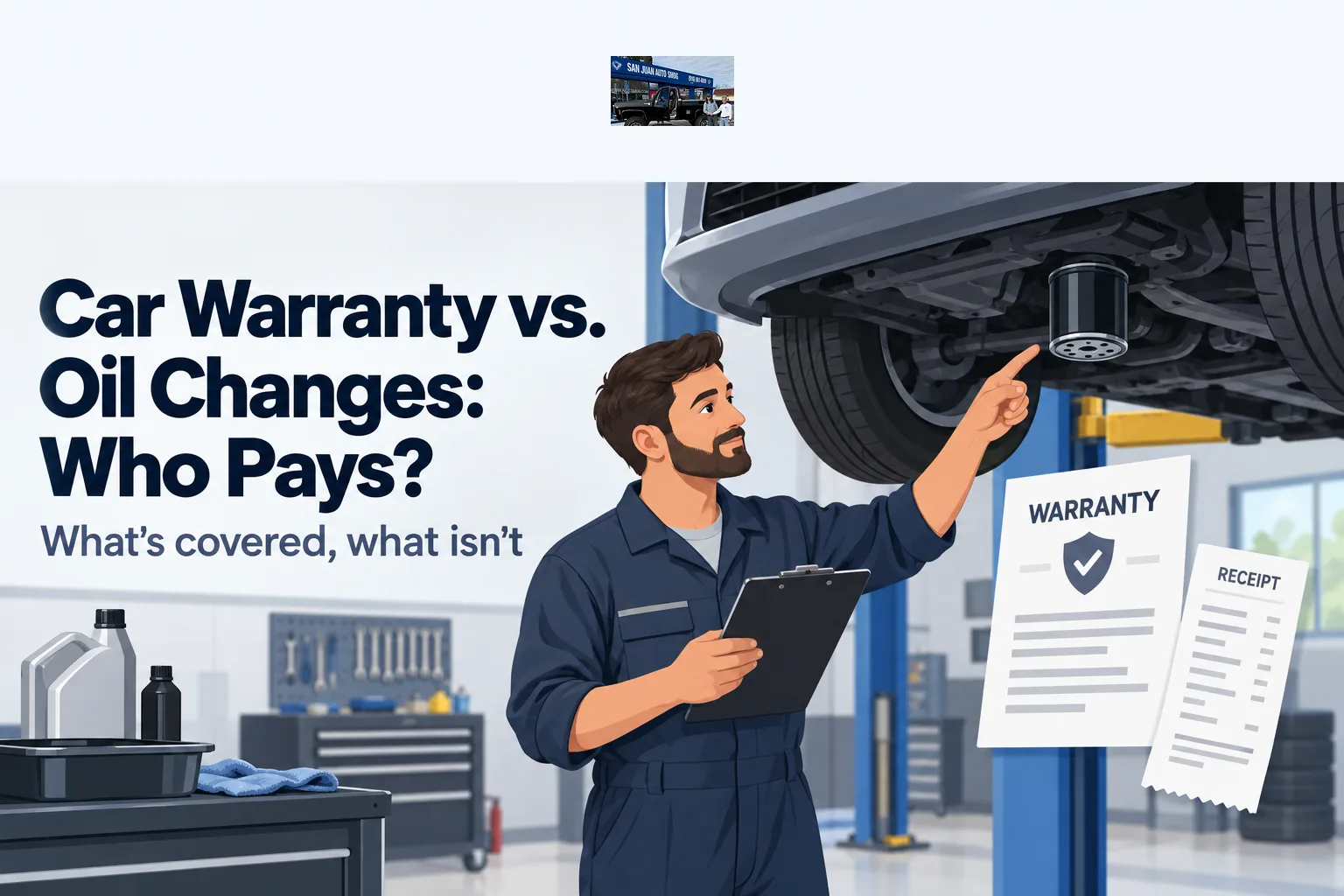
Short answer: no, a car warranty does not cover oil changes. Warranties pay for repairs when a covered part fails. An oil change is routine maintenance, something you're expected to handle on your own schedule and your own dime — the same way you pay for gas or tires.
That distinction trips up a lot of owners, especially new ones trying to figure out what a dealership will and won't cover. Below: what warranties actually skip, what a reasonable oil change costs, and how long you can stretch one before it turns into a bigger problem than any warranty would ever touch.
Key Takeaways
- Oil changes, filters, and other wear items are maintenance, not warranty repairs, so you pay for them no matter where you bought the car.
- There's no official “$3,000 rule” written down anywhere — it's shorthand for weighing a repair bill against what your car is worth.
- A full-synthetic oil change commonly lands well above $50 once quarts, filter, and labor are counted, so a price near $120 isn't automatically a red flag.
- Stretching oil changes past a year or two risks sludge buildup that no warranty will pay to reverse.
- Booking a full-synthetic oil change on a regular schedule protects both your engine and your receipts if a warranty question ever comes up.
Table of Contents
What Are Two Items Typically Not Covered in a Car Warranty?
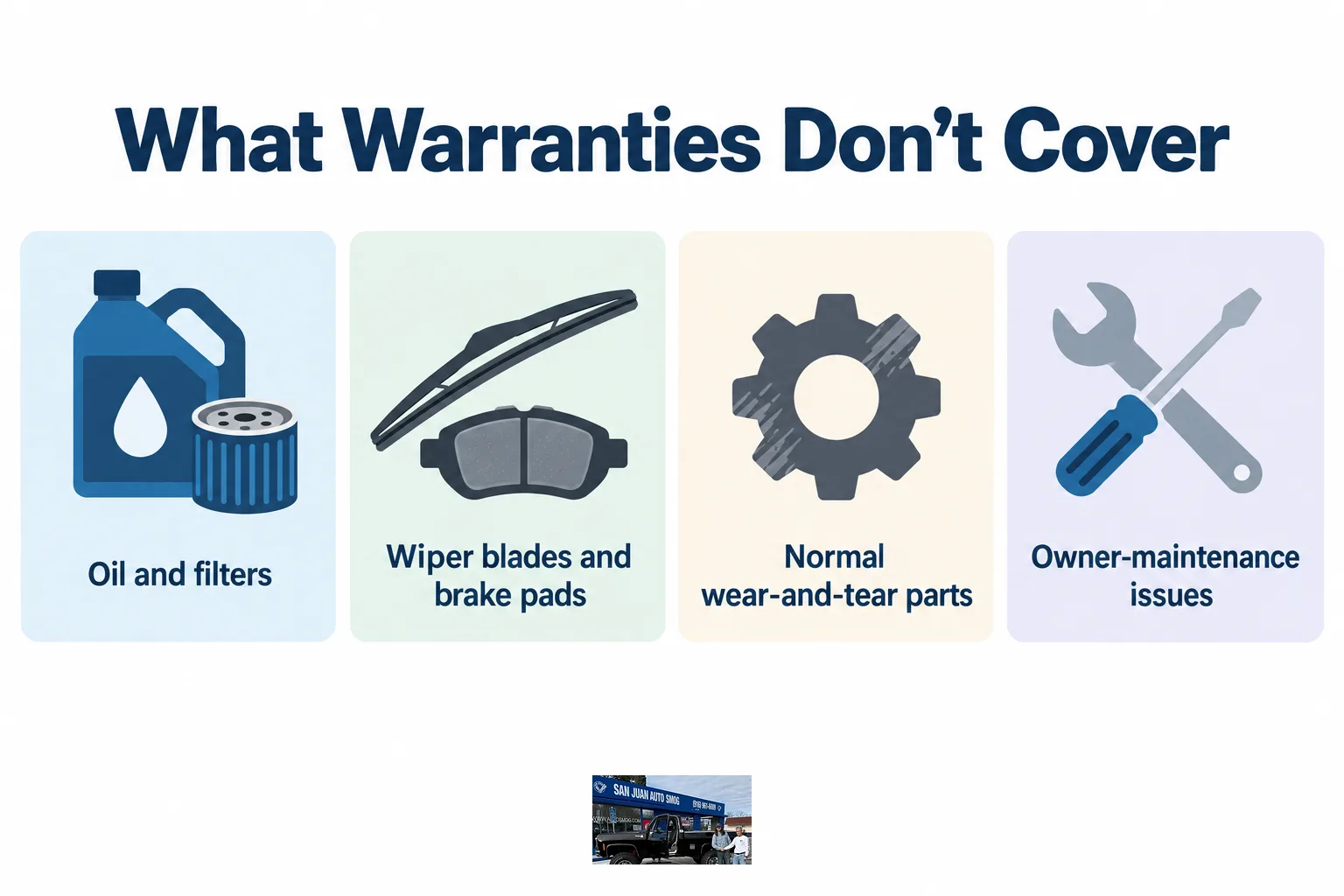
Routine maintenance items — oil and filters, plus wear-and-tear parts like wiper blades and brake pads — are the two categories warranties almost never touch. A factory or extended warranty is built to cover defects: a part that fails because it was made or installed wrong. It isn't built to cover parts that wear out through normal use, because every part wears out eventually.
Why does the distinction matter?
If a transmission fails from a manufacturing defect, a warranty claim makes sense. If an engine gets damaged because oil wasn't changed on schedule, that's treated as an owner-maintenance issue — and it can be the reason a claim on something bigger gets denied. Keeping maintenance current isn't just about performance. It's what keeps the warranty itself intact for the things it's actually supposed to cover.
What Is the $3000 Rule for Car Repairs?
The “$3,000 rule” isn't an official policy anywhere — it's a rule of thumb for deciding whether a repair is worth paying for. Compare the repair estimate to what the car is actually worth. If the bill starts approaching or passing the car's value, many owners treat that as the point to think about replacing the vehicle instead of fixing it.
Does this apply to oil changes?
No. An oil change doesn't come close to that threshold. The rule matters more for something like a failed transmission or a cracked block — the kind of expensive repair that skipped oil changes can eventually cause.
Is $120 Normal for an Oil Change?
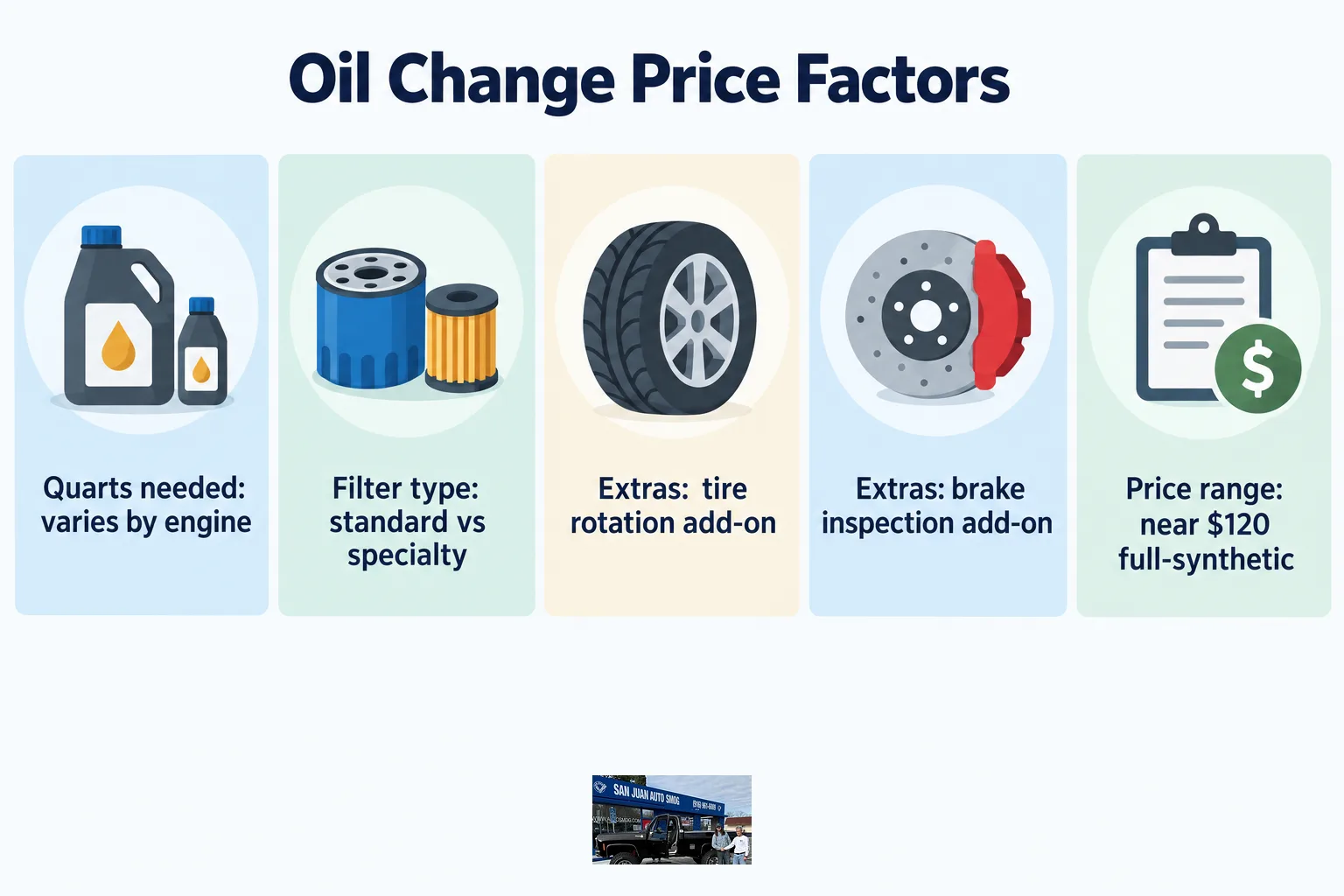
Yes, $120 is within a normal range for a full-synthetic oil change, depending on the vehicle and what's included. Price depends on how many quarts the engine takes, whether the filter is standard or specialty, and whether the visit bundles in extras like a tire rotation or brake inspection.
What should a fair price include?
Look for a package that states exactly what's covered — oil type, quart count, filter — rather than a vague flat fee. A full-synthetic oil change with up to five quarts and a standard filter sits at one end of that range; add a tire rotation and brake inspection and the price climbs from there. For a breakdown by package, the oil change pricing guide lays out what each tier typically includes.
Can You Go Two Years Without Changing Oil?
No — going two years without an oil change risks sludge buildup, reduced lubrication, and accelerated engine wear, even with full-synthetic oil. Synthetic oil stretches the interval compared to conventional oil, but it still breaks down over time and with mileage. Most manufacturer schedules call for a change well inside that two-year window.
What actually happens if oil sits too long?
Oil loses its ability to lubricate and carry away heat as it ages, whether the car gets driven much or not. Left long enough, it thickens into sludge that can block oil passages. That's a maintenance failure, not a parts defect — which puts it outside what any warranty is built to pay for.
- Check your owner's manual interval. Most full-synthetic schedules fall well under two years or a set mileage figure, whichever comes first.
- Track the date, not just the mileage. A car driven rarely still needs an oil change on a time-based schedule, since oil degrades whether or not it's used.
- Keep the receipt. A dated, itemized oil change record is what you'd want on hand if a dealership ever questions whether maintenance was kept current.
Get Your Oil Change Done Right, Every Time
Keeping oil changes on schedule is the simplest way to dodge the kind of engine damage no warranty will fix. San Juan Auto Smog offers full-synthetic oil changes by appointment, with transparent pricing laid out before you book — no surprise add-ons once the car's on the lift.

If a smog check is also due, getting both done in one visit saves a trip: the smog check and oil change combo runs $45 off compared to booking them separately. Pair that with the fact that walk-ins are welcome for smog checks on 2000-and-newer vehicles, and it's an easy way to knock out two items at once.
Book a full-synthetic oil change and leave with a dated receipt worth keeping.
Frequently Asked Questions
Does doing your own oil changes invalidate your warranty?
No, not by itself. Under the federal Magnuson-Moss Warranty Act, a manufacturer can't void your warranty just because you did your own maintenance or used an independent shop — they'd need to show the DIY work actually caused the failure being claimed.
Why isn't an oil change covered under car insurance?
Car insurance pays for damage from accidents, theft, or covered events — not for routine upkeep. An oil change is scheduled maintenance you'd need regardless of whether anything ever goes wrong, so it falls outside what any insurance policy is designed to pay for.
Will an oil change from a quick-service chain void my warranty?
Generally no, as long as the work uses the correct oil grade and filter spec for your vehicle and you keep the receipt. What causes problems is skipping the service entirely or using the wrong oil type — not simply choosing a shop other than the dealer.
How often should I get an oil change to protect my warranty?
Follow the interval listed in your owner's manual, usually stated in both months and miles. Sticking to whichever comes first keeps your maintenance record consistent, which matters if a warranty claim on something else ever gets reviewed.
What should I keep as proof of maintenance?
A dated, itemized receipt showing the oil type, quart count, and filter used is enough in most cases. Keep these in one place — digital or paper — so you're not scrambling to prove maintenance history if a warranty question comes up later.
More articles
- How Far Ahead to Book a Used Car Check in California
- Student car maintenance checklist Carmichael students can use
- Preparing a Car for a First-Time Driver in Fair Oaks
- Oil Change in Fair Oaks, CA: Pricing & Packages
- Best Smog Check Shop Near Citrus Heights, CA
- Is There a Shop That Does Smog Check and Oil Change Together?