Where to Get a Diesel or RV Smog Check Near Sacramento
Most diesel RVs, vans, and trucks registered in California still need a periodic smog check — and finding a station near Sacramento willing to test them is the real obstacle. Plenty of shops turn these vehicles away; they take longer to test and need equipment a lot of stations simply don't have. The rules themselves depend on weight, model year, and how the vehicle is registered, so there's no single answer that covers every diesel owner.
Here's what California actually requires for diesel motorhomes, what a diesel smog check tends to run, which model years are exempt, and what's shifted lately for heavier diesel trucks.
Key Takeaways
- Most diesel vehicles under a certain weight class still need a biennial smog check, same as gasoline cars.
- Older diesels can be exempt by model year, but your DMV renewal notice has the final word on what's required for your vehicle.
- Heavier diesel trucks may fall under a separate CARB testing program instead of the standard smog check for heavy vehicles.
- RV and diesel testing takes longer than a car, so call ahead instead of counting on a walk-in.
- Pricing for a diesel or RV smog check isn't flat-rate — it depends on vehicle type, so check a Sacramento-area smog check page or call before you drive over.
Table of Contents
Do you have to smog a diesel motorhome in California?
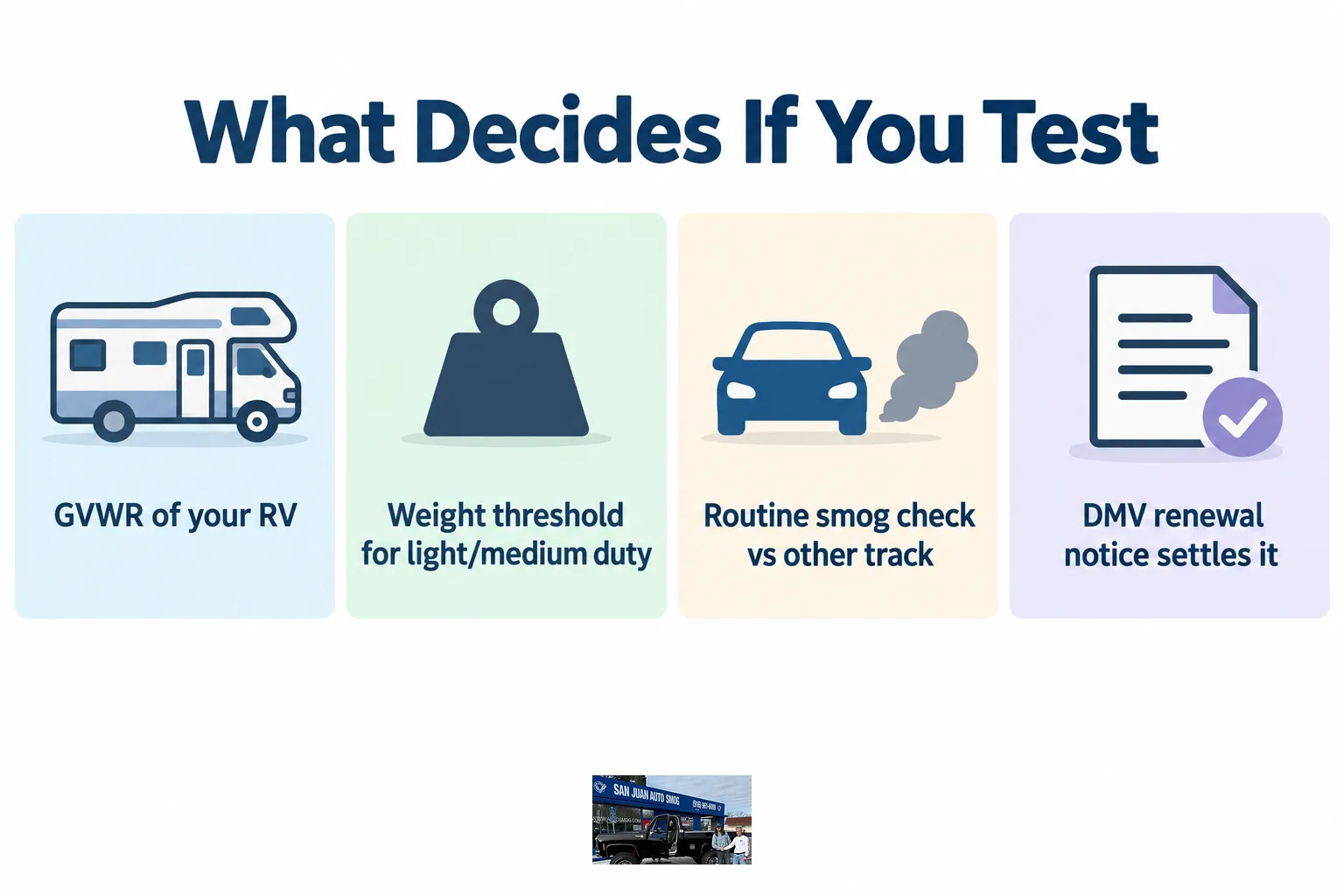
Yes, in most cases — unless your motorhome is old enough or heavy enough to fall outside the standard program. California requires biennial smog testing for diesel-powered vehicles just like gasoline ones, provided the vehicle sits under the weight threshold used for light- and medium-duty testing. Your DMV registration renewal notice settles it either way: it tells you directly whether a smog certificate is due this cycle. Treat it as the final word, since exemptions can shift with weight class, fuel type, and how the vehicle is registered.
Does the GVWR of my RV change what's required?
Yes. A diesel motorhome's gross vehicle weight rating, or GVWR, decides which program it falls under. Lighter diesel RVs generally go through the same process as a car. Heavier units get routed into a different inspection track entirely — which is exactly why it pays to confirm the category before assuming a routine smog check covers it. The RV smog check requirements in California page breaks down how weight and registration affect the test.
How much is a diesel smog check in California?
There's no single statewide price. Diesel and RV testing typically costs more than a standard gasoline smog check, simply because of the added time and equipment involved. Price depends on the station, the vehicle's weight class, the test method required for its model year, and whatever repairs turn up along the way. A diesel pickup tests differently than a 1990s motorhome — and that difference shows up in both time and cost.
Because pricing swings this much by vehicle, the most useful move is getting a quote before you show up rather than assuming a flat fee. The smog check cost guide for Fair Oaks walks through what sets the price for different vehicle types.
What year are diesels smog exempt in CA?
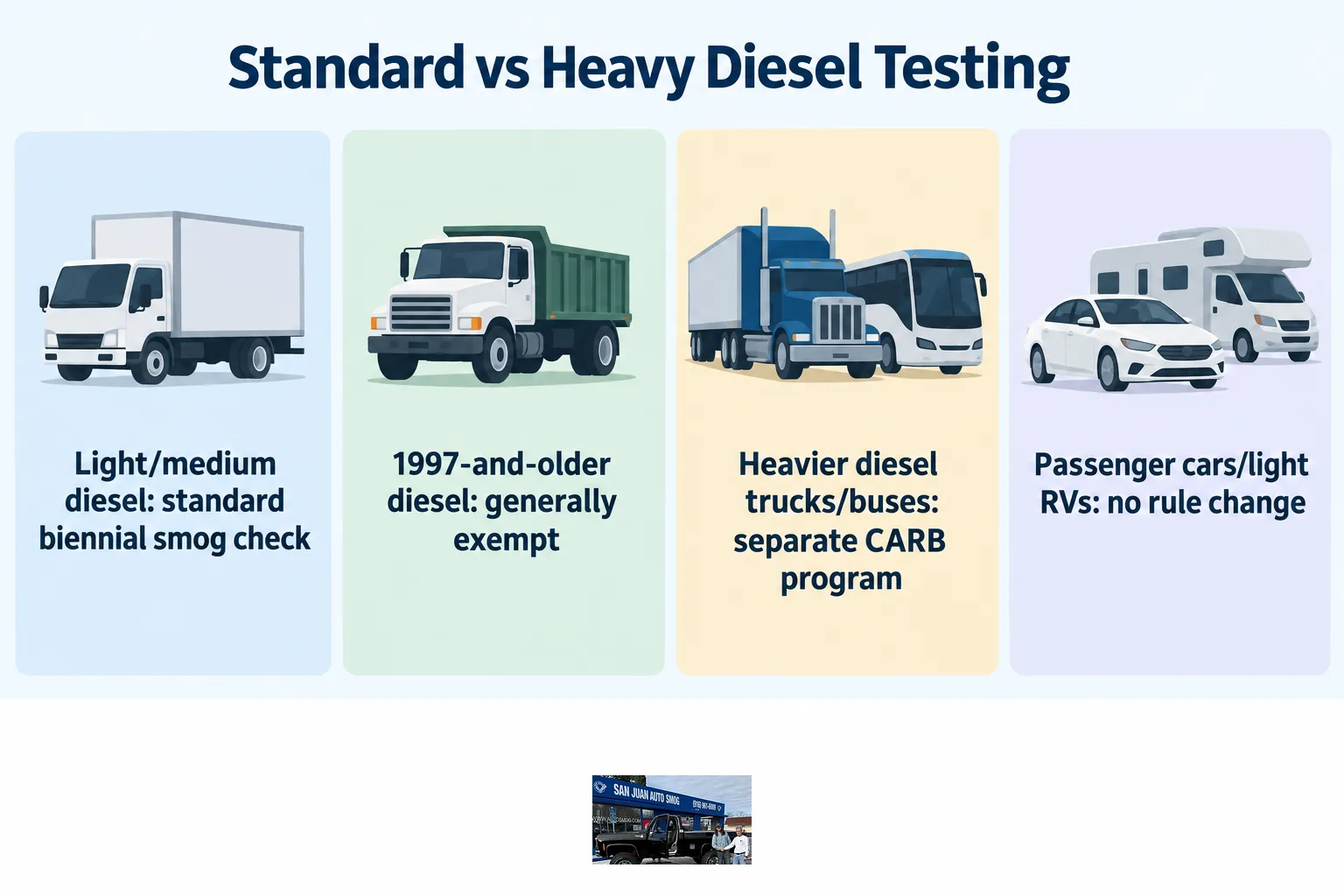
Older diesel vehicles are generally exempt. 1998-and-newer diesels under the applicable weight cutoff are typically required to test. California's Bureau of Automotive Repair has historically exempted diesel vehicles of model year 1997 and older from the standard smog check program, with 1998-and-newer diesels under the light- and medium-duty weight threshold required to test every two years. Rules like this get updated, so don't rely on a remembered cutoff year — your DMV renewal notice is the final confirmation.
Does an exemption mean no testing ever?
Not necessarily. A model-year exemption from the standard smog check doesn't automatically clear a heavier diesel truck or bus from separate emissions testing that applies to that vehicle class. It only means the vehicle sits outside the regular biennial smog check cycle.
What are the new diesel smog laws in California?
Heavier diesel trucks and buses are increasingly tested under a separate program from the standard smog check — this isn't an update to the existing one. Rather than changing the rules for passenger cars and light RVs, California has been shifting heavier diesel vehicles into periodic testing run through the California Air Resources Board, aimed at diesel trucks above the weight range the standard STAR smog check network covers. If your vehicle is a heavier diesel truck rather than a typical RV or van, confirm which program actually applies before booking a routine smog check. The smog check requirements for heavy vehicles page covers how that distinction plays out for local testing.
- Check your DMV notice first. It states plainly whether a smog certificate is due and which test type applies to your vehicle.
- Confirm your vehicle's weight class. That's what decides whether you need a standard smog check or fall under a separate diesel truck testing program.
- Call ahead before showing up. Diesel and RV testing runs longer than a car, so a station needs to plan the time and equipment for it.
- Ask for a price before you book. Cost varies by vehicle type — get a quote rather than assume a flat rate.
Get Your Diesel or RV Tested Near Fair Oaks
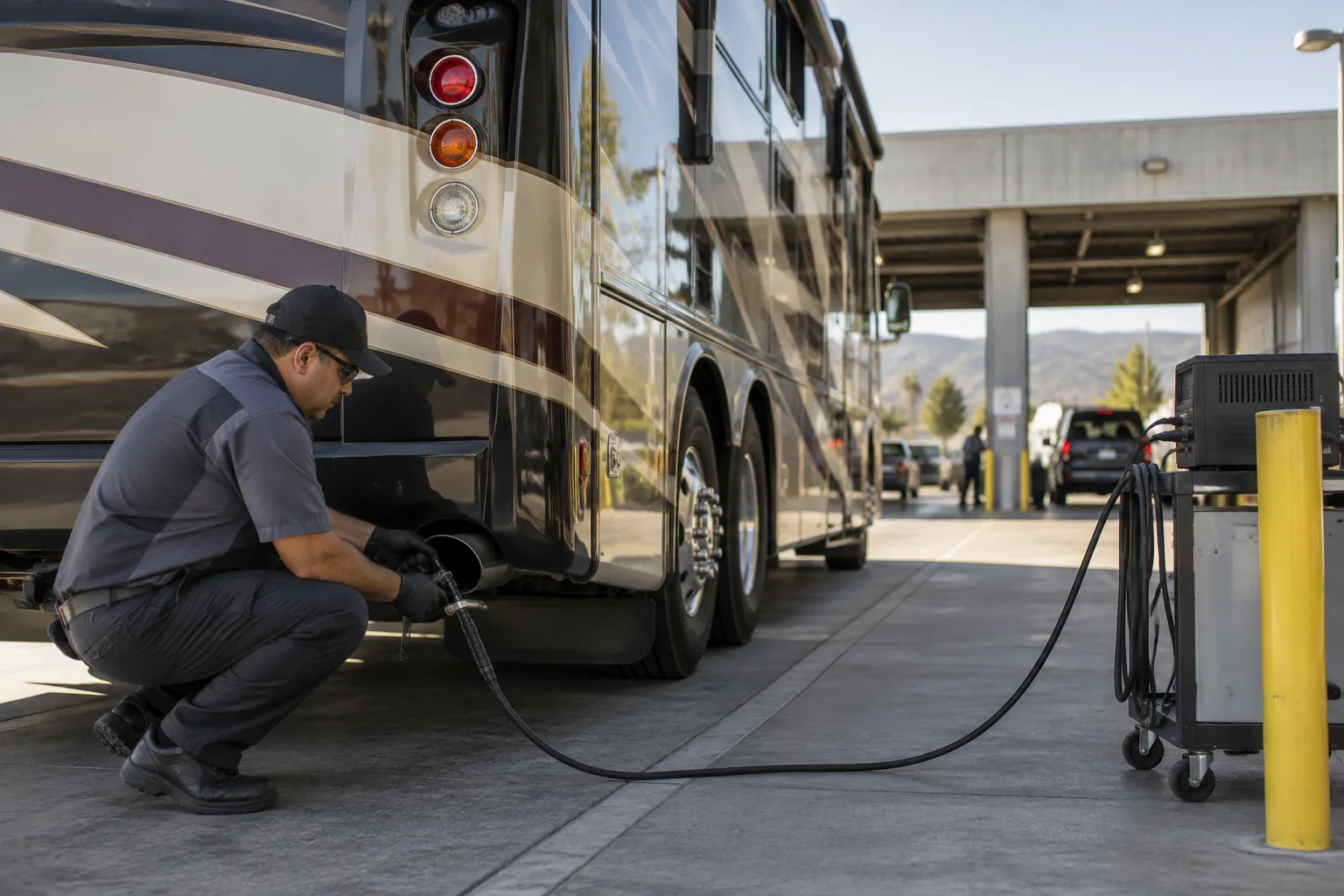
San Juan Auto Smog is a STAR-certified smog check station at 4701 San Juan Ave in Fair Oaks, serving drivers across Sacramento, Carmichael, Citrus Heights, Orangevale, and Gold River. RVs, vans, heavy trucks, and many diesel vehicles get tested here, but since this kind of testing can run up to about an hour — longer than a standard car — an appointment is recommended over a walk-in.
Pricing stays transparent and depends on your vehicle type, so a quick text gets you a straight quote before you book. If a smog check is already due and an oil change is on the list too, combining both in one visit knocks $45 off versus booking them separately.
Book or ask a quick question through the RV smog check page to lock in a time that fits your vehicle.
Frequently Asked Questions
Do diesel pickup trucks need a smog check in California?
Most diesel pickups under the standard weight threshold for light- and medium-duty vehicles need a biennial smog check, same as a gasoline truck. Heavier diesel trucks can fall under a separate testing program instead — weight class matters more here than fuel type alone.
Can I get a same-day appointment for an RV smog check?
It depends on the station's schedule, since RV and diesel testing takes longer than a routine car smog check. Calling or texting ahead gives the shop room to plan for that extra testing window instead of squeezing it into a walk-in slot.
What should I bring to a diesel or RV smog appointment?
Bring your DMV registration renewal notice — it states exactly what's required for your vehicle and test cycle. Having it on hand also helps confirm you're being tested under the right program for your vehicle's weight class.
Does a failed diesel smog check qualify for a retest?
Retest policies vary by station and by vehicle type, so confirm directly with wherever you test. For standard 2000-and-newer vehicles, a free retest within 60 days is common practice at many stations, though select promotions can exclude it.
Is a diesel smog check the same test as a gasoline smog check?
Not exactly. Diesel vehicles are typically tested with a method suited to diesel emissions rather than the same tailpipe test used for gasoline engines. The underlying requirement — holding a valid smog certificate for registration — still applies the same way.
More articles
- When to Rotate Camry Tires and Change Filters
- Power Steering Fluid Top-Off in Fair Oaks: How to Check and Add Fluid
- How Much Should a Smog Check Cost in California?
- Independent Mechanic Multi-Point Check in Orangevale
- Car Warranty and Oil Changes: What You Pay Out of Pocket
- Seasonal vehicle maintenance in Sacramento to protect your car's value