Does California Have Car Inspections? Here's What's Required
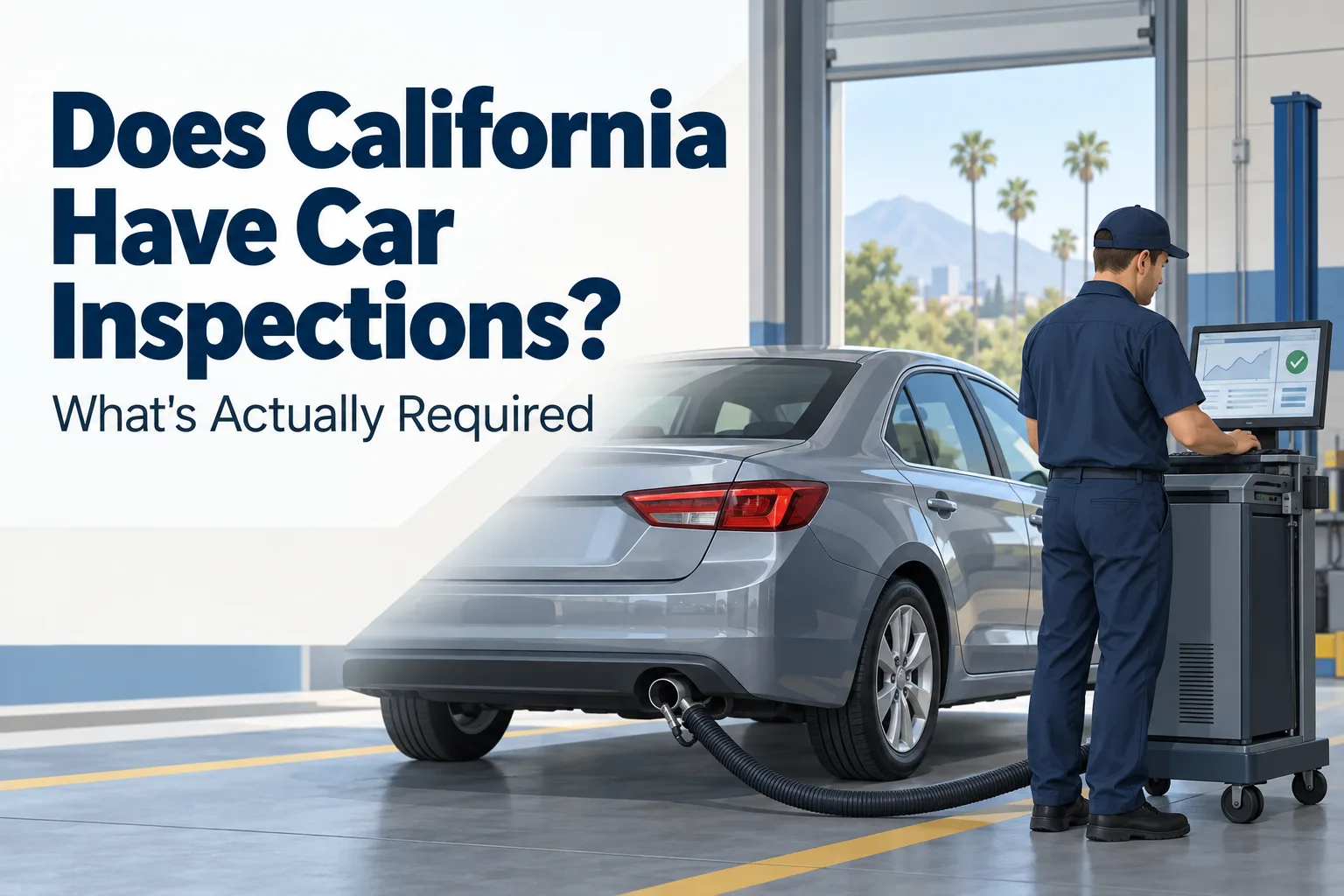
Does California have car inspections? Not in the way most drivers assume. There's no general safety inspection of brakes, tires, or lights for the typical passenger car. What California does require, on a set schedule, is a smog check — an emissions test confirming your car isn't putting excess pollution on the road.
That one difference catches a lot of people moving here from states that inspect the whole vehicle top to bottom. It also means a handful of older, modified, or historical cars follow rules that don't look anything like a standard smog check.
Here's what's actually required, what's exempt, and where to find the paperwork if your car lands in one of the odd categories.
Key Takeaways
- California requires a periodic smog check, not a general safety inspection, for most registered passenger vehicles.
- Vehicles 2000 and newer can usually get tested as a walk-in; 1999 and older vehicles test on a different procedure and should book ahead, as covered on the older vehicle smog check page.
- Jay Leno's Law lets certain specially constructed and replica vehicles skip smog checks if they stay under a mileage cap and carry historical registration.
- Smog exemption rules and forms come from California's Bureau of Automotive Repair and the DMV, not from individual shops.
- Combining a smog check with an oil change in one visit can save money over booking each separately.
Table of Contents
What Kind of Car Inspection Does California Require?
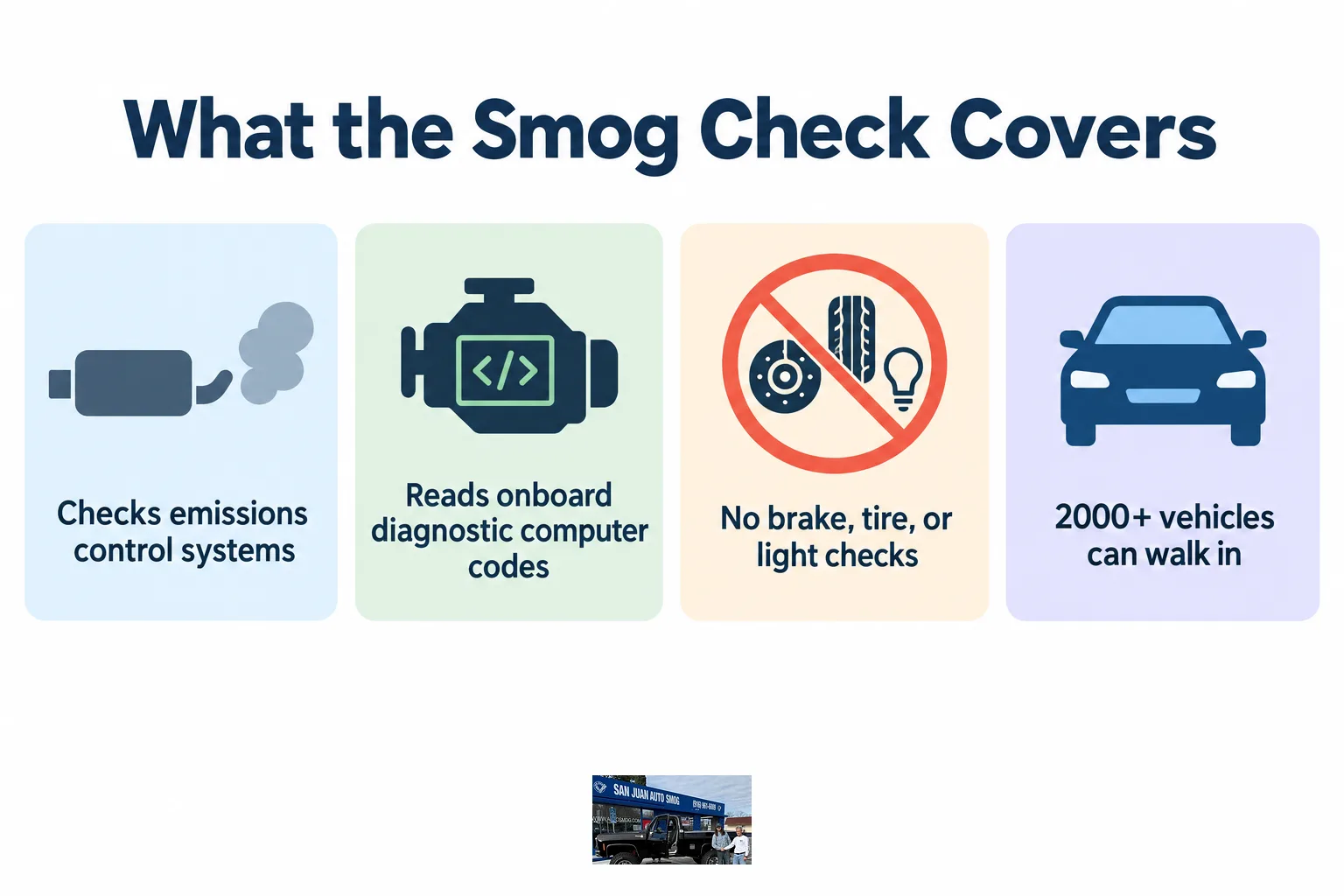
California requires a periodic smog check, not a full vehicle safety inspection. The test checks your car's emissions control systems and, on newer vehicles, reads the onboard diagnostic computer for stored codes and readiness monitors. It doesn't touch brake pads, tire tread, or headlights — none of that is part of the state-mandated test.
Does California Require a Safety Inspection Too?
No. Outside of commercial vehicles and specific DMV-ordered checks — after a title brand, say, or an out-of-state registration — there's no routine state inspection of brakes, suspension, or lights for an everyday passenger car. Drivers who want that kind of check can ask for one as a separate service, but it has nothing to do with smog certification.
Who Has to Get a Smog Check?
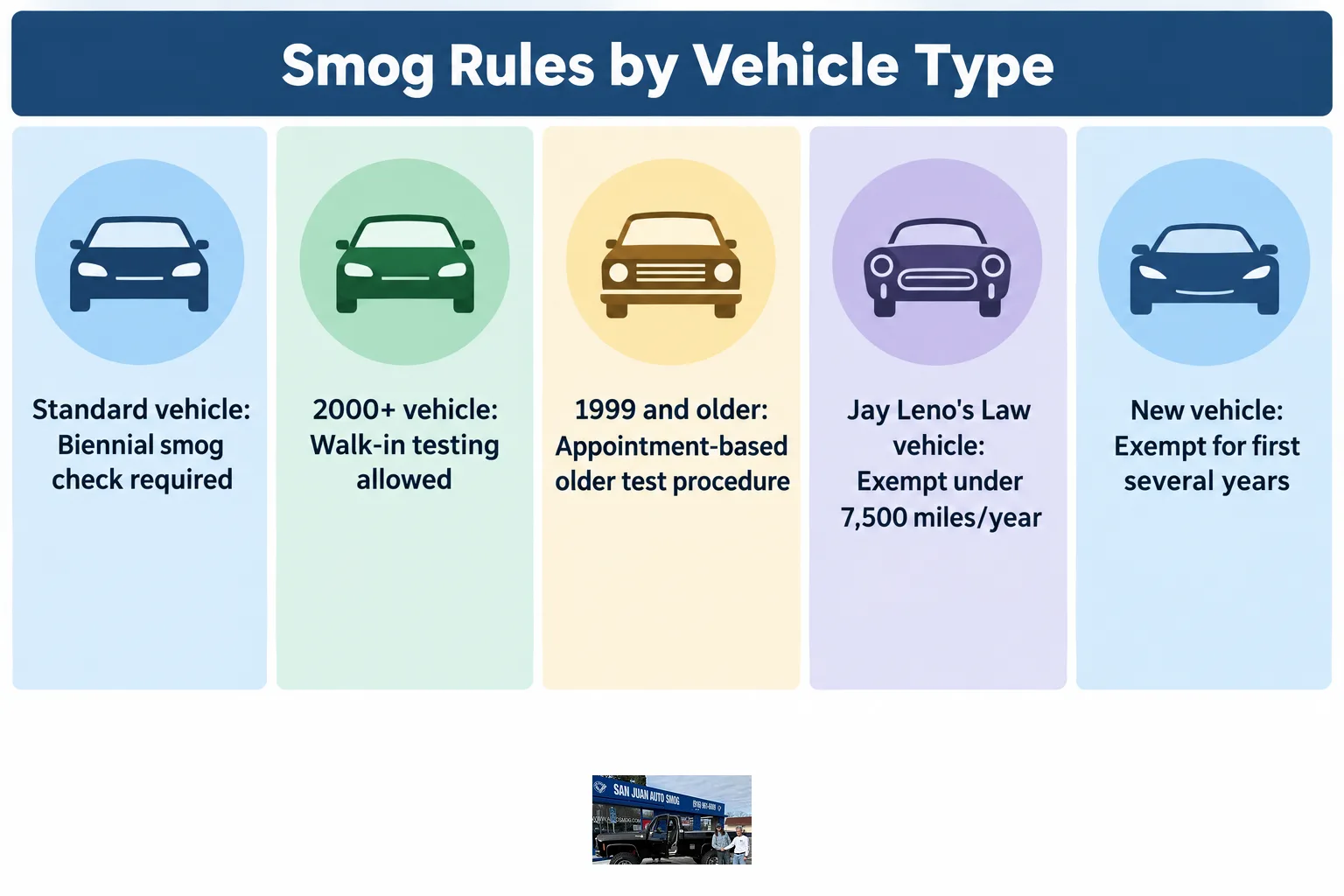
Most registered vehicles need a smog check on a biennial renewal schedule, with some exceptions by model year and vehicle type. Vehicles 2000 and newer can typically walk in without an appointment. Vehicles 1999 and older run on an older test procedure and are easier to handle with an appointment booked ahead.
Is Jay Leno's Law Still in Effect in California in 2026?
Yes, it is. Jay Leno's Law lets specially constructed vehicles and close replicas of cars built in 1968 or earlier register as historical vehicles and skip the regular smog check, as long as the vehicle meets the program's conditions.
What Vehicles Qualify for Jay Leno's Law?
The law targets specially constructed cars — kit cars, replicas — and vehicles built to replicate a pre-1969 model. Qualifying vehicles still need a one-time verification and registration process with the DMV before the smog exemption kicks in. A shop can test the vehicle in the meantime if the owner wants a baseline check.
Where Can I Find the Smog Exemption Form in California?
Smog exemption forms come from the DMV and California's Bureau of Automotive Repair, not from individual smog stations. The DMV handles historical vehicle registration paperwork. The Bureau of Automotive Repair sets and publishes the smog check program rules, including which vehicle categories are exempt and for how long.
What Other Exemptions Exist Besides Historical Vehicles?
Exemptions also cover new vehicles for their first several registration years, some electric vehicles, and a few other narrow categories the state defines. What qualifies and what paperwork each exemption needs is laid out on the California smog check exemptions page — worth checking before you assume a car is exempt.
What Is the 7,500 Mile Rule in California?
It's the annual mileage cap tied to the historical vehicle smog exemption under Jay Leno's Law. To keep the exemption, a qualifying vehicle generally can't be driven more than 7,500 miles in a given year. The rule exists for occasional-use collector and replica vehicles, not daily drivers.
What Happens If You Exceed 7,500 Miles?
Going over the cap can put the smog exemption at risk, since the whole program is built around limited, occasional use. Owners who expect to drive a qualifying vehicle more than that in a year should plan for a regular smog check instead of leaning on the exemption.
Get Your Smog Check Handled Without the Guesswork
San Juan Auto Smog runs a STAR-certified smog check station at 4701 San Juan Ave in Fair Oaks, CA, serving drivers across Fair Oaks, Carmichael, Sacramento, Citrus Heights, Orangevale, and Gold River. Walk-ins are welcome for 2000 and newer vehicles, and an appointment is recommended for 1999 and older vehicles, RVs, vans, heavy trucks, and oil changes.
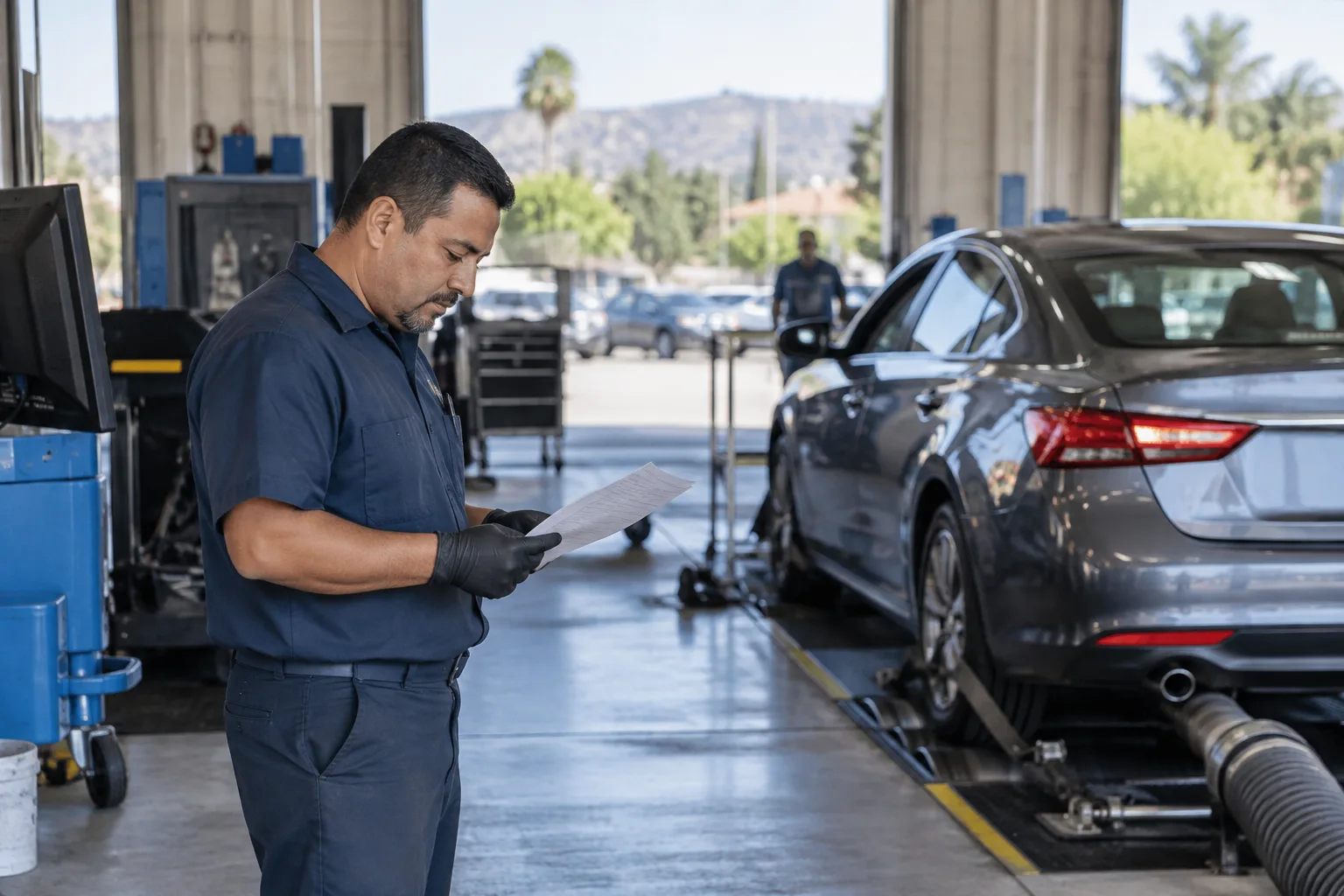
Pricing stays transparent before you commit to anything, and a free retest is available within 60 days for most 2000-and-newer vehicles that don't pass the first time. Bundling a smog check with a full-synthetic oil change in one visit also comes at a discount over booking each separately.
If your renewal notice is sitting on the counter and you're not sure which category your car falls into, book a STAR-certified smog check and get a straight answer the same day.
Frequently Asked Questions
Does every car in California need a smog check every two years?
Most registered vehicles follow a biennial smog check schedule tied to registration renewal, though the exact timing and exemptions depend on the vehicle's age and type. Checking the current DMV renewal notice for a specific vehicle is the most reliable way to confirm the deadline.
Do electric vehicles need a smog check in California?
Some fully electric vehicles are exempt from the smog check program, since there's no tailpipe emissions system to test. The exact exemption rules and which electric models qualify are covered on the smog check exemptions page.
Can a classic car skip the smog check entirely?
Only vehicles that qualify under a specific program, like Jay Leno's Law for replicas and specially constructed vehicles, or standard historical vehicle registration for genuinely old cars, can skip the regular test. Most classic and modified vehicles still need testing using the procedure appropriate to their age.
Is a smog check the same as a safety inspection?
No. A smog check only evaluates emissions-related systems and, on newer cars, onboard diagnostic data; it doesn't inspect brakes, tires, or lights. Drivers wanting a broader check on those systems need to ask for it as a separate service.
What vehicle types does a smog station typically test?
A STAR-certified station can generally test standard passenger vehicles, older vehicles with the right procedure, and many RVs, vans, and diesel vehicles, though larger vehicles usually take longer and are best scheduled ahead. Checking directly with a station on vehicle type before showing up saves a wasted trip.
More articles
- Clean Truck Check Pricing in Sacramento: What Sets Cost
- San Juan Auto Smog vs Bluautorepair: A Fair Comparison
- How Often Should I Get My Tires Rotated in Gold River?
- Brake Check in Orangevale: What’s Included and What It Costs
- How to Find an Honest Smog Shop Near Gold River
- How to Make My Car Last Longer in Citrus Heights