Change of Ownership Smog Check: California Requirements
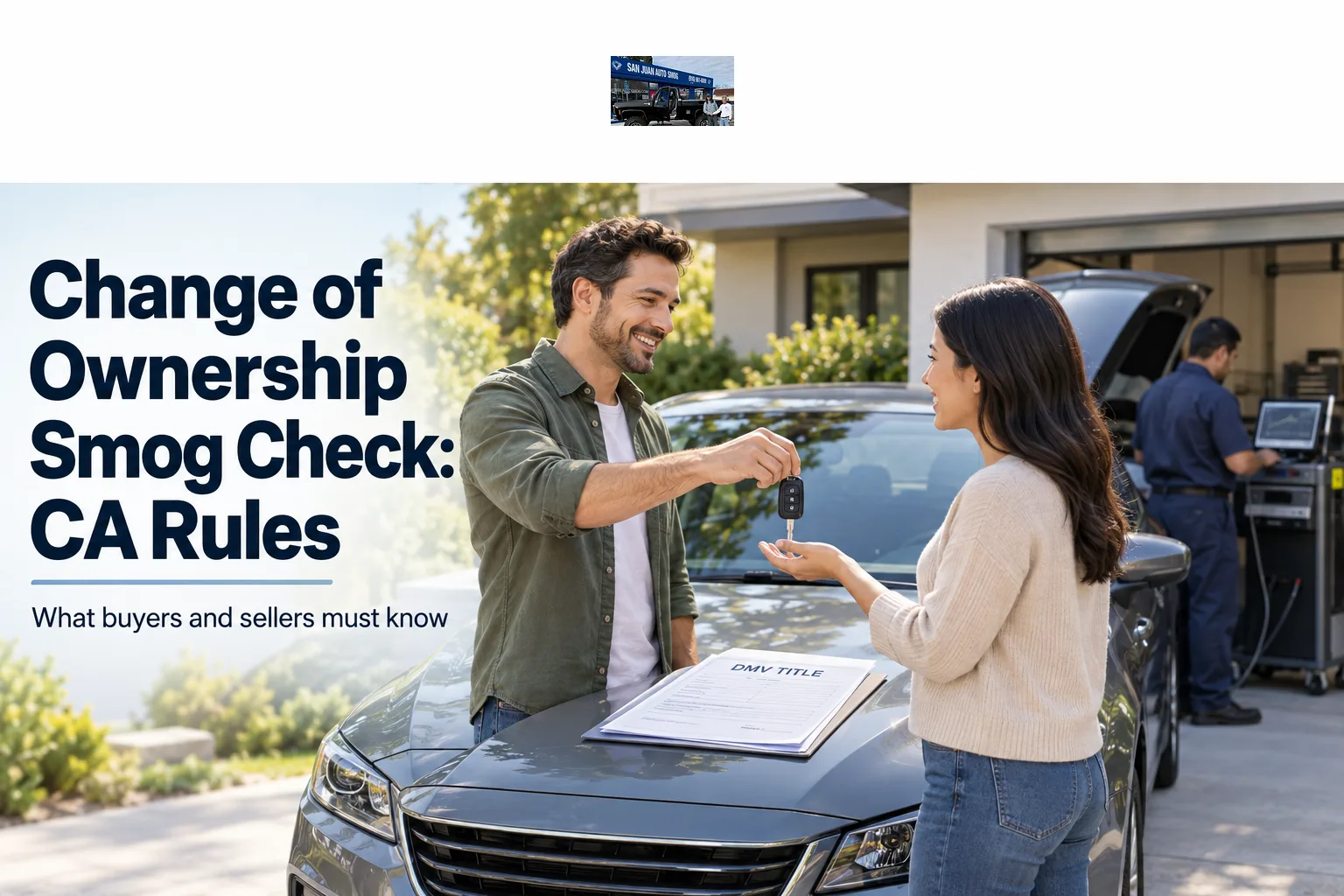
A change of ownership smog check is the emissions test California requires before the DMV will transfer a vehicle's title to a new owner, unless that specific vehicle qualifies for an exemption. The rule exists separate from the regular biennial smog schedule, so a car can be current on its registration smog and still need a fresh test the moment it's sold.
Buyers and sellers both ask about this at the worst possible time — usually mid-sale, with a DMV deadline already ticking. Knowing who's on the hook for the test, which vehicles skip it, and what happens if the car doesn't pass saves a lot of back-and-forth between the two parties.
This covers the requirement itself, who typically handles it, and what to do if the result isn't clean before the paperwork is due.
Key Takeaways
- A smog certificate is generally required at change of ownership unless the vehicle qualifies for a model-year or fuel-type exemption.
- Either the buyer or the seller can arrange the test, but the certificate has to be valid and on file when DMV paperwork is submitted.
- Vehicles from 2000 and newer can usually get a change of ownership smog check as a walk-in, while 1999-and-older vehicles should book an appointment.
- A failed test doesn't end the sale, but it does mean repairs or a price adjustment before the title can transfer cleanly.
- Out-of-state vehicles coming into California follow a different, separate testing path from an in-state ownership transfer.
Table of Contents
When Is a Change of Ownership Smog Check Required?
It's required whenever a vehicle's title changes hands in California, unless the vehicle is specifically exempt by model year or fuel type. This applies to private-party sales, dealer-to-private sales in some cases, and family transfers that aren't on California's short list of exempt transactions (like certain transfers between spouses or to a revocable trust). The test has to reflect the vehicle's current condition — an old certificate from a prior registration cycle doesn't satisfy the ownership-transfer requirement.
What steps happen at the DMV?
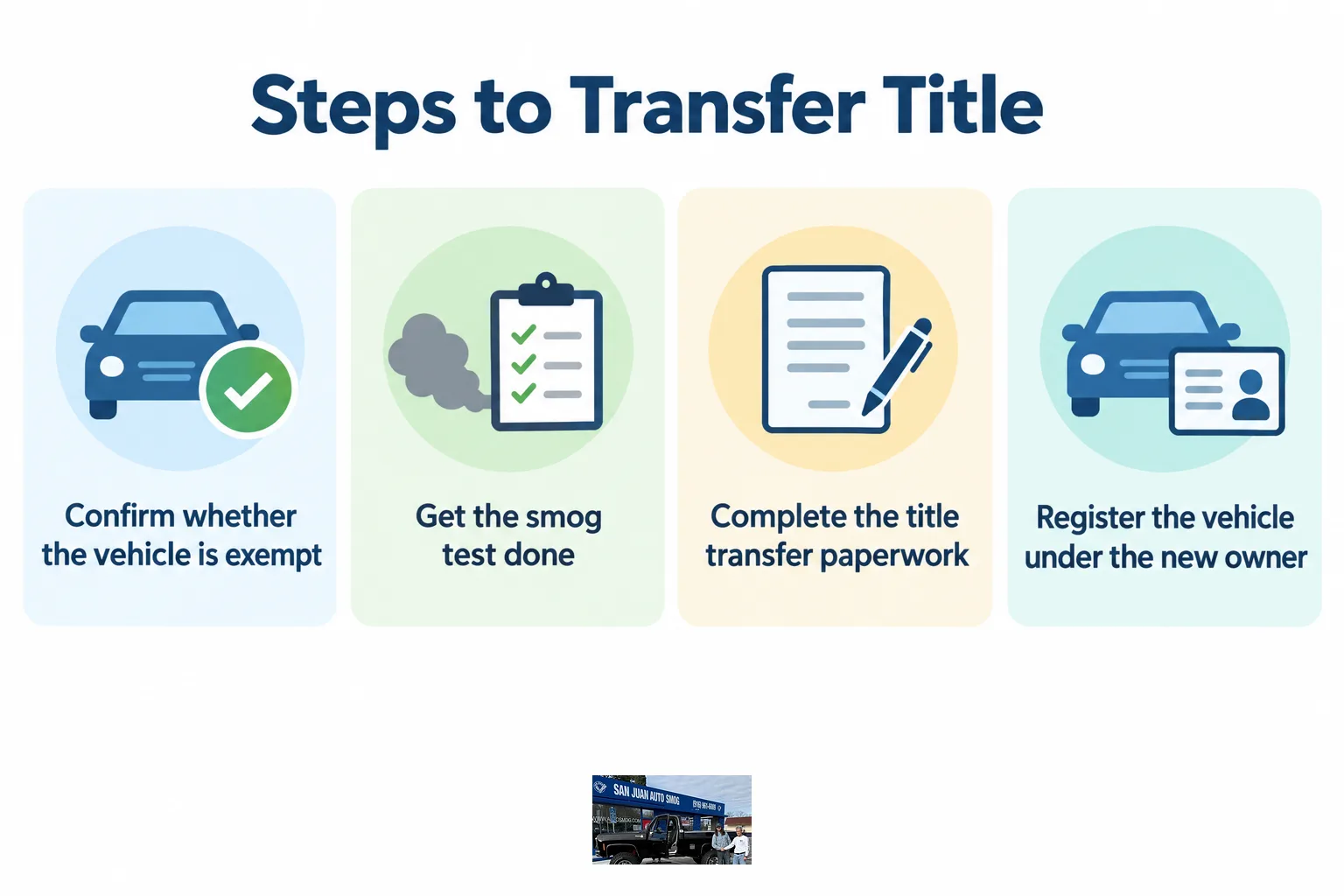
- Confirm whether the vehicle is exempt. Check the model year against California's current exemption rules before scheduling anything.
- Get the smog test done. The result has to be submitted electronically to the state by the testing station, so there's no paper certificate to lose or forget.
- Complete the title transfer paperwork. DMV checks for a passing smog result tied to the vehicle's VIN before processing the new registration.
- Register the vehicle under the new owner. Once the smog record and title paperwork both clear, the new owner gets their registration.
Who Pays for the Smog Check, Buyer or Seller?
California law puts the obligation on the seller, but in practice it's negotiated between the two parties. Many private-party sales agree that the seller covers the test as a condition of sale, since it proves the car runs clean before money changes hands. Other deals leave it to the buyer, especially if the buyer wants to pick the testing station or already plans a post-purchase inspection.
Does it matter who's listed on the certificate?
No — the smog certificate is tied to the vehicle's VIN, not to whoever paid for or requested the test. As long as it's current and on file with the state when the title transfer is submitted, it satisfies the requirement regardless of who walked the car in.
Is My Vehicle Exempt From a Change of Ownership Smog Check?
Some vehicles are exempt based on model year, and a smaller set are exempt based on fuel type or vehicle class. Exemption rules have changed more than once in recent years, so it's worth checking current status rather than assuming last year's rule still applies. The clearest way to confirm is against California's current smog check exemption rules rather than guessing by age alone.
What if the car is a diesel, RV, or heavy vehicle?
Diesel vehicles, RVs, vans, and heavy trucks often fall under different testing requirements than standard passenger cars, and some are exempt from the biennial cycle but not from ownership-transfer testing, or vice versa. Because these categories carry more exceptions, an appointment is the practical way to confirm what's actually needed for that specific vehicle before assuming either way.
What Happens If the Vehicle Fails the Smog Check?
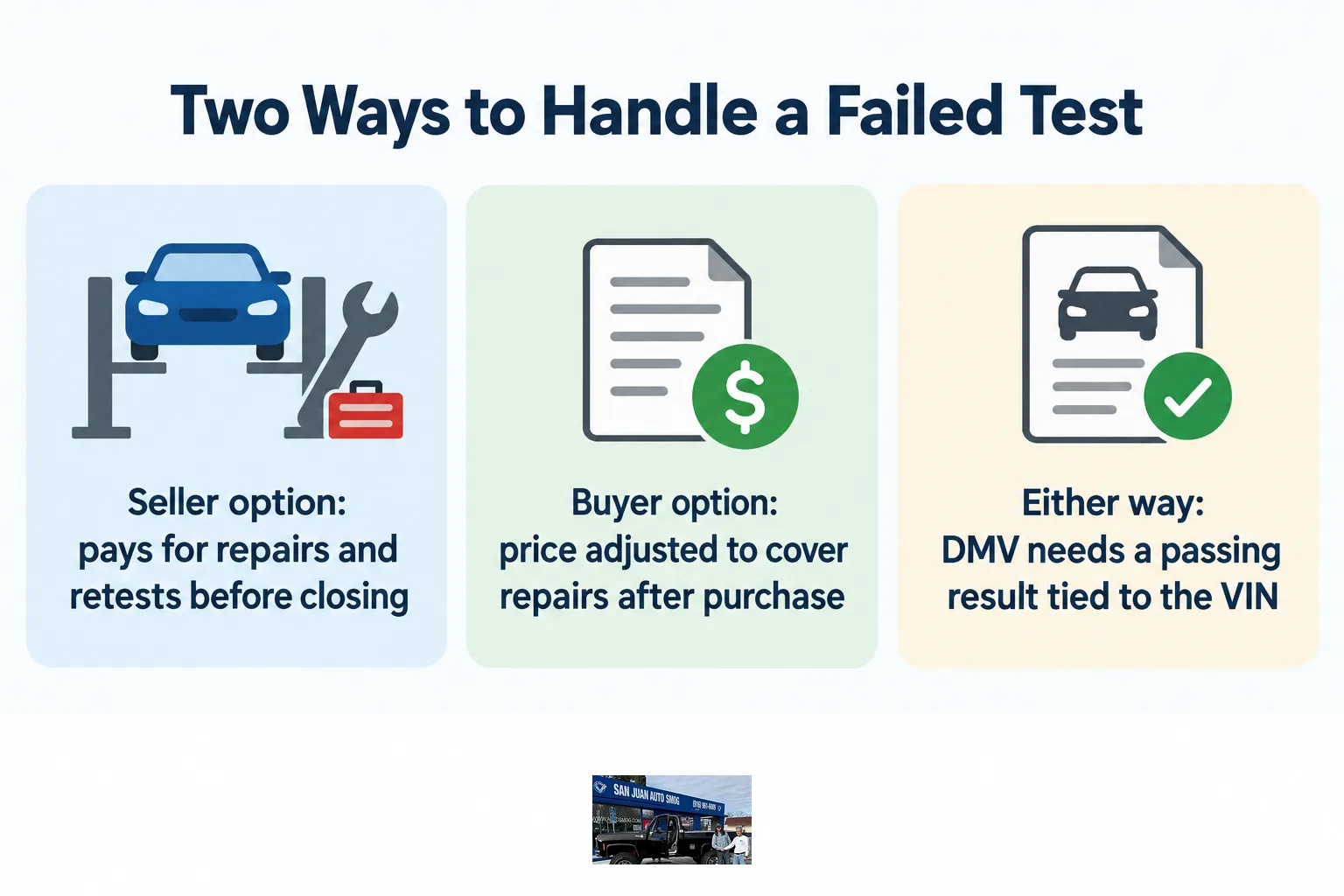
The sale can still proceed, but the title won't transfer cleanly until the vehicle passes or the DMV paperwork reflects the failure. Buyers and sellers typically handle this one of two ways: the seller pays for repairs and retests before closing the sale, or the price gets adjusted to account for the buyer handling repairs after purchase. Either way, DMV still needs a passing result tied to the VIN before registering the new owner.
Is there help for the cost of repairs?
Eligible drivers who fail a Test-Only smog check may qualify for California's Consumer Assistance Program, which can provide up to $500 toward repairs — eligibility and details are available at bar.ca.gov/cap. This applies to the repair side of a failed test, not to the ownership-transfer process itself.
Ready to Transfer the Title? Get the Smog Check Scheduled
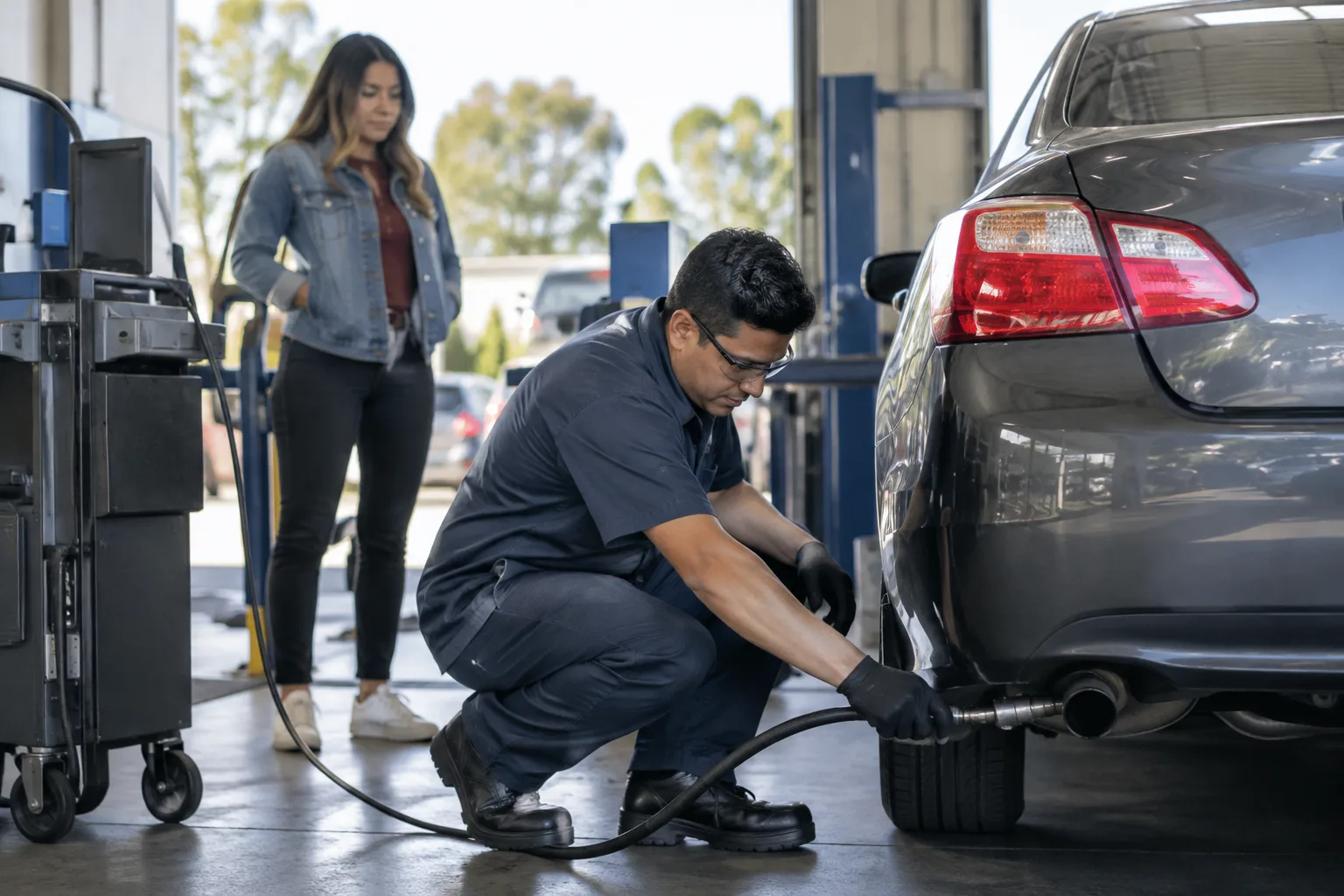
Once a sale is close to final, the smog check is usually the one piece that can't wait — DMV won't process the title without it. San Juan Auto Smog is a STAR-certified station, and 2000-and-newer vehicles can walk in without an appointment, which helps when a closing date is already set. For 1999-and-older vehicles, RVs, vans, heavy trucks, and most diesels, booking an appointment ahead of time keeps the sale on schedule instead of waiting on a slot.
Pricing depends on vehicle type, and the shop keeps that transparent rather than quoting a flat number that doesn't apply to every car. If an oil change is also due before handing the keys over, the smog + oil combo saves $45 compared to booking each separately.
Book a change of ownership smog check before the sale closes to keep the DMV paperwork moving.
Frequently Asked Questions
Does every vehicle sale in California require a smog check?
Most do, but vehicles that meet California's current model-year or fuel-type exemptions don't need a new test at the point of sale. Checking the exemption status before scheduling a test avoids paying for one that isn't required.
Can a smog check from a few months ago be used for the sale?
If the certificate is still within its valid window and tied to the vehicle's VIN in the state's system, it can sometimes satisfy the requirement, but a test specifically done for the ownership transfer is the safer route. A testing station can confirm whether an existing certificate still applies.
Do I need an appointment for a change of ownership smog check?
Vehicles from 2000 and newer can typically walk in for STAR-certified testing without booking ahead. Vehicles from 1999 and older, along with RVs, vans, and heavy trucks, should schedule an appointment since those tests often take longer or require different equipment.
What if the buyer is moving the car in from out of state?
Out-of-state vehicles entering California follow a separate smog process tied to registering the car in-state for the first time, which is different from an in-state change-of-ownership transfer between two California owners.
Is a change of ownership smog check different from the regular biennial smog check?
Yes. The biennial smog check runs on a vehicle's regular registration renewal cycle, while the change-of-ownership test is triggered specifically by the title transfer, regardless of where the vehicle sits in its renewal cycle.