What Inspections Are Needed to Sell a Car Privately in California?

If you’re asking what inspections are needed to sell a car privately, start by separating California’s smog requirements from a voluntary mechanical assessment. A smog certificate may be required for the transfer, depending on the vehicle and sale. A pre-sale inspection can help you understand the car’s condition, but it is not a substitute for a required smog check. Knowing the difference helps you plan ahead and avoid last-minute surprises.
This guide explains when a California smog certificate may be required, what a pre-sale inspection can help you assess, and how to organize records for buyers. A smog result addresses emissions testing, not the car’s overall mechanical condition. You’ll also find practical ways to choose checks based on the car’s age, condition, and your sale plans.
Key Takeaways
- To understand what inspections are needed to sell a car privately, distinguish California’s smog requirements from an optional mechanical assessment.
- A pre-sale check can help identify condition concerns with areas such as tires, brakes, fluids, and warning indicators.
- Gather available service receipts and inspection reports so buyers can review the vehicle’s history and documented findings.
- Choose a smog check, brake check, or broader multi-point inspection based on the transfer requirements and any known concerns.
Table of Contents
Selling a Car Privately in California: Which Inspection Is Required?
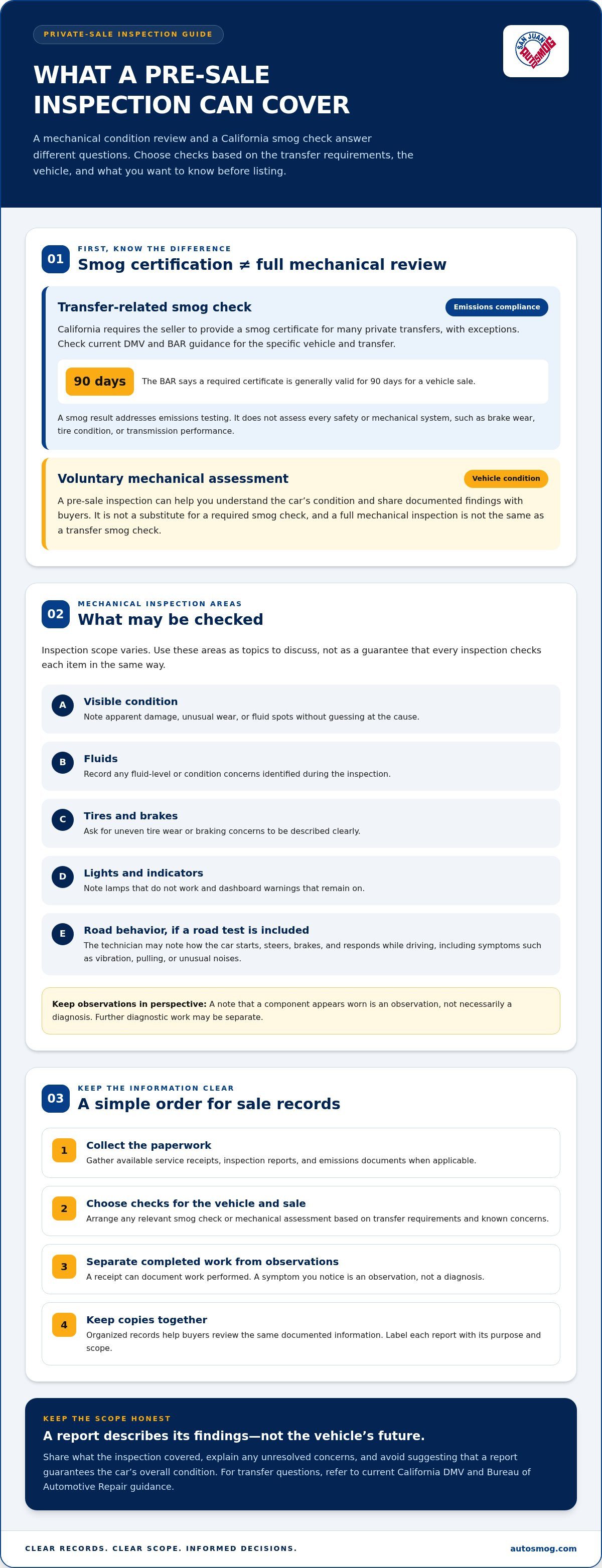
A transfer-related smog certification and a general mechanical inspection answer different questions. If California’s smog requirements apply to the vehicle transfer, the seller generally must provide a valid smog certificate. The test checks emissions compliance, not every safety or mechanical system. It does not provide a complete assessment of brake wear, tire condition, or transmission performance.
Requirements can depend on the vehicle and the type of transfer. Before setting a sale date, review the current California DMV title-transfer requirements and the Bureau of Automotive Repair’s Smog Check information. After the sale, sellers generally file a Notice of Transfer and Release of Liability with the DMV. For a broader prep checklist, see our guide to getting a car ready to sell in California. If a certificate is required, the BAR says it’s generally valid for 90 days for a vehicle sale. Don’t assume an exemption applies based only on the car’s age or fuel type. Check the current official guidance for the specific vehicle and transfer.
Does a private seller need a full mechanical inspection?
A full mechanical inspection is different from a transfer smog check, and a voluntary condition assessment should not be mistaken for a legal requirement. It can still give you a clearer picture of the car before you list it and help you answer buyer questions with documented findings. San Juan Auto Smog offers a multi-point vehicle inspection for a broader condition review.
When does California require a smog certification?
California requires the seller to provide a smog certificate for many private transfers, but exceptions apply. The answer depends on the vehicle and transfer circumstances, so use current DMV and BAR guidance rather than relying on a general checklist. A STAR-certified smog check addresses emissions testing when required. It does not replace a separate mechanical assessment. Keeping those purposes distinct helps you choose the checks that fit your sale.
Private-Sale Car Inspection Checklist: What a Mechanical Check Can Cover
A pre-sale assessment can help you prepare clear answers to common buyer questions. Inspection scope varies, so review what the report covers and note any limits. A comment that a component appears worn is an observation, not necessarily a diagnosis. Keeping that distinction clear helps you describe the findings accurately.
What should a pre-sale inspection look at?
Depending on its scope, an inspection may cover visible leaks, fluid levels or condition, tire wear, brakes, lights, and signs of wear. If a road test is included, the technician may note how the car starts, steers, brakes, and responds while driving. Further diagnostic work may be separate. Use the following list to understand useful areas to discuss, not to assume every inspection tests each item in the same way.
- Visible condition: Note apparent damage, unusual wear, or fluid spots without guessing at the cause.
- Fluids: Record any level or condition concerns identified during the inspection.
- Tires and brakes: Ask for uneven tire wear or braking concerns to be described clearly.
- Lights and indicators: Note lamps that don’t work and dashboard warnings that remain on.
- Road behavior: If a road test is included, note symptoms such as vibration, pulling, or unusual noises.
How is a smog check different from a mechanical inspection?
Keep each document labeled with its purpose and scope so a buyer can see which questions it answers. For program information, consult the Bureau of Automotive Repair’s California Smog Check Program. Describe mechanical findings separately, and don’t suggest that a report covers systems it doesn’t list.
If you want a broader condition review before showing the car, a Fair Oaks multi-point inspection can help organize observations across multiple vehicle areas.
Before You Sell: Prepare Inspection Records and Share Findings Clearly
Organized records make it easier to explain what you know about the car. Gather available service receipts, arrange any relevant inspection, read the findings carefully, and keep the paperwork together. These steps help you answer buyer questions without presenting a report as a promise about the vehicle’s future condition.
Which records help a private seller explain vehicle condition?
Keep maintenance receipts, inspection reports, and emissions documents together when applicable. Separate completed work from your own observations. For example, a receipt may show that a shop replaced a part, while a note that a noise occurs during a cold start is your observation, not a diagnosis. Use clear dates and descriptions, and don’t imply that an inspection covered systems outside its stated scope.
A buyer may arrange a pre-purchase inspection to assess the used vehicle from their perspective. That review is separate from your records and gives the buyer an opportunity to ask about the findings.
What should you do when an inspection finds a concern?
Read the report and clarify any wording you don’t understand before describing it to a buyer. A note such as “fluid residue observed” records an observation. It doesn’t establish the source or confirm a specific fault. Depending on the finding, you can address it, share the report and explain what remains unresolved, or take it into account during sale discussions. Don’t describe a possible repair as a guaranteed fix.
Use this simple order to keep your sale information consistent:
- Collect service receipts and any relevant emissions paperwork.
- Arrange the checks that fit the vehicle and your sale plans.
- Review reports and separate documented work from personal observations.
- Keep copies together so buyers can review the same information.
If you’re considering what inspections are needed to sell a car privately, clear records help explain which checks you chose without implying they guarantee the car’s condition. For a broader condition review before listing, schedule a multi-point inspection in Fair Oaks.
Choose the Right Pre-Sale Check in Fair Oaks and Nearby Communities
The right check depends on your sale plans and the car’s needs. First, determine whether California’s transfer rules call for a smog certificate. Then consider the car’s age, any concerns you’ve noticed, and the questions a buyer may ask. San Juan Auto Smog provides pre-sale inspections and STAR-certified smog checks, though not every vehicle needs both.
Which inspection makes sense for your car?
| Check | Purpose and typical scope | When it may help |
|---|---|---|
| Smog check | Tests emissions compliance, not the vehicle’s overall mechanical condition. | When the applicable California transfer rules require a smog certificate. |
| Brake check | Focuses on brake condition rather than reviewing the whole vehicle. | If you’ve noticed a change in braking or a buyer asks about the brakes. |
| Multi-point inspection | Offers a broader assessment of vehicle condition; exact scope can vary. | If you want a wider picture before showing the car or answering condition questions. |
For an older or high-mileage vehicle, an inspection can establish a useful baseline without assuming there’s a problem. Choose a focused check for a specific concern, or a broader review if you want to understand more about the car’s current condition. To decide what inspections are needed to sell a car privately, separate transfer requirements from optional checks that help you explain the vehicle to buyers.
How can Fair Oaks sellers take the next step?
San Juan Auto Smog serves Fair Oaks, Carmichael, Sacramento, Citrus Heights, Orangevale, and Gold River. If a smog check applies, its purpose is emissions testing, and you can learn about California smog checks. Routine maintenance is a separate part of vehicle care. San Juan Auto Smog offers full-synthetic oil changes, with a multi-point inspection, fluid check, and tire rotation available as options. An oil change does not guarantee a smog result.
Choose the check that fits your needs, then schedule a pre-sale inspection or STAR-certified smog check with San Juan Auto Smog.
Make Your Next Step Clear and Practical
A little preparation can make selling your car feel more manageable. Review your plans, gather the information you want to share with prospective buyers, and leave time to consider any questions that come up. You don’t need to have every answer immediately. Clear, measured communication helps keep the conversation constructive.
If an independent condition review would help you prepare, schedule a pre-sale inspection with San Juan Auto Smog. You can also discuss a full-synthetic oil change, with optional maintenance checks, to keep your vehicle’s care on track.
Frequently Asked Questions
Is a mechanical inspection required to sell a car privately in California?
A general mechanical inspection is not the same as a transfer smog check, and don’t assume it is required for a private transfer. Identify the vehicle and transfer details, then verify paperwork requirements through current California DMV or BAR guidance. If a prospective buyer requests an assessment, agree on who will arrange it, whether both parties can review the report, and how you’ll discuss any findings.
Do I need a smog check to sell my car in California?
Whether you need a smog check depends on the vehicle and transaction, so confirm the current rule before advertising the car as ready for transfer. Note its model year, fuel type, and transfer relationship when reviewing the requirements. If your registration renewal notice calls for a STAR station, follow that direction. The BAR Smog Check Program provides program information.
Can I sell my car privately if it fails a smog check?
A failed result doesn’t by itself settle the terms or requirements that apply to your sale. Keep the Vehicle Inspection Report with your records, and distinguish its result from a repair estimate or separate mechanical assessment. Verify the current transfer rules for that vehicle before agreeing to sale terms. Don’t say a repair corrected an emissions concern unless a subsequent test supports that statement.
What should a pre-sale car inspection include?
Choose the inspection scope based on the questions you need answered. If a buyer has asked about a particular symptom, describe when it occurs, such as during startup or braking, so the assessment can address it where appropriate. Keep a written report that identifies what was reviewed and notes any limits. This gives both parties a clearer record to discuss.
Should I get an inspection before selling an older car?
For an older car, compare available service receipts with the maintenance schedule in the owner’s manual. This can help you identify gaps in the record without assuming that age alone means a part has failed. If paperwork is incomplete, say so plainly and keep your own observations separate from documented service. That context can help buyers understand the car’s history.
More articles
- How Long Does It Take to Smog a Car? | Carmichael
- Driving With Oil Light On: Fair Oaks Driver Guide
- How Long Does a Smog Usually Take? | Fair Oaks
- Used-Car Buyer’s Inspection in Orangevale: A Practical 2026 Guide
- How Long Is a Smog Check? | Sacramento
- When Is the First Smog Check Required in California? | Gold River