Getting a Car Ready to Sell in California: A Practical 2026 Guide

What can make a private car sale feel more complicated than it needs to be? A missing document, incomplete maintenance records, or uncertainty about smog requirements can leave both sides with unanswered questions. Getting a car ready to sell in California starts with a few practical steps: organize the paperwork, review the vehicle’s condition, and understand which requirements apply to your sale.
It’s reasonable to wonder whether a smog check is required, which transfer documents to prepare, and whether an inspection or routine maintenance is worth doing. Requirements can depend on the vehicle and type of transfer, so check current California rules for your situation. This guide explains how to gather sale records, handle the smog-check question, and decide when a pre-sale inspection or routine maintenance could help you describe the car clearly. An inspection can identify concerns before a buyer sees the vehicle, but it can’t promise a sale or a particular price.
Key Takeaways
- Make getting a car ready to sell in California manageable by organizing the paperwork, reviewing the vehicle’s condition, and checking sale-specific requirements.
- Check current California smog guidance for your vehicle and transaction. Smog certification and title-transfer paperwork are separate.
- Start with service records and visible concerns, then consider routine maintenance that supports the car’s condition and reliability.
- A pre-sale inspection can help you understand and document an older or high-mileage vehicle’s condition before listing it.
Table of Contents
Getting a Car Ready to Sell in California Starts with a Clear Plan
You don’t need to overhaul a car to prepare it for sale. A short, organized process can help you sort out paperwork, understand the vehicle’s condition, and identify the California requirements that apply. Sensible preparation makes conversations with potential buyers clearer, but it can’t guarantee a sale, a particular price, or an inspection result.
Work through these steps in order:
- Collect the ownership, maintenance, and emissions records you have.
- Write down the car’s current condition, including known concerns and maintenance that may be due.
- Check which smog and transfer steps apply to your vehicle and sale.
- Decide whether routine maintenance or a pre-sale inspection would provide useful information.
What to gather before you advertise the car
Find the California Certificate of Title and review the ownership details. If a lien or another ownership matter is involved, gather the information you have so you can identify what needs attention during the sale. Put service receipts, repair records, available vehicle documents, and smog paperwork in one place. If you need current emissions information, review the applicable California smog check service details. Requirements can depend on the vehicle and transaction, so use current California DMV or Bureau of Automotive Repair guidance for your situation.
How to describe the car honestly
Keep your description specific and accurate. List maintenance you can support with records, mention concerns you already know about, and don’t describe an unresolved issue as fixed. A receipt shows what work was done and when, but it doesn’t establish the condition of every part today. If service records are missing, say so plainly. This helps buyers distinguish documented work from what remains unknown and gives you a clearer starting point for getting a car ready to sell in California.
California Smog Checks and Title Transfers: Verify What Applies
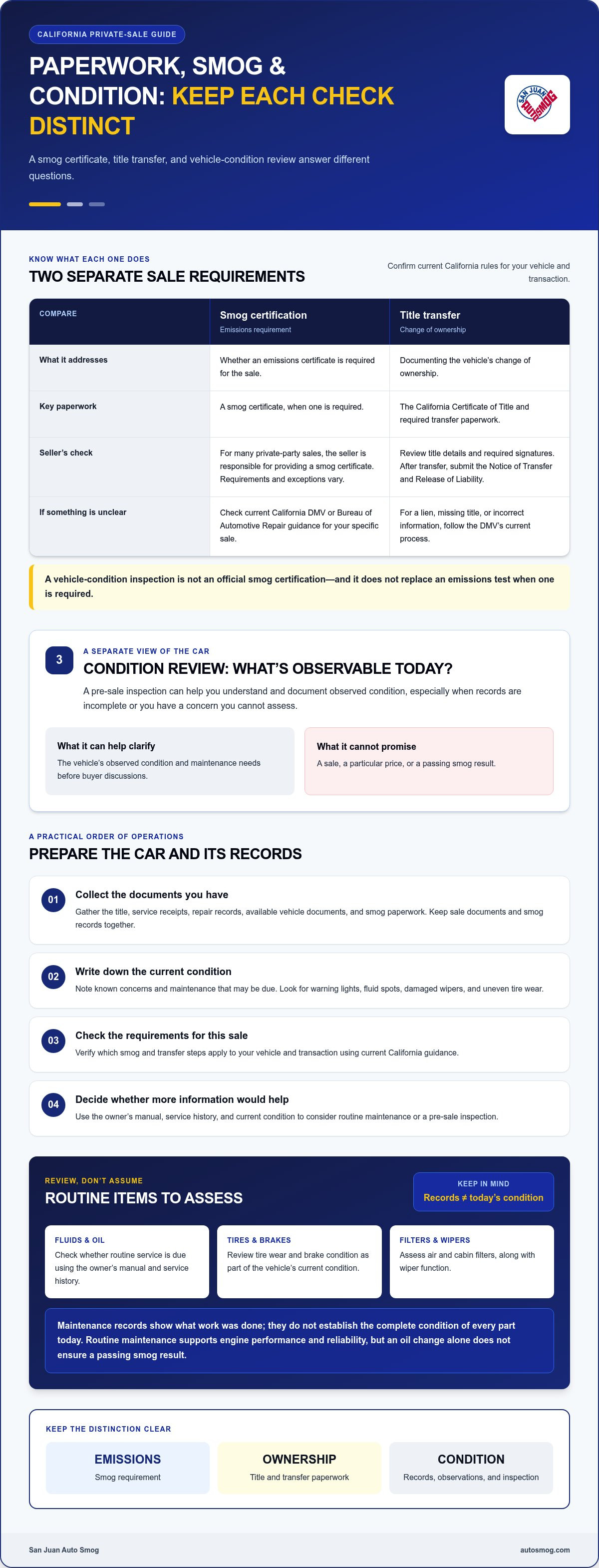
Smog certification and title transfer are separate parts of a vehicle sale. A smog certificate addresses emissions requirements when they apply; the title and transfer paperwork document the change in ownership. Getting a car ready to sell in California means checking both rather than assuming one document takes care of the other.
When a smog check may be part of the sale
For many private-party sales, the seller is responsible for providing a smog certificate, but requirements can vary with the vehicle and transaction. The California DMV’s smog inspection guidance explains requirements and exceptions, including STAR inspection situations. Review current DMV or Bureau of Automotive Repair Smog Check guidance for your specific sale. If your vehicle needs a test, San Juan Auto Smog provides a STAR-certified smog check.
A vehicle-condition inspection assesses general condition; it is not an official smog certification. A pre-sale inspection can help you understand and document what technicians observe, but it doesn’t replace an emissions test when one is required.
Which title-transfer details should sellers confirm?
The California Certificate of Title is the ownership document used to transfer the vehicle. Review its details and follow the DMV’s instructions for the required signatures. If a lien, missing title, or incorrect information complicates the paperwork, use the DMV’s current process before completing the sale. After the transfer, sellers should also submit the Notice of Transfer and Release of Liability. Check the California DMV title-transfer instructions for current forms, deadlines, and submission steps, since these details can change.
Keep copies of completed documents and smog records with your sale paperwork. Before handing over the car, review the paperwork for missing signatures or information while there’s still time to address them.
A Practical Pre-Sale Checklist for the Car's Condition
Once the paperwork is organized, review the car itself. Start with what you can document and observe, then decide whether maintenance is due. Getting a car ready to sell in California doesn’t mean repairing every worn item. Focus first on clear safety concerns and condition issues that could affect how the vehicle drives or is presented.
- Organize records. Put service receipts and maintenance notes together. If you can, arrange them by date so it’s easy to see what work was completed.
- Look for visible concerns. Note warning lights, fluid spots, damaged wipers, uneven tire wear, or anything else you already know needs attention.
- Review routine maintenance. Use the owner’s manual, service history, and the vehicle’s current condition to assess fluids, tires, brakes, filters, and wipers.
Maintenance records show what work was done, not the vehicle’s complete condition today. Keep that distinction clear when describing the car. Routine maintenance supports engine performance and reliability, but an oil change alone does not ensure a passing smog result.
Which maintenance items are reasonable to review?
Use the owner’s manual and service history to determine what’s due instead of relying on a generic interval. If an oil change is due, arranging one helps keep routine care current. San Juan Auto Smog offers full-synthetic oil changes, with a multi-point inspection, fluid check, and tire rotation available as options. You can also review brake condition, tire wear, air and cabin filters, and wiper function. Treat these as items to assess, not automatic repair recommendations.
When can a pre-sale inspection help?
An inspection can be useful when records are incomplete or you’ve noticed a concern you can’t assess. It provides information about observed condition and maintenance needs before buyer discussions. It’s a snapshot of the vehicle at that time, not a guarantee against future problems, and it doesn’t replace an official smog test when one is required.
If an inspection identifies a concern, consider whether it affects safe operation or needs attention before a buyer drives the vehicle. For other findings, use the information to make a measured maintenance decision rather than assuming every item requires immediate repair.
When a Fair Oaks Pre-Sale Inspection Makes the Next Step Easier
A pre-sale inspection can be especially useful for an older or high-mileage vehicle, a car with gaps in its service history, or one with a concern you haven’t been able to assess. It gives you information to consider before deciding what to address, what to disclose, and how to answer a buyer’s questions. You don’t need to treat every observation as a repair order. The goal is to understand the car’s condition and make informed choices.
What an inspection can and cannot tell a seller
An inspection is a snapshot based on the checks performed at that time. It can identify visible concerns and maintenance items worth discussing, but it can’t predict every future problem or guarantee a buyer’s approval. It also doesn’t replace an official smog certification when one is required. Keep the findings with your service records, and describe them accurately alongside what you know about the vehicle.
For example, if an inspection identifies a concern that needs further attention, share that information rather than presenting it as resolved. If the car’s history is incomplete, be clear about what you can document and what you don’t know. Straightforward communication helps keep expectations realistic.
A straightforward local next step
San Juan Auto Smog provides pre-sale inspections in Fair Oaks for vehicle owners from nearby Carmichael, Sacramento, Citrus Heights, Orangevale, and Gold River. Bring the records you have and point out any symptoms or concerns you’ve noticed. That context helps make the inspection more useful for your decision-making. If routine maintenance is due, such as an oil change, consider addressing it for the vehicle’s upkeep, not as a way to ensure a smog result.
If you’re weighing whether an inspection would help with your sale, schedule a pre-sale inspection in Fair Oaks.
Take the Next Step with Confidence
Preparing to sell can be a useful time to decide what you want to know about your vehicle before handing over the keys. You don’t have to fix every age-related mark or make every maintenance decision at once. A clear inspection report can help you weigh the next steps and have a more informed conversation with a potential buyer.
Getting a car ready to sell in California is easier when you base decisions on the car’s actual condition, not guesswork. If a pre-sale inspection would help you move forward, San Juan Auto Smog can help. If an oil change or other routine maintenance is due, taking care of it now can also give you a clear service record to share.
Schedule a pre-sale inspection with San Juan Auto Smog in Fair Oaks.
Frequently Asked Questions
Is a smog check required when selling a car in California?
Not always. Getting a car ready to sell in California includes checking the current rule for your vehicle and transaction with the California Bureau of Automotive Repair. Have the model year, fuel type, and sale details ready when reviewing the guidance. A condition inspection doesn’t issue emissions certification, and routine maintenance can’t guarantee a passing smog result.
What paperwork do I need to sell a car in California?
Start with the California Certificate of Title and the records you already have, then follow current California DMV instructions for your specific transfer. Before completing the paperwork, compare the vehicle identification number on the title with the number on the car. Keep copies of signed documents and note when you submitted any seller notice. The required forms and steps can depend on the transaction.
Should I get an oil change before selling my car?
Get an oil change if it’s due under the vehicle’s maintenance schedule or you can’t tell when it was last serviced. Keep the receipt and note the odometer reading so the record is useful to a prospective buyer. If an oil change isn’t due, don’t assume doing one will improve a smog result. It supports routine engine care, not emissions certification.
Is a pre-sale inspection worth getting before listing a car?
It can be helpful if you’re unsure how to describe a concern or want a clearer basis for deciding what maintenance to address. For a Fair Oaks-area seller, an inspection can help you organize questions before showing the car. Use the findings to inform your decisions and discussion, not as a guarantee that a buyer will agree with the assessment or that future issues won’t arise.
What should I fix before selling my car?
Prioritize clear safety concerns and maintenance that’s actually due. Investigate warning lights rather than resetting them just to make the dashboard look clear. Review the owner’s manual and service records before deciding what work makes sense. For example, worn wipers may affect visibility, while a cosmetic mark may not affect safe operation. Keep receipts for completed work and describe remaining concerns accurately.
More articles
- When Is the First Smog Check Required in California? | Gold River
- How Much Is a CA Smog Check? | Orangevale
- Can I Get Just a Vehicle Inspection? What California Drivers Should Know
- How Much Is a CA Smog Test? | Citrus Heights
- Brake Pad Replacement Cost vs. a Brake Check: What Do You Actually Need?
- How Much Is a Smog Check? | Sacramento