Driving With Oil Light On: Fair Oaks Driver Guide

An oil warning light is not a routine oil-change reminder. If it signals low oil pressure, continuing to drive can risk serious engine damage, so pull over safely and turn off the engine. It’s understandable to wonder whether the light means your oil is due or something more urgent is happening. For signs your car needs an oil change Fair Oaks drivers can check the owner’s manual and maintenance schedule, but an active oil-pressure warning calls for a different response.
This guide explains how to tell an oil-pressure warning from a maintenance reminder, when to stop driving, and what to do once you’re safely off the road. You’ll also learn how to check your oil level safely and when to arrange professional help rather than driving on. After the immediate concern is addressed, routine oil changes, fluid checks, and a multi-point inspection can help you stay on top of ongoing maintenance, especially for older or high-mileage vehicles.
Key Takeaways
- Learn how to tell an oil-pressure warning from a scheduled oil-change reminder by checking the dashboard message and your owner’s manual.
- If a red oil-pressure warning appears while driving, pull over safely and switch off the engine before taking another step.
- Check oil level only when safely parked and according to your vehicle’s instructions; a low reading doesn’t explain every pressure warning.
- For signs your car needs an oil change Fair Oaks drivers can track, follow the manufacturer’s service schedule and monitor oil level between changes.
Table of Contents
Oil Light On While Driving? Why Fair Oaks Drivers Should Take It Seriously
A red oil-pressure warning generally means you should pull over as soon as it’s safe and switch off the engine. Don’t keep driving to your destination or a repair shop with the warning on. The light can indicate that oil isn’t circulating through the engine at the pressure it needs. Running an engine without adequate oil pressure can damage moving parts.
The symbol and dashboard message vary by vehicle. Check your owner’s manual for the meaning of the specific warning in your car. For example, Ford owner’s manuals are available online. If the light appears with unusual engine noise, such as knocking or ticking, leave the engine off and arrange professional help. Stopping promptly is a protective step, not a reason to panic.
Does the oil light mean the engine is low on oil?
Not necessarily. Low oil level is one possible cause, but the warning alone can’t identify what’s wrong. Oil quantity and oil pressure are related but different: the dipstick or electronic gauge indicates how much oil is in the engine, while pressure indicates whether oil is circulating with enough force. A suitable level doesn’t rule out a pressure problem.
Pressure can be affected by a mechanical issue or a problem with the warning system, among other causes. Don’t assume the light simply means it’s time for an oil change, and don’t use a fresh oil change as a substitute for addressing an active warning. The signs your car needs an oil change Fair Oaks drivers notice, such as a scheduled service reminder, are different from an oil-pressure warning.
After the immediate warning is addressed, routine maintenance can help you keep track of your vehicle’s overall condition. A Fair Oaks multi-point inspection can review general maintenance items, but it isn’t a fix for an unresolved oil-pressure problem.
Oil-Pressure Warning or Oil-Change Reminder: How to Tell the Difference
Dashboard alerts can look similar, but they don’t always call for the same response. An oil-pressure warning concerns oil circulation and should be treated as urgent. An oil-life or scheduled-maintenance reminder usually tells you that service is due. Read the full message, note the symbol, and check your owner’s manual, since displays and wording differ by vehicle.
What does a red oil-can symbol usually indicate?
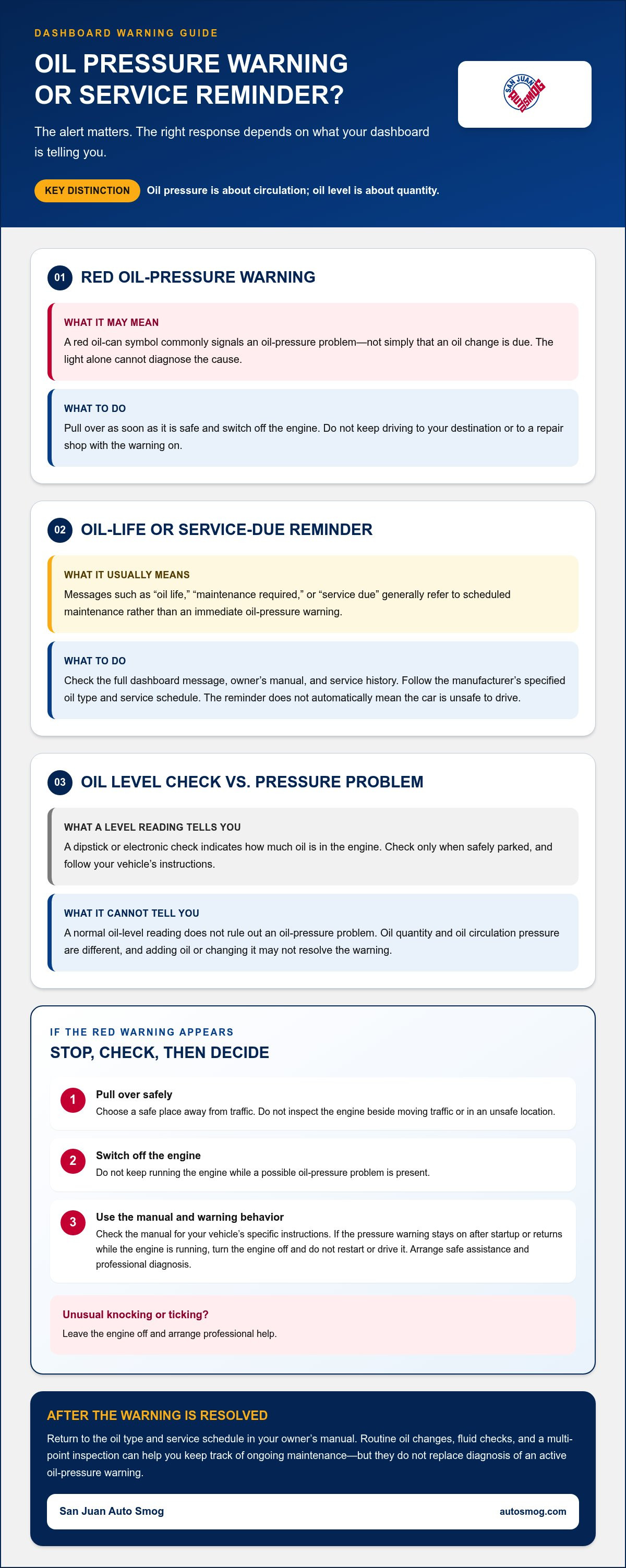
A red oil-can symbol commonly signals an oil-pressure problem, not simply that the next oil change is due. If it appears while the engine is running, pull over safely and switch off the engine. Don’t assume adding oil or changing it will resolve the warning. Oil level and oil pressure are different, and the dashboard symbol alone can’t diagnose the cause. Use your manual to confirm what your vehicle’s warning means.
What if the message says oil life or service due?
Messages such as “oil life,” “maintenance required,” or “service due” generally refer to scheduled maintenance rather than an immediate pressure warning. They don’t automatically mean the car is unsafe to drive, but they do mean it’s time to review the service schedule and arrange maintenance. Follow the oil type and interval specified by the manufacturer, rather than relying on a general rule or the reminder alone.
For signs your car needs an oil change Fair Oaks drivers can use the reminder as one prompt, then check the service history and owner’s manual. If the message is unclear, consult the manual before deciding what it means. If your vehicle is due for routine service, you can schedule an oil change. A routine oil change addresses scheduled maintenance; it does not necessarily resolve an active oil-pressure warning. If that warning is on, don’t drive the vehicle to an oil-change appointment.
Oil Light On? Stop, Check, and Decide What to Do
If a red oil-pressure warning comes on, get out of traffic safely, stop, and turn off the engine. Check your owner’s manual for the warning’s meaning and any instructions specific to your vehicle. Don’t inspect the engine beside moving traffic or in an unsafe location.
- Pull over safely. Choose a safe place away from traffic before leaving the driver’s seat.
- Switch off the engine. This limits the time it runs while a possible pressure problem is present.
- Consult the owner’s manual. Follow its instructions before checking anything under the hood.
Can you check the oil level yourself?
If you’re parked on level ground in a safe place, the manual can show whether your vehicle has a dipstick or an electronic oil-level check and how to use it. Follow its instructions about when to check; procedures differ. Don’t reach near hot or moving engine parts. A normal oil-level reading is useful, but it doesn’t rule out an oil-pressure problem.
When should you avoid restarting the engine?
If the pressure warning stays on after startup or comes back while the engine is running, turn the engine off and don’t restart or drive the vehicle. Arrange safe assistance and professional diagnosis instead. A routine “service due” reminder is different, but an active oil-pressure warning needs prompt attention. Adding oil or booking an oil change does not necessarily resolve its cause.
Once the warning has been addressed, use the manufacturer’s service schedule to plan routine maintenance. The U.S. Department of Energy’s vehicle maintenance tips also recommend using the manufacturer’s recommended grade of motor oil and having warning lights checked promptly by a mechanic. For signs your car needs an oil change Fair Oaks owners can track, start with the manual and service history. If an oil change is due after the pressure concern is resolved, you can schedule an oil change. San Juan Auto Smog offers full-synthetic oil changes, with a multi-point inspection, fluid check, and tire rotation available as options.
After the Warning: Routine Oil Care for Fair Oaks Drivers
Once an oil-pressure concern has been safely diagnosed and addressed, return to the oil type and service schedule in your owner’s manual. Routine maintenance helps you keep track of other needs, but it doesn’t replace diagnosis of an active warning. If the pressure light is still on, don’t drive the vehicle for routine service.
What maintenance should you consider after the warning is addressed?
Review your maintenance records and note which services are due. Oil and other fluid levels, tire rotation, brake condition, filters, and wipers each need attention on their own schedule.
A Fair Oaks multi-point inspection can help you review general vehicle condition and organize routine maintenance. It isn’t a diagnosis or repair for an unresolved oil-pressure fault.
When is it time to schedule an oil change?
Use the manufacturer’s maintenance schedule and oil-life monitoring guidance, if your vehicle has it. Check the service record too, especially if you recently bought the vehicle or aren’t sure when its last oil change was. Signs your car needs an oil change Fair Oaks drivers should pay attention to include a service reminder or an interval reached in the owner’s manual, not an active oil-pressure warning.
San Juan Auto Smog serves Fair Oaks and nearby communities, including Carmichael, Citrus Heights, and Orangevale. Once any urgent pressure concern is resolved, schedule routine service when it’s due. For scheduled maintenance, you can schedule a full-synthetic oil change.
Make Your Next Maintenance Step Easier
A clear service record can make future maintenance decisions simpler. Keep notes on oil changes, fluid checks, and other services, especially if you drive an older or high-mileage vehicle. When a reminder appears, that history can help you compare it with the manufacturer’s schedule and decide what is due.
If you’re tracking signs your car needs an oil change Fair Oaks drivers can act on, use your owner’s manual and service records as your guide. San Juan Auto Smog offers full-synthetic oil changes, with a multi-point inspection, fluid check, and tire rotation available as options. These optional checks help you stay aware of general vehicle needs, but they aren’t a substitute for safe diagnosis of an active oil-pressure warning.
Schedule an oil change when your vehicle is due, and keep your maintenance plan moving forward with confidence. Schedule your oil change with San Juan Auto Smog in Fair Oaks.
Frequently Asked Questions
Is it safe to drive with the oil light on?
No, not if it’s an oil-pressure warning. After you’ve stopped safely, note the exact dashboard wording or symbol and whether you heard unusual engine sounds. That information can help explain what happened when you arrange assistance. If the message is unfamiliar, use the owner’s manual for your make and model rather than relying on a symbol image from another vehicle.
Can I drive a short distance if the oil light comes on?
Don’t treat a short trip as a safe exception. A brief drive still runs the engine, and the warning doesn’t show how much risk is present. Avoid restarting the vehicle just to test whether the light returns. From a safe location, arrange assistance that won’t require you to drive the vehicle; tell them the warning appeared while the engine was running.
What is the difference between the oil light and the oil-change light?
The exact display depends on the vehicle, so check the manual for its meaning. Some vehicles show an oil-life percentage or a service message; that display tracks scheduled maintenance and may need to be reset after service according to the manufacturer’s instructions. Keep a record of the date and mileage of each oil change so you can compare service history with the reminder.
What should I do if the oil light comes on and then goes off?
Make a note of when it appeared, including whether the engine was starting, idling, or turning. Don’t rely on the light going out as proof that everything is fine. If it happens again, or you notice unusual engine noise, share those details when seeking professional guidance. The timing can help narrow down what needs to be checked without guessing at the cause.
Can low oil cause the oil-pressure light to come on?
Yes, a low oil level can contribute, but the warning alone can’t confirm that this is the cause. If your vehicle’s manual describes adding oil after checking the level, use the specified oil and avoid overfilling. If the warning remains or returns, don’t assume adding oil has resolved the problem. The vehicle needs appropriate assessment before normal driving resumes.
More articles
- How Long Does It Take to Smog a Car? | Carmichael
- How Long Does a Smog Usually Take? | Fair Oaks
- Used-Car Buyer’s Inspection in Orangevale: A Practical 2026 Guide
- How Long Is a Smog Check? | Sacramento
- What Inspections Are Needed to Sell a Car Privately in California?
- When Is the First Smog Check Required in California? | Gold River