Smog Test for a 1998 RV in Sacramento: Where to Go
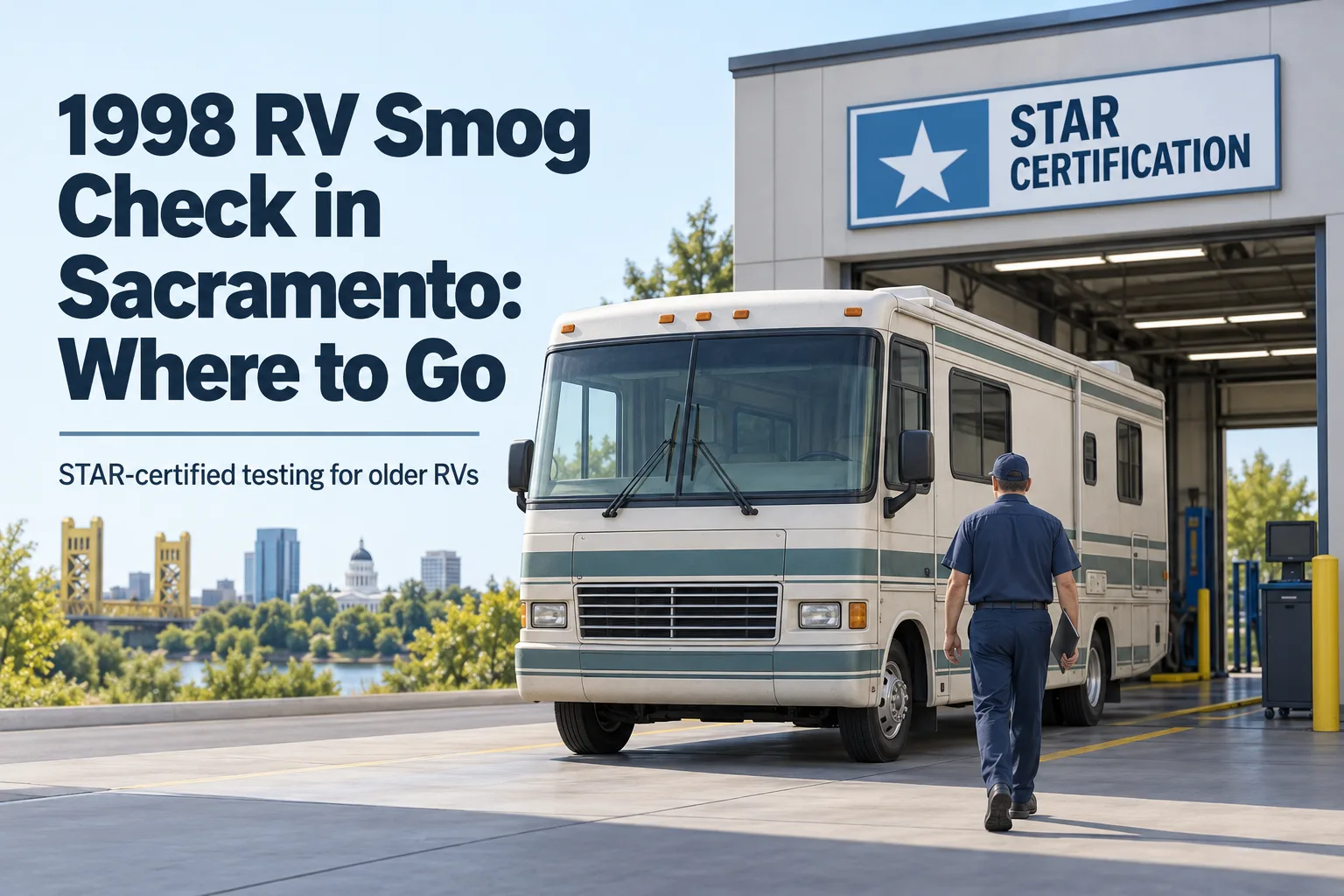
A 1998 RV in Sacramento needs a STAR-certified station that still tests pre-2000 vehicles. That RV falls into two categories at once — “older vehicle” and “larger vehicle” — so not every shop that advertises smog checks will even take it.
Plenty of stations only run the quick, computer-plugged-in test built for 2000-and-newer cars. A 1998 motorhome usually needs the older tailpipe-sniffer procedure, plus more time on the lift because of its size and, often, a diesel or heavier-duty engine. That narrows your options fast.
If you searched for a fast, inexpensive smog check place and kept hitting dead ends the moment you mentioned the model year or the word “RV,” that's normal. The fix isn't a cheaper shop. It's the right kind of shop, booked ahead, so the test isn't rushed.
Key Takeaways
- A 1998 RV needs a STAR-certified station that still tests 1999-and-older vehicles, not every smog shop qualifies.
- Appointments are recommended for RVs, vans, heavy trucks and older vehicles because the test takes longer than a standard car.
- Bundling the smog test with an oil change on the same visit can save money if the RV is also due for service.
- Have your registration, last smog certificate (if any), and any check-engine-light history ready before the appointment.
- Diesel RVs and motorhomes may follow a different testing path than gas models, so mention the engine type when you call.
Table of Contents
Why does a 1998 RV need special handling for a smog check?
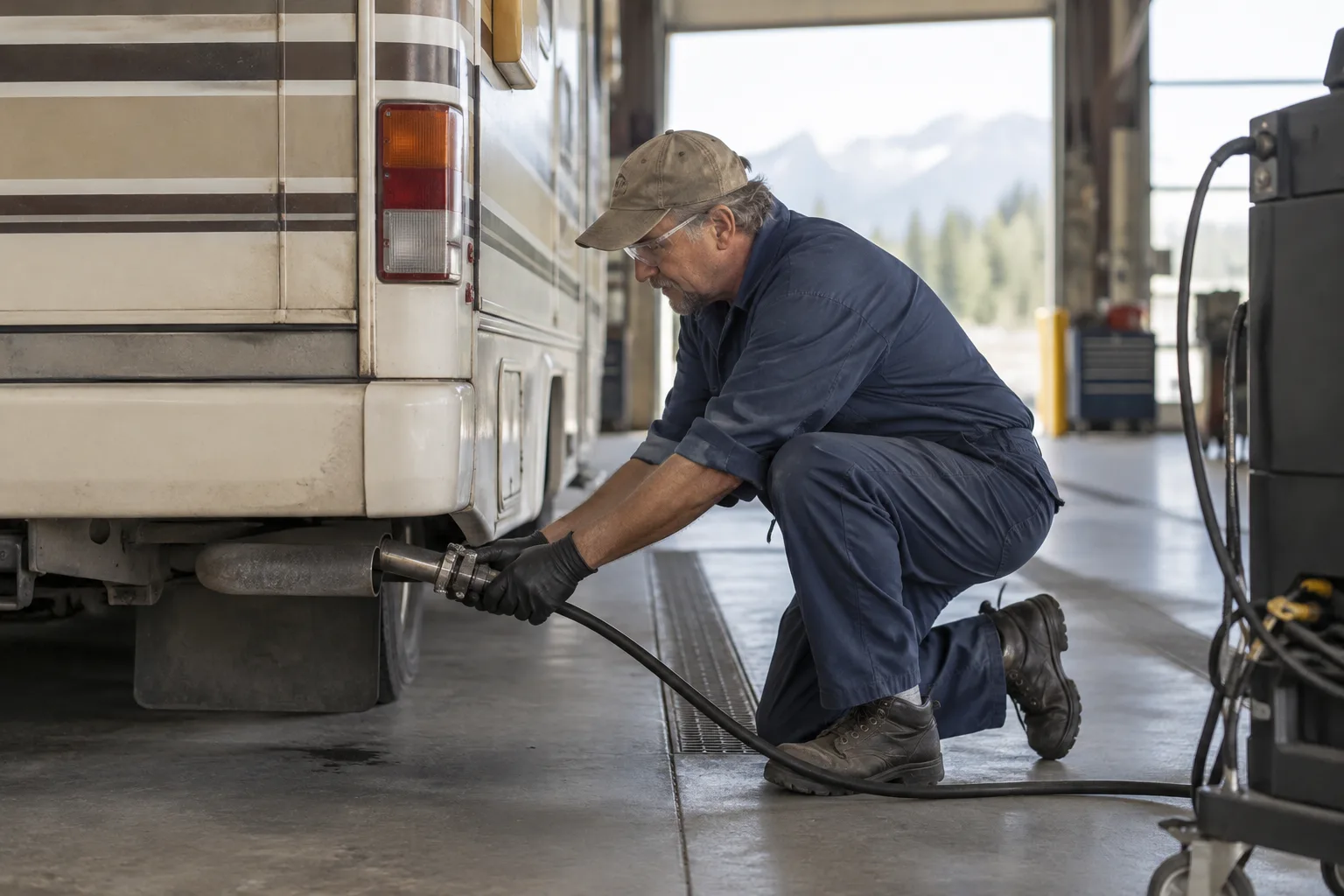
A 1998 RV is old enough to need the tailpipe-based test and large enough to need extra bay time, so it doesn't fit the walk-in process built for newer cars. Vehicles from model year 2000 forward generally use the OBD-II plug-in test, which is quick. A 1998 model predates that system, so technicians run the older emissions procedure instead — slower, and more hands-on to set up.
Does the size of the RV change the appointment?
Yes. Larger vehicles take more time to position, test, and release, so stations that handle them — including RV and motorhome smog checks — recommend booking ahead rather than walking in. That protects your spot and gives the technician the full time the vehicle actually needs.
Do I need a STAR-certified station for an RV smog check?
If your DMV renewal notice says you must go to a STAR station, yes — and a STAR-certified station can also test an RV like this one in the normal course of business. STAR certification means the station meets California's testing and equipment standards closely enough to handle directed tests, not just routine ones.
What if my notice doesn't mention STAR?
Choose a STAR-certified shop anyway. For a 1998 RV, it's the safer bet, since it signals the station is equipped and current on procedures for vehicles that don't fit the newer OBD-II process.
How do I find a fast, inexpensive smog check place for an older RV?
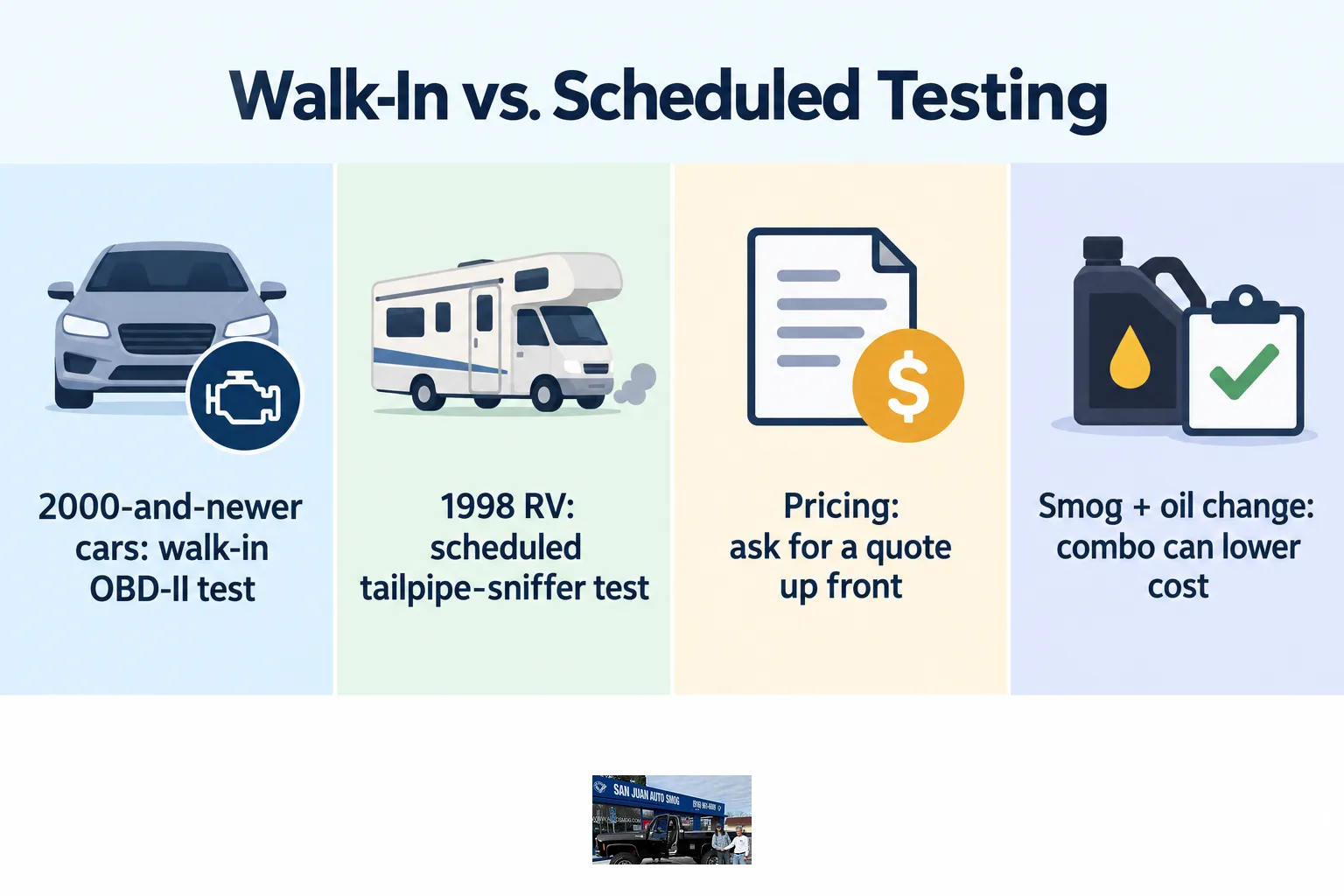
“Fast and inexpensive” for an RV means booking an appointment instead of trying to walk in, and asking for pricing up front instead of guessing. Walk-in service works well for 2000-and-newer cars, but an RV this age needs a scheduled slot so the station can plan the extra time properly. That scheduling is what keeps the visit fast once you arrive, instead of waiting behind same-day walk-in traffic.
Will pricing be different than a regular car?
Yes, generally. Pricing for RVs, older vehicles, and diesel models varies by vehicle type, so ask for a quote when you book rather than assuming a flat rate. If the RV is also due for maintenance, pairing the smog test with a smog and oil change combo can lower the combined cost compared to booking each separately.
What should I do before the appointment?
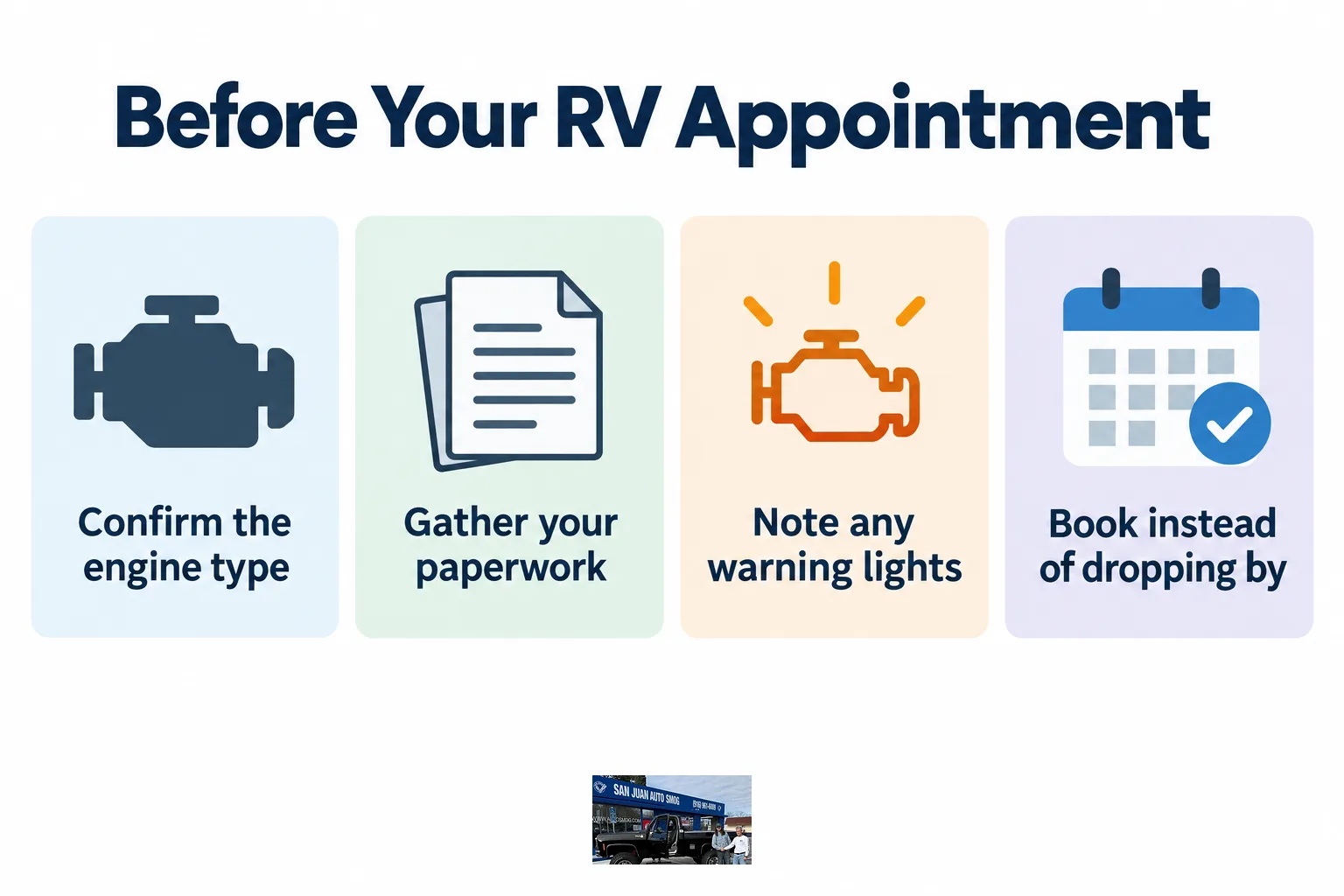
- Confirm the engine type. Gas and diesel RVs can follow different testing paths, so mention which one you have when you schedule.
- Gather your paperwork. Bring your current registration and, if you have one, your last smog certificate.
- Note any warning lights. A check-engine light or recent repair history helps the technician know what to expect before testing begins.
- Book instead of dropping by. Appointments are recommended for RVs, vans, heavy trucks and older vehicles so the full test time is reserved.
Ready to Book Your 1998 RV Smog Check?
San Juan Auto Smog is a STAR-certified smog check station at 4701 San Juan Ave, Fair Oaks, CA 95628, serving Fair Oaks, Carmichael, Sacramento, Citrus Heights, Orangevale, and Gold River. It handles RV, van, heavy truck and many diesel smog checks, along with testing for 1999-and-older vehicles — both of which apply to a 1998 motorhome — with pricing explained up front and no guesswork.
Walk-ins are welcome for 2000-and-newer vehicles, but for an RV this age, scheduling ahead is what gets the longer test the time it needs. If the RV is also due for an oil change, ask about doing both in one visit.
Start by scheduling your RV smog check appointment.
Frequently Asked Questions
Where are you going to smog for older vehicles?
Look for a STAR-certified station that specifically lists testing for 1999-and-older vehicles — many shops only run the newer OBD-II test. Booking ahead is recommended for older vehicles because the test procedure takes more time than the plug-in version used on newer cars.
Fast, inexpensive smog check places — how do I compare them?
Ask what the price includes and whether an appointment or walk-in applies to your vehicle; RVs and older cars are priced and scheduled differently than a standard 2000-and-newer walk-in. For an RV, the fastest path is usually a scheduled appointment, not a walk-in line.
Can a 1998 RV use the regular walk-in smog check?
No. Walk-in service is set up for 2000-and-newer vehicles using the OBD-II test. A 1998 RV needs the older testing procedure and extra bay time, so an appointment is recommended.
Does a diesel RV get tested differently?
Diesel vehicles, including many RVs, can follow a different testing path than gas models, so mention the fuel type when scheduling. That lets the station confirm the right procedure before you arrive.
Can I get an oil change at the same visit as the RV smog check?
Yes. A smog check and oil change can be done in the same visit, and combining them is typically cheaper than booking each separately. Ask about the combo pricing when you schedule the appointment.
What if my 1998 RV fails the smog test?
If it fails, the technician can usually explain what caused the failure so you know what to address before a retest. Check with the station about its retest policy before you book, since retest terms can vary by vehicle type and promotion.
More articles
- Local Auto Shop vs Chain Store Orangevale: Compare Costs and Service
- Save Money on Car Maintenance in Citrus Heights with DIY Care
- Does California Have Car Inspections? Here's What's Required
- Will Using an Independent Mechanic Void Your Warranty?
- Clean Truck Check Pricing in Sacramento: What Sets Cost
- Red Flags to Look for When Buying a Used Car in Carmichael