Red Flags to Look for When Buying a Used Car in Carmichael

A polished car can still hide problems. Red flags to look for when buying a used car in Carmichael include maintenance records that conflict with the vehicle history, uneven panel gaps or tire wear, and warning signs during a test drive. If the car pulls to one side or has heating, air conditioning, or defroster problems, look into the cause before deciding.
It’s understandable to feel unsure when judging a car you haven’t owned or maintained. A careful check can help you spot concerns early and make a more informed decision. Review the records, body, tires, cabin systems, and test-drive behavior. An independent pre-purchase inspection can also assess issues that aren’t easy to see at a glance.
Key Takeaways
- Compare the seller’s maintenance records with the vehicle-history report to spot missing or inconsistent details.
- Look for uneven panel gaps and tire wear, which can point to concerns that deserve a closer look.
- Test the air conditioning, heater, and defrosters, then notice whether the car pulls while driving or braking.
- Use the full inspection process, not a clean appearance alone, to decide whether the car feels like the right choice.
Table of Contents
Red flags to look for when buying a used car Carmichael
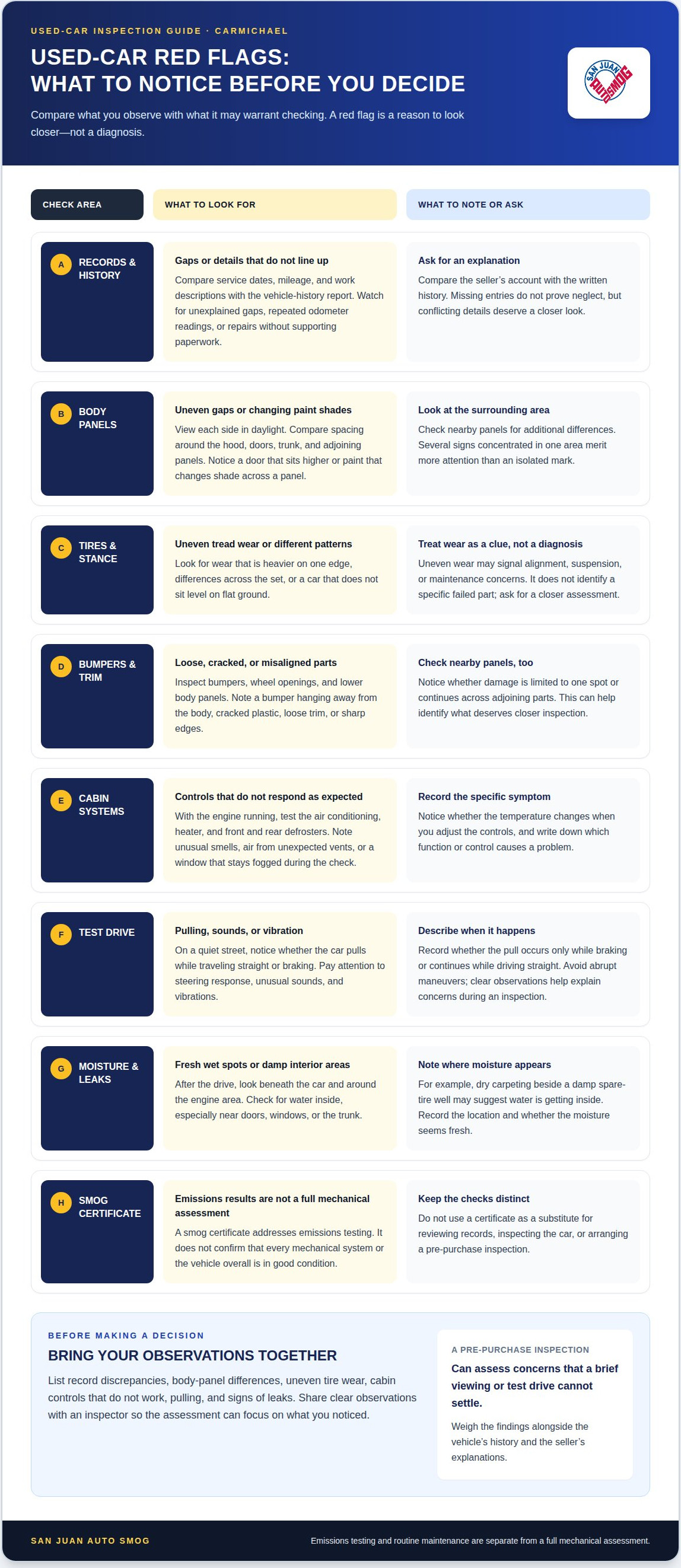
Start with the paperwork, then compare it with the car in front of you. Ask for maintenance records and compare dates, mileage, and work descriptions with the vehicle-history report. The U.S. Department of Justice’s National Motor Vehicle Title Information System lists approved providers for title and branding history, such as salvage or flood records. If the service records show regular visits but the report has long gaps, ask the seller to explain the difference. Missing entries don’t prove neglect, but conflicting details deserve a closer look. Note any questions the documents leave unanswered.
Check that the records describe the car you’re considering. Mileage should progress consistently across service visits and history entries. Look for unexplained gaps, repeated odometer readings, or repairs without supporting paperwork. A receipt identifying a replaced component may help explain a later repair, while a vague entry can leave questions about the work. Compare the seller’s account with the written history rather than relying on memory. Also check that the name and vehicle identification number on the title match the seller and the car; the California DMV title page explains what a valid title transfer needs.
Walk around the car in daylight and view each side from several angles. Compare the gaps around the hood, doors, trunk, and adjoining panels. Uneven spacing, a door sitting higher than its neighbor, or paint that changes shade across a panel can point to poor assembly or previous damage. Check nearby panels, too. Several differences concentrated in one area deserve more attention than an isolated mark.
Look closely at the tires before the test drive. Tread worn more on one edge than the other, or different wear patterns across the set, may signal alignment, suspension, or maintenance concerns. Check whether the tires appear similarly worn and whether the car sits level on flat ground. Uneven wear doesn’t identify a specific failed part. Treat it as a reason for closer assessment, not as a diagnosis.
During the walk-around, inspect the bumpers, wheel openings, and lower body panels. Note a bumper that hangs away from the body, cracked plastic, loose trim, or sharp edges. Check whether nearby panels sit evenly and whether visible damage is limited to one area or continues across adjoining parts. These observations can help distinguish a small cosmetic mark from damage that warrants closer inspection.
Test the cabin systems while the engine is running. Switch on the air conditioning and heater, then try the front and rear defrosters. Notice whether air comes from the expected vents and whether the temperature changes when you adjust the controls. A system that doesn’t respond, produces an unusual smell, or leaves a window fogged during the check may need attention. Note which control or function causes the problem.
Choose a test-drive route with a quiet street and a safe place to brake smoothly. Notice whether the car pulls to one side while traveling straight or braking. Pay attention to steering response, unusual sounds, and vibrations. If it drifts only while braking, note when that happens; if it pulls continuously, record that separately. Avoid abrupt maneuvers. Specific observations make it easier to explain concerns during a thorough inspection.
After the drive, check beneath the car and around the engine area for fresh wet spots. A car wash can also reveal water entering the cabin, especially around doors, windows, or the trunk. Dry carpeting beside a damp spare-tire well, for example, may suggest water is getting inside. Note where moisture appears and whether it seems fresh. The location can help an inspector trace the source.
In California, the seller is generally responsible for providing a valid smog certification at the time of sale; the DMV smog inspection page explains the rules and exemptions. Be cautious if someone offers a smog certificate as proof that the whole car is sound. Emissions results and a mechanical condition assessment answer different questions. The Legal Information Institute describes “clean piping” as using a substitute exhaust sample instead of testing the vehicle’s actual exhaust. For California emissions context, Carmichael readers can review the local smog-check information. A certificate doesn’t replace a review of records, a careful inspection, or a pre-purchase inspection.
Before deciding, list your concerns: record discrepancies, body-panel differences, uneven tire wear, cabin controls that don’t work, pulling, or signs of leaks. A pre-purchase inspection can assess issues that a brief viewing or test drive cannot settle. Share clear observations so the inspection can focus on what you noticed. Weigh the findings alongside the car’s history and the seller’s explanations before deciding whether to proceed.
San Juan Auto Smog
San Juan Auto Smog at 4701 San Juan Ave, Fair Oaks, CA 95628 can help Carmichael buyers as they assess a used vehicle. As a STAR-certified Test & Repair station (license RC303707), the shop performs STAR-certified smog checks and can diagnose and repair a car that fails. A pre-purchase inspection gives a closer look before you commit. Older vehicles may need an Older Vehicle Smog Check (1999 and older). San Juan Auto Smog offers full-synthetic oil changes, with a multi-point inspection, fluid check, and tire rotation available as options. Text (916) 961-6009 to make an appointment.
FAQs
Does a smog certificate show that a used car is mechanically sound?
No. A smog certificate confirms emissions testing, not the condition of every mechanical system or the vehicle overall.
Should I arrange an inspection before buying?
A pre-purchase inspection can assess concerns that a brief viewing or test drive may not resolve.
For help with emissions testing or routine maintenance, contact San Juan Auto Smog.
Make Your Next Step a Confident One
A used-car decision doesn’t end when you choose a vehicle. If you buy, keep the seller’s records and your inspection notes together. They can help you build a clear maintenance history from the start and notice changes as you drive. If you decide not to proceed, use the concerns you identified to guide your search for a better fit.
A measured approach to the red flags to look for when buying a used car in Carmichael can help you decide based on the vehicle’s condition, not pressure to act quickly. Take time to consider what you observed and what still needs attention before committing.
For help planning your next vehicle-care step, contact San Juan Auto Smog today. Text (916) 961-6009 to make an appointment. A clear plan can make ownership feel more manageable from the beginning.
More articles
- Save Money on Car Maintenance in Citrus Heights with DIY Care
- Does California Have Car Inspections? Here's What's Required
- Will Using an Independent Mechanic Void Your Warranty?
- Clean Truck Check Pricing in Sacramento: What Sets Cost
- San Juan Auto Smog vs Bluautorepair: A Fair Comparison
- How Often Should I Get My Tires Rotated in Gold River?