Smog Repair in Sacramento: What Happens After a Failed Test
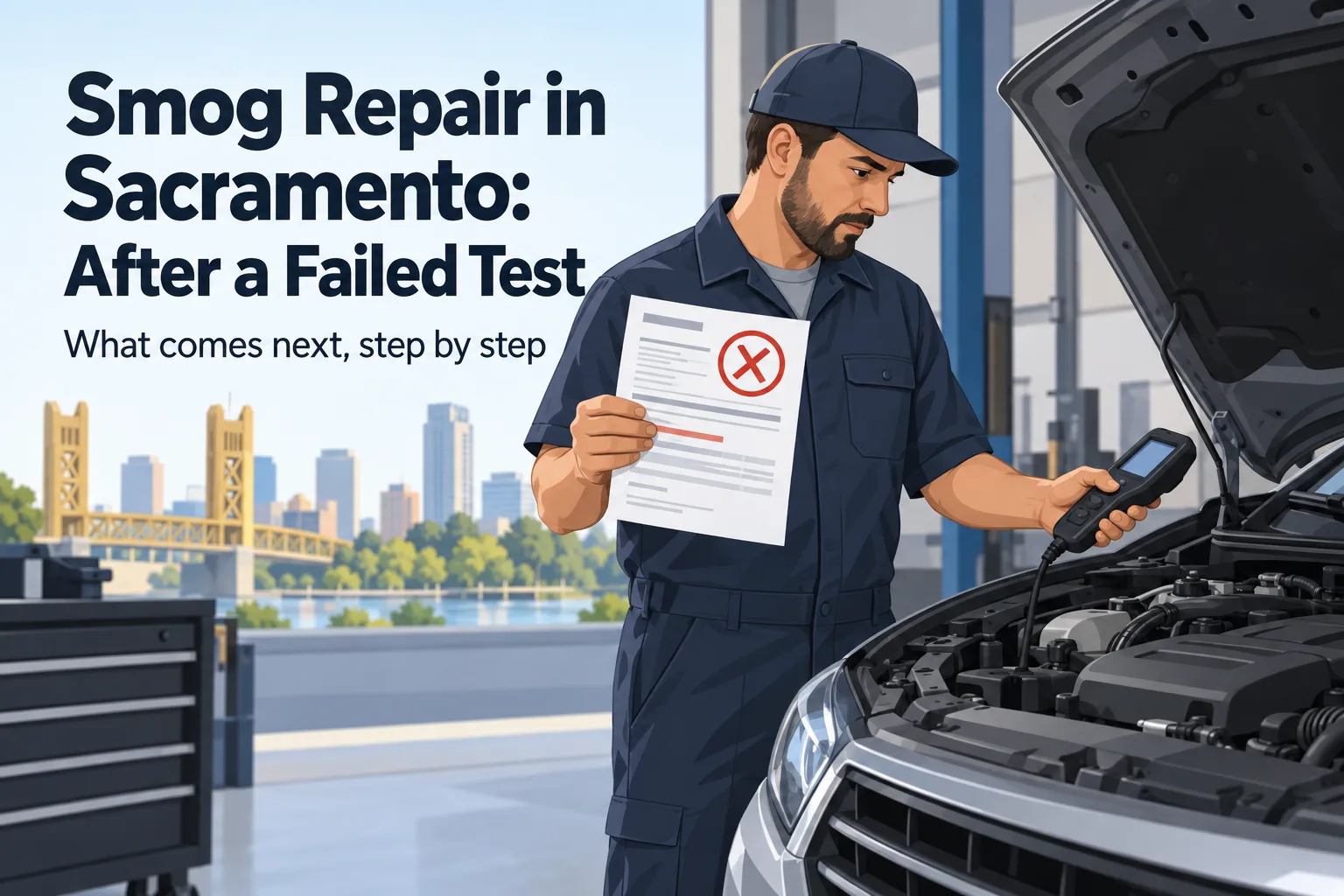
Smog repair in Sacramento is the fix-it step after your car fails its emissions test — not the test itself. A shop has to track down the system that tripped the failure, repair or replace it, then prove the fix clears the test before you pay for another one.
If you're reading this, you probably just failed and you're staring at a printed report full of codes that mean nothing to you. That report isn't a dead end, though. It tells a technician exactly where to look.
Here's how the process works, what it tends to cost, and what to ask before you hand the keys to anyone.
Key Takeaways
- A failed smog report names the specific test and codes that failed — that's where repair diagnosis starts.
- Test-only shops can't legally repair vehicles they flag as Gross Polluters, under California's Bureau of Automotive Repair rules.
- Repair cost depends entirely on what failed: a sensor is a small job, a catalytic converter a large one. Get a quote before assuming the worst, and check what a smog check itself costs separately from repair.
- Every repair needs a passing retest before the DMV accepts your registration renewal.
- Ask upfront whether a shop offers a free or discounted retest window after repairs — policies vary by station.
Table of Contents
What does smog repair actually involve?
It means diagnosing the exact system that caused the test failure, repairing or replacing it, and confirming the fix with a retest. A smog test checks several things at once: emissions output, the check engine light, and onboard monitors tracking components like the catalytic converter and oxygen sensors. When one of those trips, the printed report names it. No guessing required.
What usually fails?
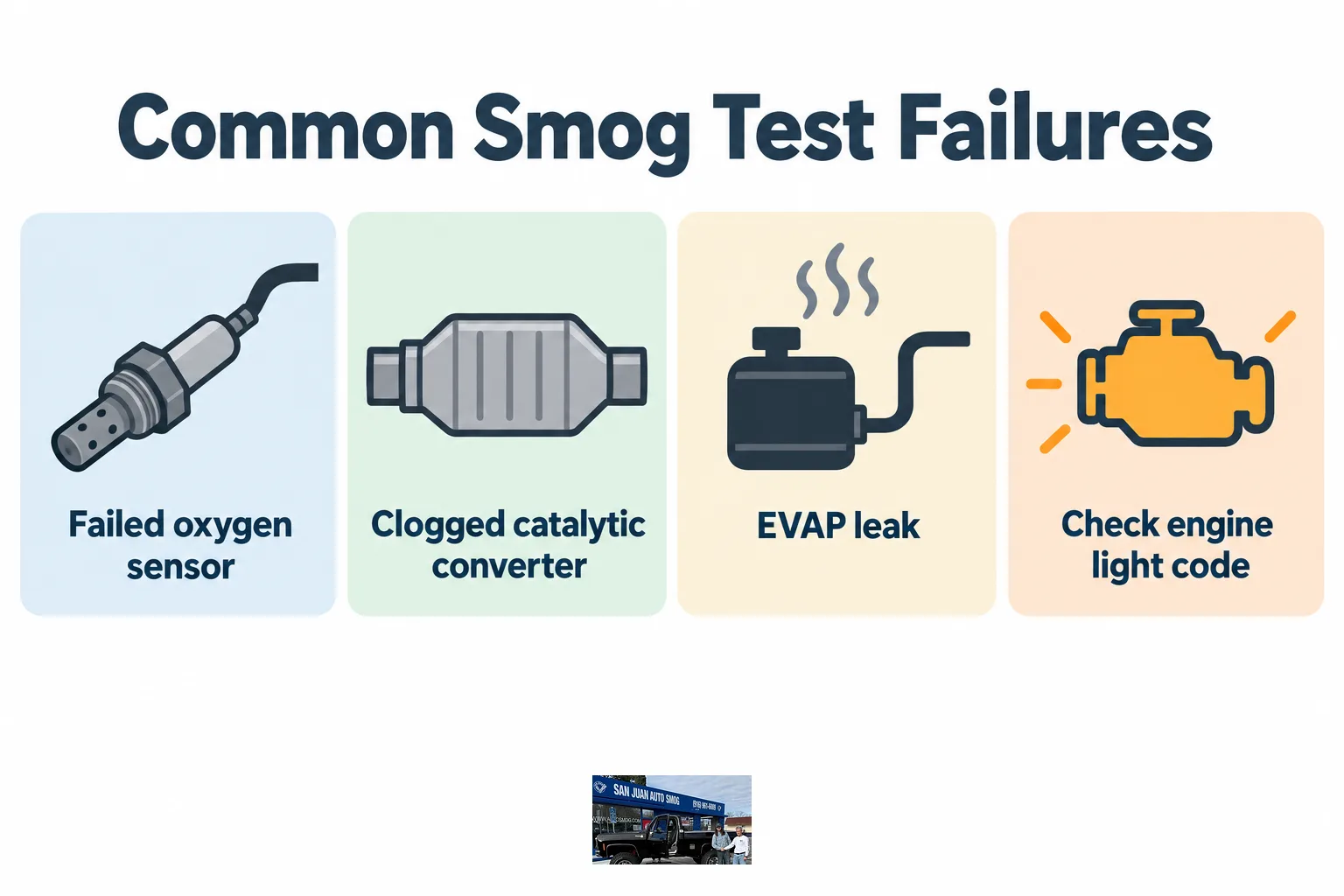
Usual suspects: a failed oxygen sensor, a clogged or failing catalytic converter, an EVAP leak, or a stored code tied to the check engine light. Each one has its own repair path and its own price tag — which is exactly why the report matters more than a guess.
Does a failed test tell you what to fix?
Yes. The report spells out which test failed — visual, functional, or emissions readings — plus any stored diagnostic codes. A shop doing smog failure diagnosis starts from that report instead of starting over.
How do you find a shop that tests and repairs in Sacramento?
Look for a STAR-certified station that also handles repairs, so diagnosis and the fix happen without a second trip across town. Not every station can do both. California's smog program keeps some of them separate on purpose.
What's the difference between test-only and test-and-repair stations?
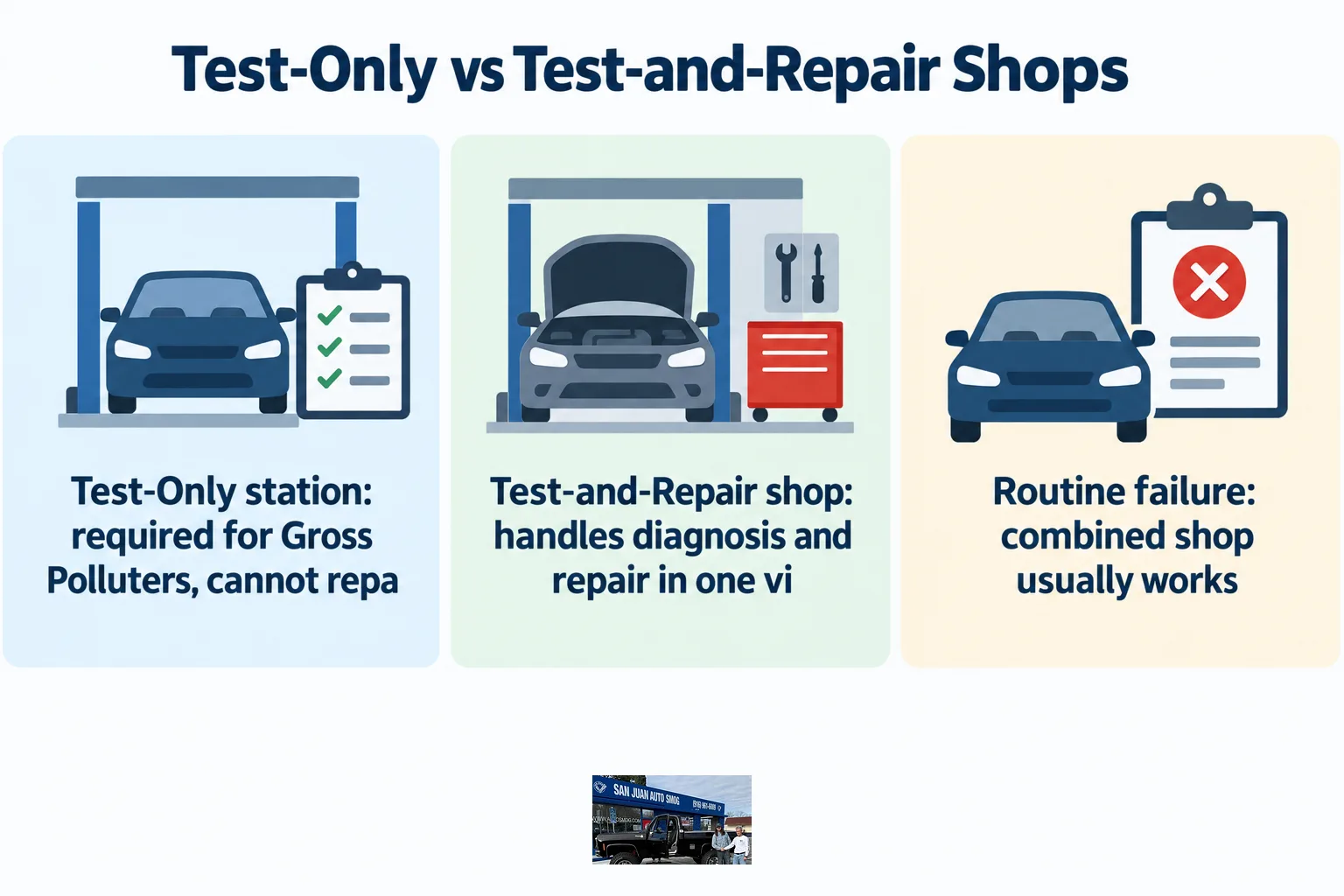
California's Bureau of Automotive Repair requires vehicles flagged as Gross Polluters to be retested at a Test-Only station, and that station can't do the repair itself. Land in that category and you'll need a separate repair shop first. Check your result against the Gross Polluter retest rules before you book anything — it saves a wasted trip.
Failed for something more routine? A combined test-and-repair shop can usually handle diagnosis and repair in one visit — simpler for most drivers.
What should you do right after a failed test?
- Read the printed report. Note which test failed and any codes listed — that's what determines the kind of repair you need.
- Get a repair diagnosis. A shop doing smog failure repair confirms the cause before replacing anything.
- Approve the repair. Get the cost upfront — prices vary by part and labor.
- Schedule the retest. Don't assume it passed until the car's actually been tested again.
What does smog repair typically cost?
Cost depends entirely on what failed — a sensor replacement is a modest repair, a catalytic converter is one of the bigger ones. There's no single number that applies across vehicles. The part, the labor time, and the vehicle's age all move the total.
Is there financial help for expensive repairs?
California runs a statewide assistance program for qualifying owners facing costly emissions repairs. Eligibility depends on income and vehicle status, so ask a shop whether your situation qualifies before assuming you're stuck paying the full bill.
Do you need a retest after repairs, and how soon?
Yes — every repair needs a passing retest before the DMV accepts your registration renewal. The repair alone changes nothing on your record. It's the passing test result that gets submitted.
What if the repair doesn't fix it the first time?
Sometimes more than one system contributes to a failure, so one repair doesn't always clear everything on the first try. If the retest still shows a failure, ask the shop to re-check the original diagnosis before replacing anything else. Stacking repairs without confirming the cause rarely saves money.
Get Your Car Back to a Passing Smog Test
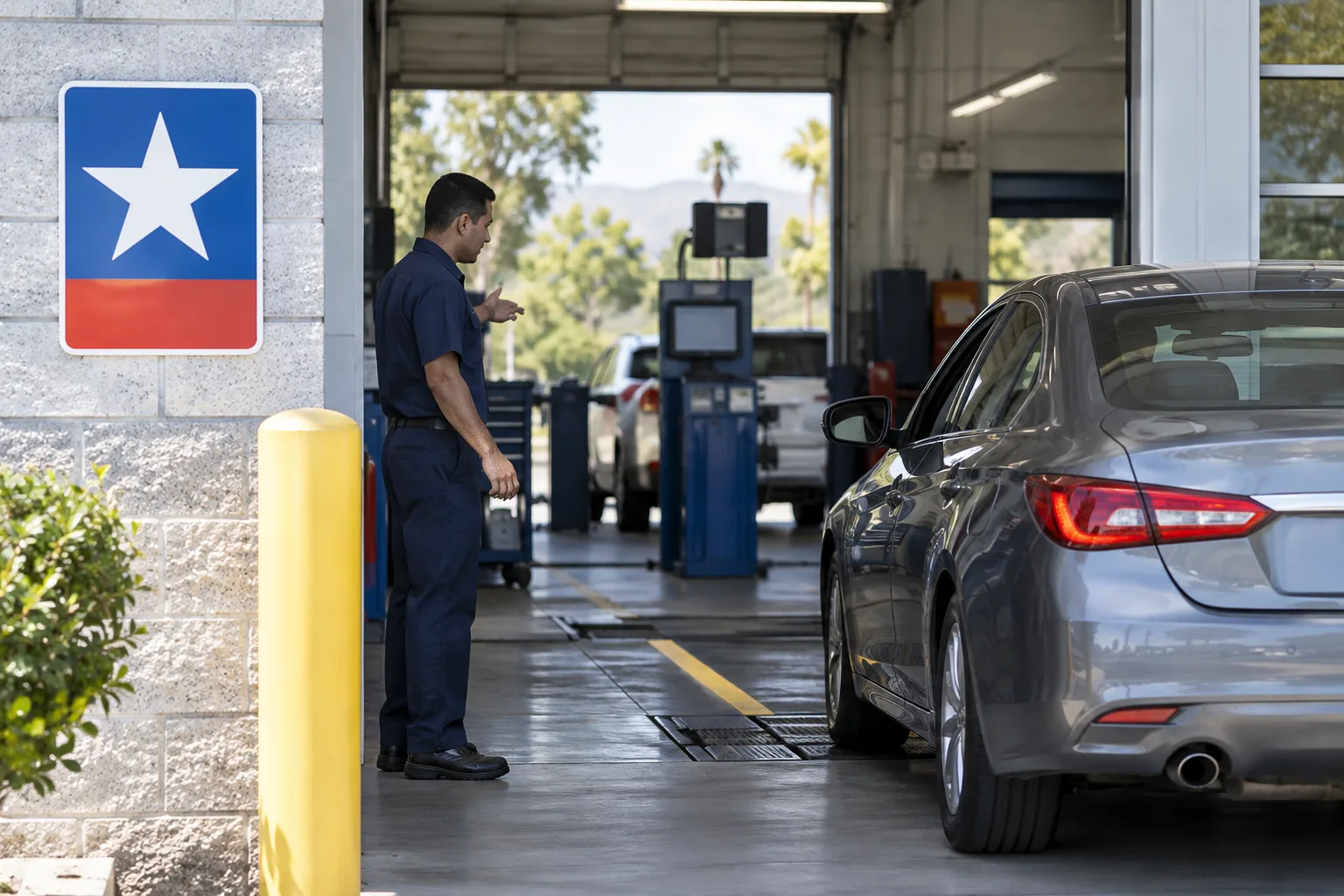
San Juan Auto Smog runs a STAR-certified smog check station at 4701 San Juan Ave in Fair Oaks, and also serves Carmichael, Sacramento, Citrus Heights, Orangevale, and Gold River. Walk-ins are welcome for 2000-and-newer vehicles. 1999-and-older cars, RVs, vans, and heavy trucks run smoother with an appointment, since those tests just take more time.
Smog check and oil change both on the list? Bundling them in one visit saves money through the combo pricing instead of booking each separately — and pricing stays transparent before you commit to anything.
Book a STAR-certified smog check or check the smog and oil change combo to handle both in a single visit.
Frequently Asked Questions
Can I get my car repaired and retested at the same Sacramento shop?
In most cases, yes — unless your vehicle was flagged as a Gross Polluter, which requires the retest at a separate Test-Only station. Ask the shop directly which category your result falls into before you schedule anything.
How long does smog repair take?
Depends on the part, and whether it has to be ordered. A sensor swap can sometimes happen same-day; a catalytic converter replacement may take longer if parts aren't on the shelf.
Will a check engine light always need repair before a smog test?
Yes. A lit check engine light is an automatic failure on the visual portion of the test, no matter how the vehicle otherwise performs. The underlying code has to be addressed first.
What if I can't afford the repair right away?
Ask about California's statewide repair assistance program — it's built for qualifying owners facing high-cost emissions repairs. Eligibility rules vary, so confirm your situation with a shop or the program directly before ruling it out.
Does fixing a smog failure guarantee I'll pass the retest?
No shop can promise an outcome — some vehicles have more than one contributing issue. A proper diagnosis before the repair gives the best shot at a clean retest, but the only real confirmation comes once the car is tested again.
More articles
- Best Smog Shop for Quick Turnaround in Orangevale
- Car maintenance for hot Sacramento summers: checks that matter
- Is It Safe to Drive With the Oil Light On? What to Do
- Who Handles Diesel Smog Checks Near Sacramento?
- Local Auto Repair and Maintenance in Gold River
- Smog Test for a 1998 RV in Sacramento: Where to Go