Is It Safe to Drive With the Oil Light On? What to Do

An oil warning light is a stop-and-check signal, not something to ignore. If you’re wondering whether it is safe to drive with the oil light on, pull over safely and turn off the engine. Continuing to drive with the warning on can cause serious engine damage, even in a short time.
It’s easy to mistake an oil warning for a routine reminder, but it can indicate low oil pressure, meaning the engine may not be getting the lubrication it needs. A yellow or amber light can have a different meaning, such as low oil level or a sensor issue. Check the color and your owner’s manual to understand the warning.
This guide explains what the oil light means, how to check the oil level safely, and what to do if the warning stays on. You’ll also learn why topping up may not solve the problem and when it’s safer to leave the car switched off and arrange help.
Key Takeaways
- If the oil warning appears while you’re driving, pull over safely and switch off the engine rather than continuing your trip.
- Learn how red and amber oil warnings can point to different issues, including low pressure, low oil level, or a sensor problem.
- Check the dipstick with the engine off and learn what to do if the oil level is low or the warning stays on.
- Understand why topping up may not fix the cause and when continued driving can put the engine at risk.
Table of Contents
What is an engine oil warning light?
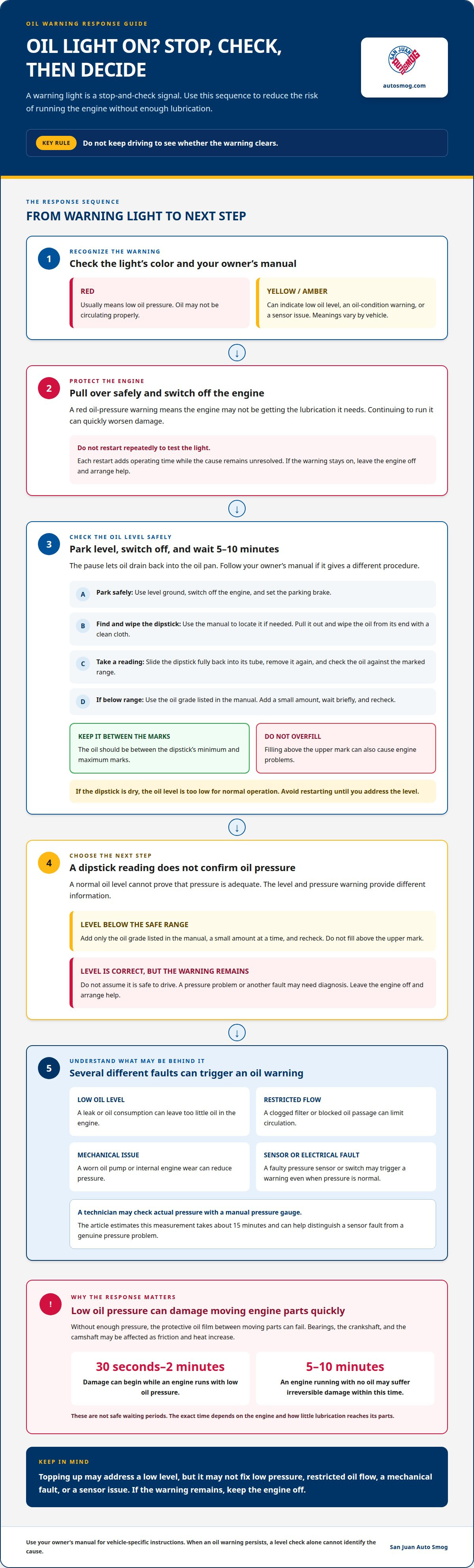
An engine oil warning light alerts you to a possible problem with oil level or pressure. Engine oil lubricates moving parts, helps carry away heat, and protects internal surfaces from wear. A red oil warning usually indicates low oil pressure, meaning oil may not be circulating properly. A yellow or amber warning can indicate low oil level, an oil condition warning, or a sensor issue. Check your owner’s manual, since warning colors and symbols vary by vehicle.
Low oil pressure can have several causes, even when the dipstick shows enough oil. A failing oil pump may not circulate oil effectively. A blocked oil filter or passage can restrict flow, while the wrong oil grade may not provide the pressure the engine requires. Internal engine wear can also reduce pressure. A faulty oil pressure sensor or switch may trigger the warning even when pressure is normal, so the light alone cannot identify the problem.
- Low oil level: A leak or oil consumption can leave too little oil in the engine.
- Restricted flow: A clogged filter or blocked oil passage can limit circulation.
- Mechanical or electrical fault: A worn pump, internal wear, or faulty sensor can activate the warning.
If the oil warning appears right after an oil change, the level or oil grade may be incorrect. A faulty or improperly fitted filter, a leak, a damaged sensor, or a blockage in the lubrication system can also trigger the light. The timing is useful information, but it does not prove the oil change caused the problem.
In the United States, diagnosis or repair has no single fixed cost; it depends on the cause, testing, parts, and labor. A shop should give you an estimate after inspecting the vehicle; in California, the Bureau of Automotive Repair’s auto-repair guide explains your right to a written estimate before work begins. A technician may use a mechanical gauge to check actual oil pressure. That measurement helps distinguish a sensor fault from a genuine pressure problem.
Engine damage from inadequate oil pressure
Oil pressure maintains a film of lubricant between moving parts that would otherwise rub together. If pressure drops, crankshaft and connecting-rod bearings can lose that protective film. Metal contact creates heat and friction, and continued engine operation can quickly worsen the damage.
Damage can begin quickly once lubrication is lost, and an engine run with little or no oil can be ruined. There is no safe waiting period; how fast damage happens depends on the engine and how little lubrication reaches its parts.
Bearings may wear or overheat first, while poor lubrication can also affect the crankshaft and camshaft. As damage progresses, you may hear knocking or tapping, notice reduced power, or find the engine stalls. These signs can mean internal parts are already under stress. A quiet engine does not prove oil pressure is safe.
- Very low oil: The oil pickup may not draw enough oil into the pump, especially as the vehicle moves or changes direction.
- Restricted circulation: A blockage can prevent oil from reaching engine passages and moving components.
- Mechanical wear: Damaged bearings can increase internal clearances, making it harder to maintain pressure.
Driving even a few miles with very little or no engine oil can lead to expensive damage. If the warning appears, switch off the engine promptly to limit further operation without lubrication. Restarting repeatedly to see whether the light clears adds operating time while the cause remains unresolved.
Don’t guess at the cause: low oil level, a pressure problem, and internal damage require different assessments. After an oil-pressure concern is addressed, a multi-point inspection can help identify separate maintenance items that need attention.
How to check the engine oil level
Check the oil on level ground, with the engine warm and switched off for 5-10 minutes. That pause lets oil drain back into the oil pan, giving the dipstick a more useful reading. If the owner’s manual gives a different procedure for your vehicle, follow its instructions.
- Park safely: Stop on level ground, switch off the engine, and set the parking brake. Wait 5-10 minutes before checking.
- Find the dipstick: Use the owner’s manual to locate it if the handle isn’t easy to identify. Pull it out and wipe the oil from its end with a clean cloth.
- Take a reading: Slide the dipstick fully back into its tube, then remove it again. Check where the oil film sits against the marked range.
- Add oil only if needed: If the reading is below the safe range, use the oil grade listed in the manual. Add a small amount, wait briefly, and recheck the dipstick.
Keep the reading between the dipstick’s minimum and maximum marks. Don’t fill above the upper mark, because overfilling can also cause engine problems. If the dipstick is dry, the level is too low for normal operation; avoid restarting the engine until you address the level.
Some newer vehicles use an electronic oil-level display instead of a dipstick. The display may require a specific parking position or engine temperature, so follow your vehicle’s manual. A dashboard oil-pressure warning and an oil-level reading provide different information: a normal dipstick reading does not confirm that oil pressure is adequate.
Check the level during routine maintenance, and sooner if you notice an oil spot beneath the car or the warning light appears. If the level is correct but the warning remains on, don’t treat the dipstick as proof that driving is safe. The warning may involve oil pressure or another fault that a level check cannot diagnose.
Whether it is safe to drive with the oil light on
Usually, no. A red oil-pressure warning means the engine may not be receiving enough lubrication, so pull over safely and switch it off. A flashing oil light can also signal critically low pressure, low oil, or an oil-pump problem. Don’t keep driving to see whether the warning clears.
There’s no dependable distance you can drive before engine damage occurs. If oil pressure is critically low, damage can begin while the engine is running, so even a short trip may be too far. The safest choice is to stop as soon as road conditions allow and turn off the engine.
A yellow or amber oil-level warning may call for a different response, but first identify it in your owner’s manual. If it indicates low oil level, the manual may allow a short, careful drive to a safe place to add oil. This guidance does not apply to a red oil-pressure warning.
- Red pressure light: Pull over safely, shut off the engine, and arrange assistance.
- Low-level warning: Stop safely and check the dipstick using the vehicle’s recommended procedure.
- Warning remains after adding oil: Don’t restart to continue the trip. Call for roadside assistance.
- Oil level is already sufficient: Leave the engine off and arrange assistance; the warning may indicate a pressure problem.
If adding oil turns off a low-level warning, keep any drive to a repair shop as short as possible, and only if the manual allows it. Stop right away if the light returns, the engine makes unusual noises, or the vehicle loses power. A correct dipstick reading does not rule out low oil pressure, and a flickering warning still needs attention.
Once the vehicle is safely stopped, contact the team for next steps rather than driving with a persistent warning.
San Juan Auto Smog
San Juan Auto Smog in Fair Oaks helps drivers keep up with routine oil maintenance and understand practical next steps after an oil warning. If the oil level is low and the vehicle is safe to bring in, a Full-Synthetic Oil Change can support regular engine care. As a STAR-certified Test & Repair station (license RC303707) at 4701 San Juan Ave, Fair Oaks, CA 95628, the shop also offers auto repair and maintenance; ask whether your specific oil-pressure repair is a fit when you call.
If the warning stays on after you stop and check the level, leave the engine off and arrange assistance rather than driving to a shop. A persistent oil-pressure warning needs diagnosis before you drive again. Once the immediate issue is addressed, staying current with oil changes can help you keep track of routine maintenance.
Contact San Juan Auto Smog to discuss routine oil maintenance or your next service. Text (916) 961-6009 to make an appointment.
Make your next maintenance decision with confidence
If you’re still wondering whether it is safe to drive with the oil light on, choose caution. Don’t use a routine service visit as a reason to drive with an active warning. Address the immediate oil-pressure concern first. Then keep a simple record of oil checks, warning lights, and maintenance. That history can help a technician understand what changed and plan ongoing care.
For routine maintenance, San Juan Auto Smog offers Full-Synthetic Oil Changes, with a multi-point inspection, fluid check, and tire rotation available as options. If emissions testing is also due, its STAR-Certified Smog Check and Older Vehicle Smog Check for vehicles 1999 and older are separate services to consider, and if a vehicle fails, the shop can diagnose and repair it. For more ways to keep an engine healthy, see the U.S. Department of Energy’s vehicle maintenance tips. An oil change supports routine engine care, but it does not guarantee a smog inspection result.
Schedule your next visit with San Juan Auto Smog when you’re ready. Please book ahead. Text (916) 961-6009 to make an appointment. A thoughtful next step can make vehicle care feel more manageable.
Frequently Asked Questions
Can You Drive to the Shop?
If the oil warning is active, arrange help rather than driving to a shop. When you call, describe the dashboard symbol, whether it stayed lit or flashed, and any unusual engine sounds. Mention recent oil service or top-ups too. These details help the shop understand the situation and plan the next diagnostic step.
Can low oil damage an engine?
Yes. A low reading needs attention, especially if it returns after you add the oil grade specified in your owner’s manual. Note the dipstick reading and whether you see fresh spots beneath the parked vehicle. This information can help distinguish a one-time low level from a recurring concern and give a technician useful context.
Is It Safe to Drive with Your Oil Light On?
No. Treat an active oil warning as a reason not to continue your trip. If you’re unsure whether the dashboard symbol is an oil warning or a scheduled maintenance reminder, compare it with the symbols in your owner’s manual. Don’t rely on color alone, since displays and warning descriptions can differ by model.
My oil light came on then went off. Should I worry?
Yes. Note the conditions when the warning appeared, such as whether the vehicle was idling, turning, or braking. Don’t try to recreate it by driving or restarting the engine. Share your observations with the technician, along with any recent oil service. Even a brief warning deserves attention because it can provide useful clues.
What Does the Oil Light Mean?
The oil-can symbol identifies an oil-related alert, but its exact meaning depends on your vehicle. Check the dashboard display for accompanying text, then consult your owner’s manual. If the display names a maintenance interval, record the message and mileage to distinguish scheduled service from an unexpected warning.
What does the oil pressure warning light mean?
It means the vehicle’s monitoring system has detected an oil-pressure concern or a possible fault in the monitoring circuit. A technician can compare the dashboard warning with an actual pressure measurement and inspect related electrical components. Tell them whether it appeared during startup, idling, or normal driving; those circumstances can help guide diagnosis.
More articles
- Who Handles Diesel Smog Checks Near Sacramento?
- Local Auto Repair and Maintenance in Gold River
- Smog Test for a 1998 RV in Sacramento: Where to Go
- Local Auto Shop vs Chain Store Orangevale: Compare Costs and Service
- Save Money on Car Maintenance in Citrus Heights with DIY Care
- Does California Have Car Inspections? Here's What's Required