How to Set a Sacramento Car Maintenance Budget for Your Vehicle

The right maintenance budget depends on your car’s age and mileage, not a one-size-fits-all monthly amount.
A steady plan can help prevent an unexpected repair bill from disrupting your budget. Set aside money each month for scheduled maintenance, then build a separate reserve for repairs so routine service and surprises don’t draw on the same funds.
This guide shows you how to tailor your savings to your vehicle’s age, mileage, and upcoming service needs. You’ll learn how to estimate a monthly target using your own records and organize an annual plan for oil changes, inspections, and other maintenance.
Key Takeaways
- Use your vehicle’s age and mileage to choose a monthly starting budget: newer cars generally need less set aside than older or high-mileage vehicles.
- Keep emergency repair savings separate from routine maintenance money so an unexpected repair doesn’t disrupt planned service.
- Use your owner’s manual and driving habits to map annual service needs, then spread expected costs across the year.
- Compare local repair estimates by the work included and your vehicle’s needs, not by a single citywide average.
Table of Contents
Adjusting budgets for vehicle age and mileage
For Sacramento drivers learning how to budget for car maintenance in Sacramento, separate planned upkeep from repair savings. Set aside a distinct amount for any inspection your vehicle needs, then keep routine maintenance and unexpected repairs visible as separate budget categories. The Sacramento smog-check information can help you plan for local inspection needs.
- Choose a starting amount based on age. A newer, low-mileage car usually needs a smaller monthly set-aside than an older or high-mileage one. Treat any starting amount as a planning figure, then compare them with your service records and the work scheduled for the coming year.
- Adjust for mileage and condition. A vehicle with 100,000 or more miles may need more frequent repairs and replacements. Consider its service history, current condition, and upcoming maintenance milestones. If several items are due soon, budget toward the higher end of the age-based range and note which services are approaching.
- Use your own records to refine the estimate. Add maintenance and repair spending over a recorded period, then divide by the number of months covered. Use your own invoices to distinguish recurring upkeep from a one-time repair and improve your estimate over time.
- Check mileage milestones in the owner’s manual. The manual identifies service needs for your specific model. Serpentine belts are typically replaced between 60,000 and 100,000 miles, but the interval varies by vehicle. Write the specified mileage in your calendar and spread expected costs across the months before service is due.
- Make the budget reflect the next year. A practical approach to how to budget for car maintenance in Sacramento is to list your vehicle’s age, mileage, and upcoming service. A newer car with low mileage may fit the lower range, while an older car nearing a maintenance milestone may call for a larger reserve. Review the plan as the odometer and service needs change.
Building a separate emergency repair fund
Compare itemized estimates for the same repair, vehicle, parts, and labor before deciding. Ask what each recommended service addresses, then distinguish urgent repairs from maintenance you can plan ahead.
Compare local repair prices
- Request an itemized estimate that identifies the concern, proposed work, parts, and labor. Sacramento prices can’t be compared fairly with California or national averages unless the estimates cover the same job and vehicle. A repair’s cost can vary with the model, part, labor involved, and diagnostic findings.
- Compare like with like. If one estimate includes diagnostic work or additional parts, identify that difference before weighing totals. A lower estimate may cover less work, while a higher one may include more. Focus on the explanation and scope, not just the final amount.
- Ask the technician to explain how each recommendation relates to the reported symptom or inspection finding. Separate work needed to address the current concern from preventive maintenance that can be scheduled later. A multi-point inspection can help organize observed maintenance needs.
Set aside emergency repair savings
- Open a separate savings category for repairs, apart from your routine service budget. Treat it as a planning target, then adjust deposits to fit your vehicle’s condition and household budget.
- Automate a deposit after each payday, even if the amount changes from month to month. Keep the fund available for repairs rather than using it for scheduled oil changes, tires, or other expected service. This separation makes it easier to see what money remains for planned care.
- After paying for a repair, rebuild the fund gradually and record the work, date, and mileage. If an estimate includes several recommendations, ask which issue needs attention first and which can wait. That order helps you plan withdrawals without treating every suggested service as an immediate emergency.
A sample annual maintenance schedule
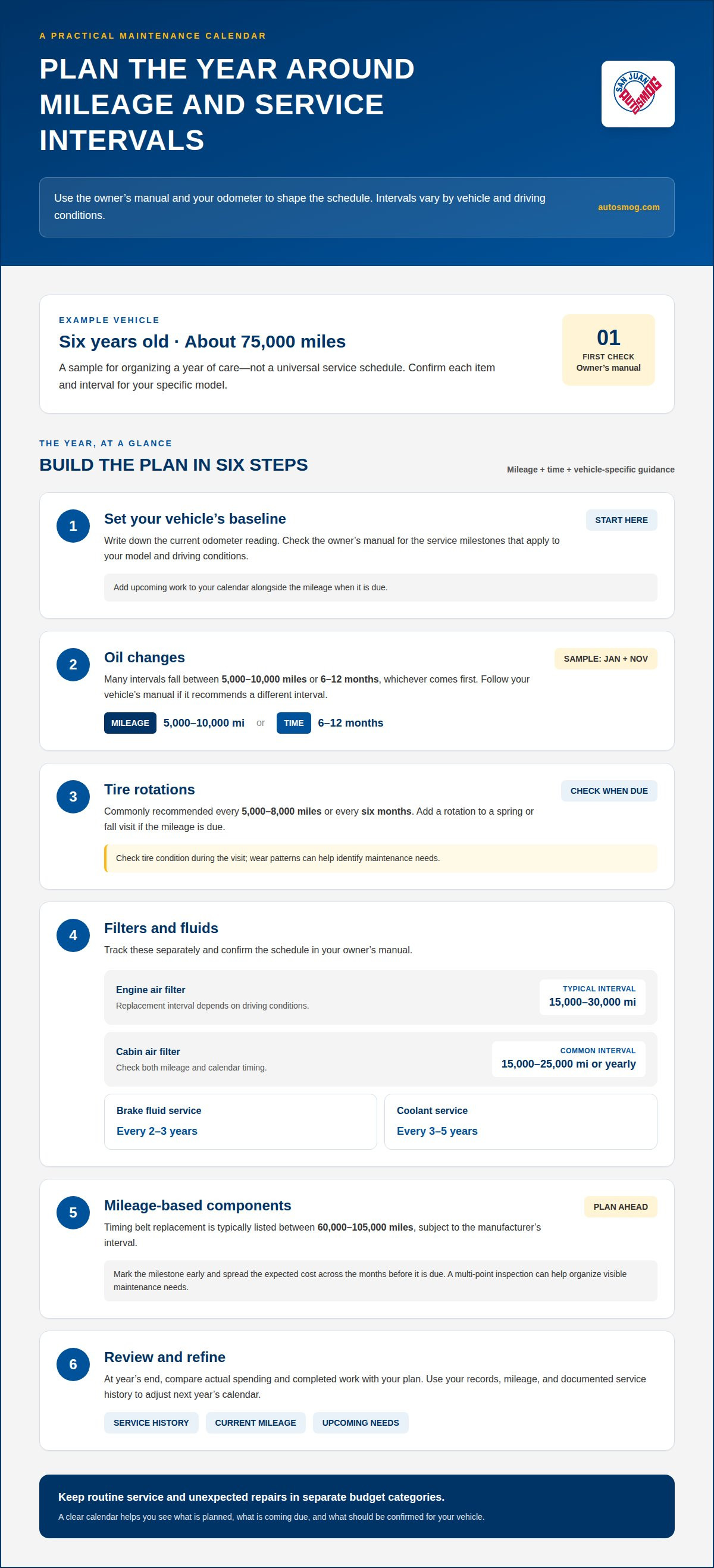
Build the calendar around mileage and the manufacturer’s schedule. A six-year-old car driven about 75,000 miles locally provides a useful example.
- Start with the owner’s manual. Record the current odometer reading and the service milestones listed for your vehicle. Maintenance intervals vary by model and driving conditions, so use the manual rather than assuming every car follows the same calendar. Add upcoming work to a calendar alongside its expected mileage.
- Schedule oil changes by mileage or time. Many oil change intervals fall between 5,000 and 10,000 miles, or every 6 to 12 months, whichever comes first. In the sample plan, schedule oil changes in January and November. Follow your vehicle’s manual if its recommended interval differs.
- Pair tire rotations with regular service. Tire rotations are commonly recommended every 5,000 to 8,000 miles or every six months. Add a rotation to a spring or fall appointment if the mileage is due. Check the tire condition during the visit (the NHTSA tire safety page explains tread and pressure basics), since wear patterns can help identify maintenance needs.
- Track filters and fluid service separately. Engine air filters are typically replaced every 15,000 to 30,000 miles, depending on driving conditions. Cabin air filters are commonly replaced every 15,000 to 25,000 miles or once a year. Brake fluid service is listed every 2 to 3 years, and coolant service every 3 to 5 years. Confirm the schedule in your manual.
- Plan for mileage-based components. Timing belts are typically replaced between 60,000 and 105,000 miles, subject to the manufacturer’s interval. Mark this milestone early and budget across the months before it comes due. A multi-point inspection can help organize visible maintenance needs.
- Review the year’s spending. Compare your actual records with that sample, then adjust next year’s calendar for your car’s mileage and documented service history.
Are car repair and maintenance prices higher in Sacramento than the California or national average?
Sacramento’s location alone doesn’t tell you whether a repair costs more or less than elsewhere. Compare the same work on similar vehicles, with the same parts and labor included.
- Match the repair before comparing totals. Compare estimates for the same vehicle, concern, and work. An oil service, brake job, and diagnostic visit are different services, so combining them into one average hides useful differences. A citywide figure also won’t tell you what your specific repair should include.
- Check what each estimate covers. Look for the parts, labor, diagnostic work, and any additional work listed. If one estimate includes a diagnostic step and another doesn’t, the totals aren’t directly comparable. Ask for a plain-language explanation of the difference before deciding.
- Separate the vehicle’s needs from the location. Repair costs can change with the vehicle’s make, model, age, condition, and the parts required. For example, two vehicles with the same reported symptom may need different diagnostic steps or components. Compare estimates for your own vehicle rather than assuming a California or national average applies.
- Keep maintenance separate from ownership costs. Car payments, insurance, registration, and taxes belong in your personal budget, not your maintenance comparison. Focus on scheduled service and repair work so you can see what the vehicle itself requires.
- Use a written comparison. Record each estimate’s work description and included items in one place. Mark which recommendations address the current concern and which are preventive. This makes differences easier to discuss and helps you plan without treating every recommended item as equally urgent.
For help organizing your vehicle’s needs into a clear maintenance baseline, schedule an appointment.
San Juan Auto Smog: Full-Synthetic Oil Change
San Juan Auto Smog can help you organize scheduled maintenance with a Full-Synthetic Oil Change. San Juan Auto Smog offers full-synthetic oil changes, with a multi-point inspection, fluid check, and tire rotation available as options. Follow your owner’s manual for the correct oil interval and grade, then include the service in your annual budget. An oil change supports engine performance and reliability, but does not guarantee that a vehicle will pass a California smog inspection.
If your vehicle is due for routine service, you can pair an oil change with a STAR-Certified Smog Check when an inspection is also due. Older vehicles may need an Older Vehicle Smog Check (1999 and older), while RV, van, and heavy truck inspections are also available. San Juan Auto Smog is a STAR-certified Test & Repair station (license RC303707), so if a vehicle fails, the shop can diagnose and repair it too. The DMV smog inspection page explains when your registration needs a smog check. Smog checks on 2000 and newer vehicles don’t need an appointment, but please book ahead for oil changes and for smog checks on 1999 and older vehicles, RVs, vans, and heavy trucks. Keeping routine service on schedule helps you track vehicle needs alongside your emergency repair savings.
Contact San Juan Auto Smog at 4701 San Juan Ave in Fair Oaks to plan your next service. Text (916) 961-6009 to make an appointment.
Make Your Maintenance Plan a Lasting Habit
A useful budget should adapt to your car’s changing needs. Keep a simple record of service dates, mileage, and repairs, then review it when your driving routine or vehicle condition changes. This can help you anticipate expenses and make informed decisions about what to schedule next.
Learning how to budget for car maintenance in Sacramento takes more than setting money aside. Keep your vehicle’s care organized, ask clear questions, and plan maintenance around its condition and the manufacturer’s schedule. If an oil change or emissions inspection is due, San Juan Auto Smog can help with a Full-Synthetic Oil Change or a STAR-Certified Smog Check.
Contact San Juan Auto Smog today to plan your next service. Text (916) 961-6009 to make an appointment. A steady approach can make caring for your vehicle feel more manageable, one practical decision at a time.
Frequently Asked Questions
How Much Should I Budget for Vehicle Maintenance?
Start with a monthly amount based on your own service records, then adjust for your vehicle’s age, mileage, and upcoming service. A car approaching a manufacturer-recommended maintenance milestone may need a larger monthly allocation than a newer vehicle with a consistent service history. Keep routine maintenance savings separate from emergency repair funds, so planned oil changes and unexpected repairs don’t draw from the same balance.
How Much Does the Average Person Spend on a Car Monthly?
These costs serve different purposes, so keep your maintenance budget separate from payments, insurance, registration, and taxes.
What Is the Average Annual Cost of Car Maintenance in Sacramento, California?
Maintenance spending depends on the vehicle, so one annual figure won’t fit every Sacramento driver. To understand your yearly costs, total your maintenance and repair records, separating vehicle work from insurance, registration, and other ownership expenses.
How Much Should I Budget Monthly for Routine Car Maintenance in Sacramento?
For a Sacramento budget, start with the maintenance needs that match your car’s age and mileage, then account for services due in the coming year. Your owner’s manual can help identify what to plan for. Use invoices to refine your monthly target over time, and keep savings for unexpected repairs separate from routine service funds.
How Do Car Maintenance Costs Vary by Vehicle Make, Age, Mileage, and Type?
Costs vary depending on the parts your vehicle needs, its service schedule and condition, and the work required. Age and mileage can point to approaching maintenance milestones, while make and model determine the appropriate parts and procedures. Cars, RVs, vans, and heavy trucks can have different service needs, so plan for your specific vehicle rather than relying on a general average.
What Routine Maintenance Does a Car Need by Mileage or Time Interval?
Use the owner’s manual as your schedule because intervals vary by vehicle. FuelEconomy.gov’s maintenance tips also show how routine care affects fuel costs. Typical guidance places oil changes at 5,000 to 10,000 miles or every 6 to 12 months, and tire rotations at 5,000 to 8,000 miles or every six months. Filter, fluid, and belt intervals also vary. Record mileage and dates to see what’s coming due.
More articles
- Fair Oaks auto maintenance for busy parents: Find a trusted garage
- Smog Inspection Cost: What Fair Oaks Drivers Actually Pay
- Why the DMV Sent You to a STAR Station for a Smog Check
- Smog Test Price in California: What Sets the Cost
- Smog Certificate Cost: What Really Drives the Price
- High-Mileage Vehicle Inspection in Fair Oaks: What to Check and Why