Are Oil Changes Covered Under Warranty? The Real Answer
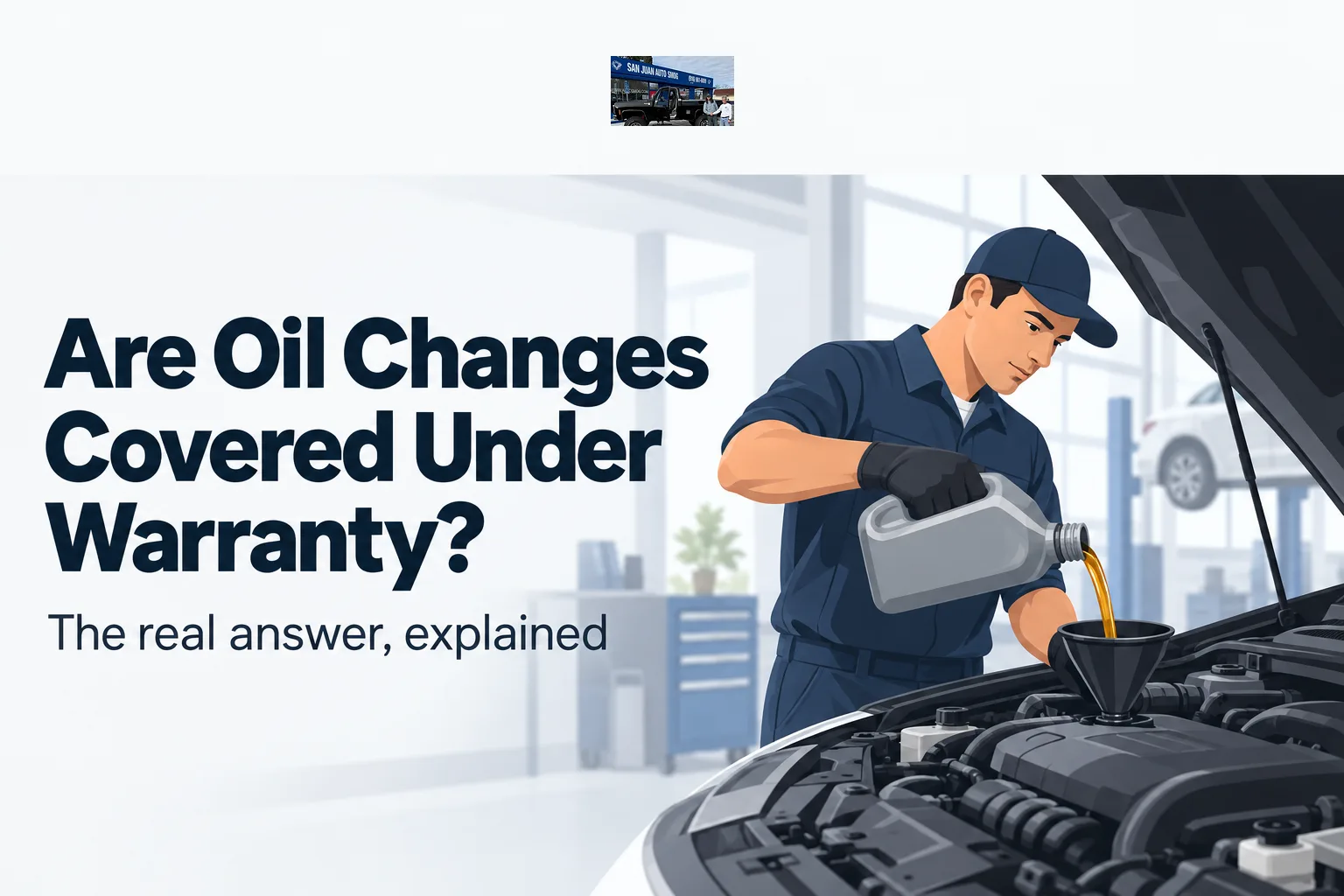
Short answer: no, a standard new-car warranty doesn't pay for oil changes. It covers defects, not routine upkeep. Some vehicles come with a separate prepaid maintenance plan that does pay for oil changes, but that's a different document entirely, with its own limits. Mixing the two up is exactly how most drivers end up confused about what they're actually owed.
Knowing which one applies to your car changes what you pay out of pocket, and what paperwork you need to hang onto.
This covers how to tell the two apart, what your warranty actually requires from you, and how to protect yourself if a dealer ever questions where you got your oil changed.
Key Takeaways
- A warranty covers defects in parts and workmanship; it does not pay for routine oil changes unless a separate maintenance plan says so.
- Some new vehicles include a prepaid or complimentary maintenance plan, which is a different contract from the warranty and has its own mileage or time limit.
- Your warranty can still require that oil changes happen on schedule, even if it never pays for them.
- Keep dated, itemized receipts every time, whether you book an oil change at a dealer or an independent shop.
- A manufacturer generally cannot deny an unrelated warranty claim just because an independent shop did your oil changes.
Table of Contents
Are oil changes covered under warranty?
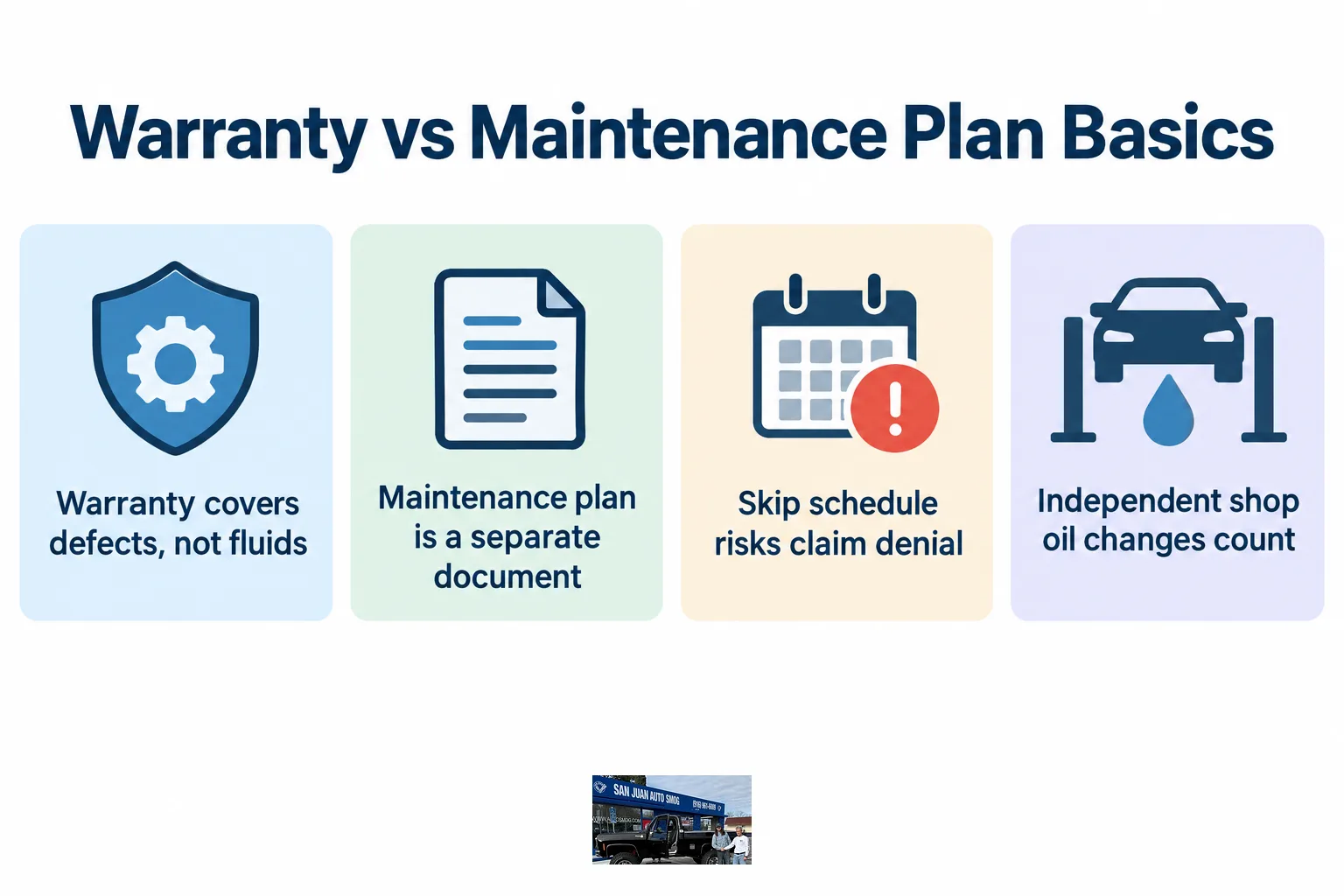
Not by a standard new-car warranty — only by a separate maintenance plan if your vehicle came with one. A bumper-to-bumper or powertrain warranty exists to cover repairs when a part fails on its own. It was never built to pay for fluids and filters on a normal schedule. If your paperwork mentions “complimentary maintenance” or “prepaid maintenance” as its own line item, that's the piece that may cover oil changes — and it usually expires well before the warranty does.
What is the difference between a warranty and a maintenance plan?
A warranty is a promise to fix or replace defective parts. A maintenance plan is a prepaid service contract that covers specific scheduled items — often oil changes, tire rotations, and multi-point inspections — for a limited window, commonly two or three years or a set mileage figure set by the manufacturer. Look for two separate documents in your paperwork. Having one doesn't mean you have the other.
What if my car didn't come with a maintenance plan?
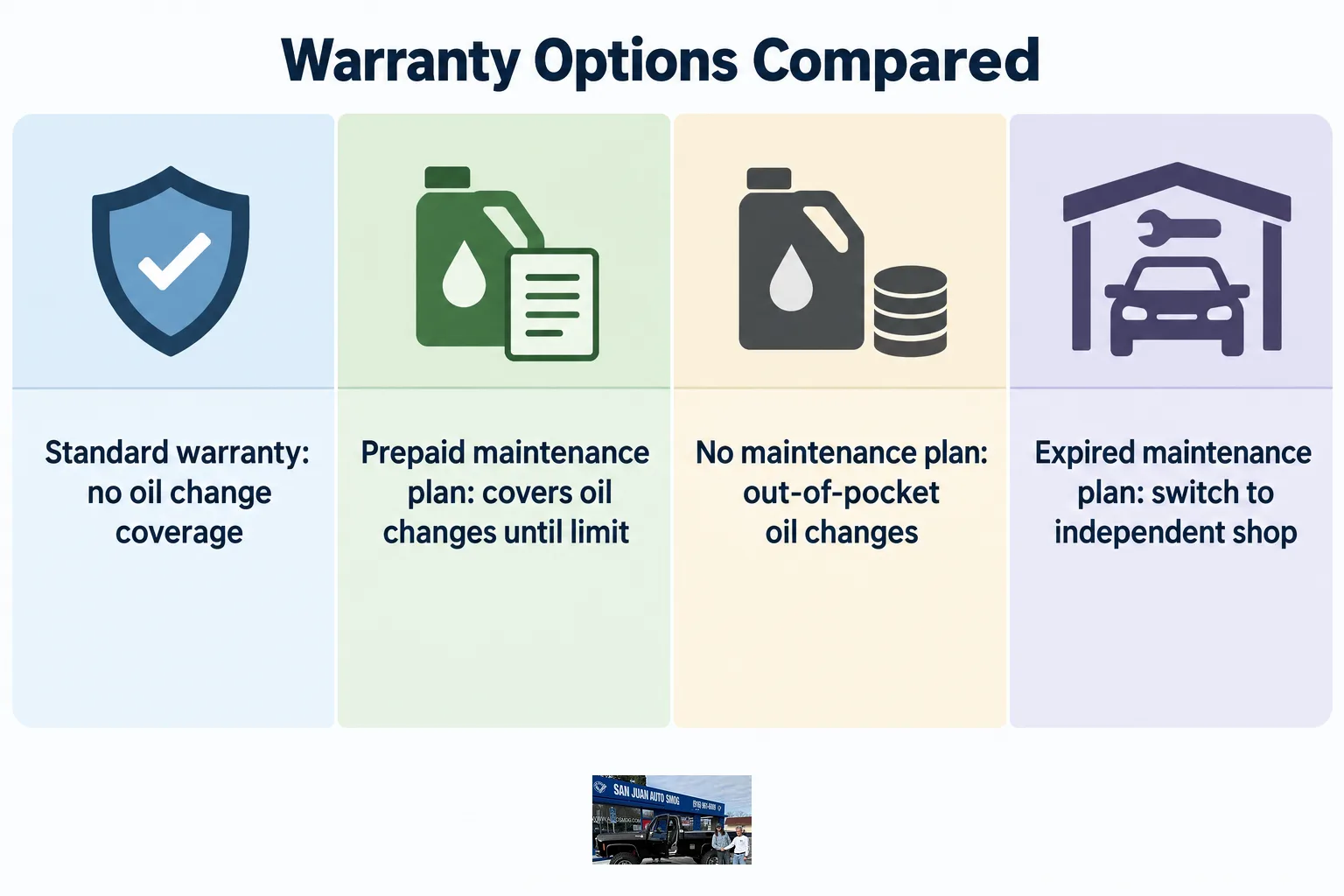
Then oil changes are an out-of-pocket cost, same as on an older vehicle. That doesn't make the warranty irrelevant, though — it still sets expectations for when and how often the oil gets changed.
Does my warranty still require oil changes even if it doesn't pay for them?
Yes, most warranties require you to follow the manufacturer's maintenance schedule to keep coverage valid, whether or not they pay for the service. Skip it, or let it slide too long, and a manufacturer has grounds to deny a claim tied to engine damage — even though the warranty itself never covered the oil change in the first place.
Does the dealer have to do the service for the warranty to count?
No. Federal law — the Magnuson-Moss Warranty Act, enforced by the Federal Trade Commission — generally prohibits a manufacturer from requiring you to use the dealer for routine maintenance just to keep the warranty valid. An independent shop's oil change counts, as long as the work matches the manufacturer's schedule and you can show it happened.
What should I keep to prove I changed the oil?
A dated, itemized receipt for every oil change, kept together for the life of the warranty. If a claim ever gets questioned, the burden falls on you to show the maintenance happened on schedule — not on the manufacturer to prove it didn't.

- Get an itemized receipt every time. It should show the date, mileage, oil type, and quantity used.
- Keep receipts in one place. A folder, a phone photo album, or a digital file all work — the format matters less than having them accessible.
- Match the interval to the manufacturer's schedule. If your owner's manual calls for a change every set number of months or miles, don't let gaps run noticeably longer.
- Hold onto records for the full warranty term. Don't discard receipts once a year passes if the warranty itself runs longer.
What if my warranty does cover oil changes?
Then you'll typically need to use the dealer or network the plan specifies to redeem it, and the coverage runs out on its own schedule, separate from the warranty's. Read the maintenance plan document for the exact number of visits or mileage cutoff it covers. Go past that limit and the next oil change is on you, even if the warranty itself is still very much alive.
Can I switch to an independent shop once the maintenance plan runs out?
Yes. Once a prepaid maintenance plan is used up, nothing requires you to keep going back to the dealer. At that point the only thing protecting your warranty is following the schedule and keeping your own records, as covered above.
Protect Your Warranty Without Overpaying for Oil Changes
Once you know your warranty doesn't pay for oil changes, the smart move is finding a shop that keeps the cost transparent and hands you a clean, dated receipt every visit. San Juan Auto Smog runs a full-synthetic oil change with upfront pricing, starting with the Good Package at $110.99, and recommends booking an appointment so the work fits your schedule rather than a walk-in line.
If a DMV renewal lands around the same time as your next oil change, combining the two in one visit saves a trip and some money.
Check current pricing and book the full-synthetic oil change that keeps your maintenance record on schedule.
Frequently Asked Questions
Do all new cars come with free oil changes?
No. Only vehicles with a manufacturer-included maintenance plan get oil changes at no extra charge, and that plan is separate from the warranty. Check your sales paperwork specifically for a maintenance plan document, not just the warranty booklet.
Will an independent oil change void my warranty?
Generally no, as long as the service matches the manufacturer's required schedule and you keep proof. For a closer look at this exact concern, see Does an Independent Oil Change Void Your Warranty?
What happens if I miss an oil change interval?
Missing or significantly delaying an interval can give a manufacturer grounds to deny a related claim, such as engine damage traced to inadequate lubrication. It won't affect unrelated claims, like a factory defect in the electrical system.
Does a powertrain warranty cover oil changes?
No. A powertrain warranty covers failures in major components like the engine and transmission, not the routine fluid and filter service that keeps those components running.
Can I combine an oil change with other services in one visit?
Yes, many shops offer combined visits to save time, and some pair a smog check with an oil change for a lower combined price. See the smog and oil change combo for an example of how that pricing works.
More articles
- Does an Independent Oil Change Void Your Warranty?
- Questions to Ask a Mechanic Before Service in Fair Oaks
- Pre-Purchase Inspection in Fair Oaks: Buy with Confidence
- Smog and Oil Change Combo Deals in Fair Oaks
- Change of Ownership Smog Check: California Requirements
- Looking for a Low Cost Smog Check Near You?