Which Warranty Covers an Oil Change? Quiz Answer Explained
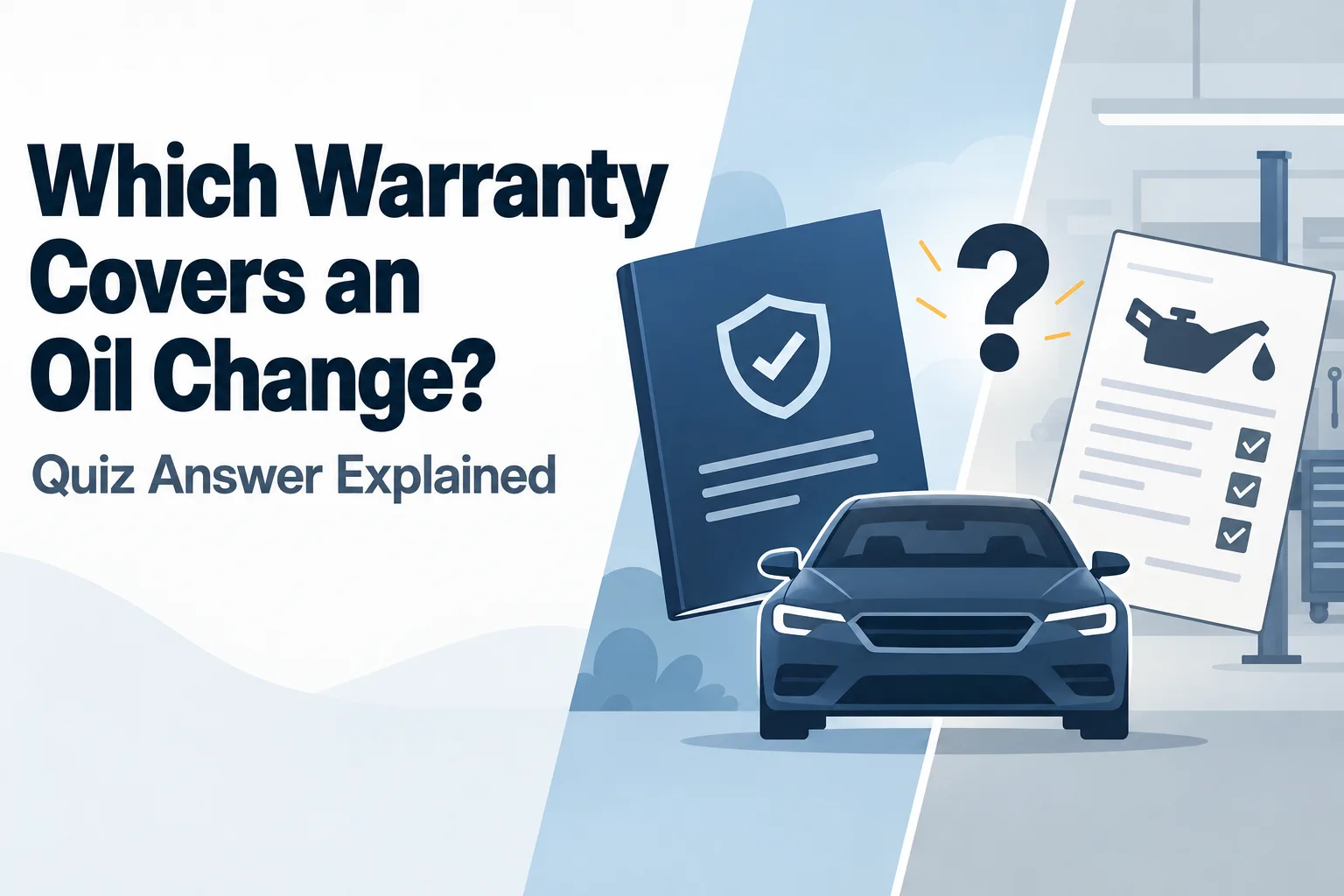
A maintenance plan is the option that would cover the cost of an oil change — not a bumper-to-bumper warranty and not an extended warranty. If your car's manufacturer recommends replacing the oil every 6,000 miles to prevent engine damage, choose the plan built for required, scheduled upkeep, because that's exactly what a maintenance plan pays for.
Warranties work differently. A bumper-to-bumper warranty and an extended warranty both exist to cover unexpected repairs — a failed part, a defect, something that breaks before it should. An oil change isn't a repair. It's expected, scheduled, and the same every time, which is why warranties typically exclude it.
Knowing the difference matters beyond a quiz question. It changes how you budget for your car, and it explains why some drivers get surprised by an oil change bill even though they're “still under warranty.”
Key Takeaways
- A maintenance plan covers routine services like oil changes; warranties generally cover unexpected repairs instead.
- Manufacturer oil change intervals (commonly every 6,000 miles, but check your owner's manual) exist to prevent long-term engine wear, not just to sell service.
- Waiting years between oil changes risks sludge buildup and accelerated engine wear, even if the car still runs.
- A well-maintained car can last well beyond 100,000 miles when oil changes and basic checks stay on schedule — see full synthetic oil change options for keeping that schedule simple.
- The “30-60-90” mileage markers are a useful mental checklist, not a replacement for your owner's manual.
Table of Contents
What's the Difference Between a Maintenance Plan and a Warranty?
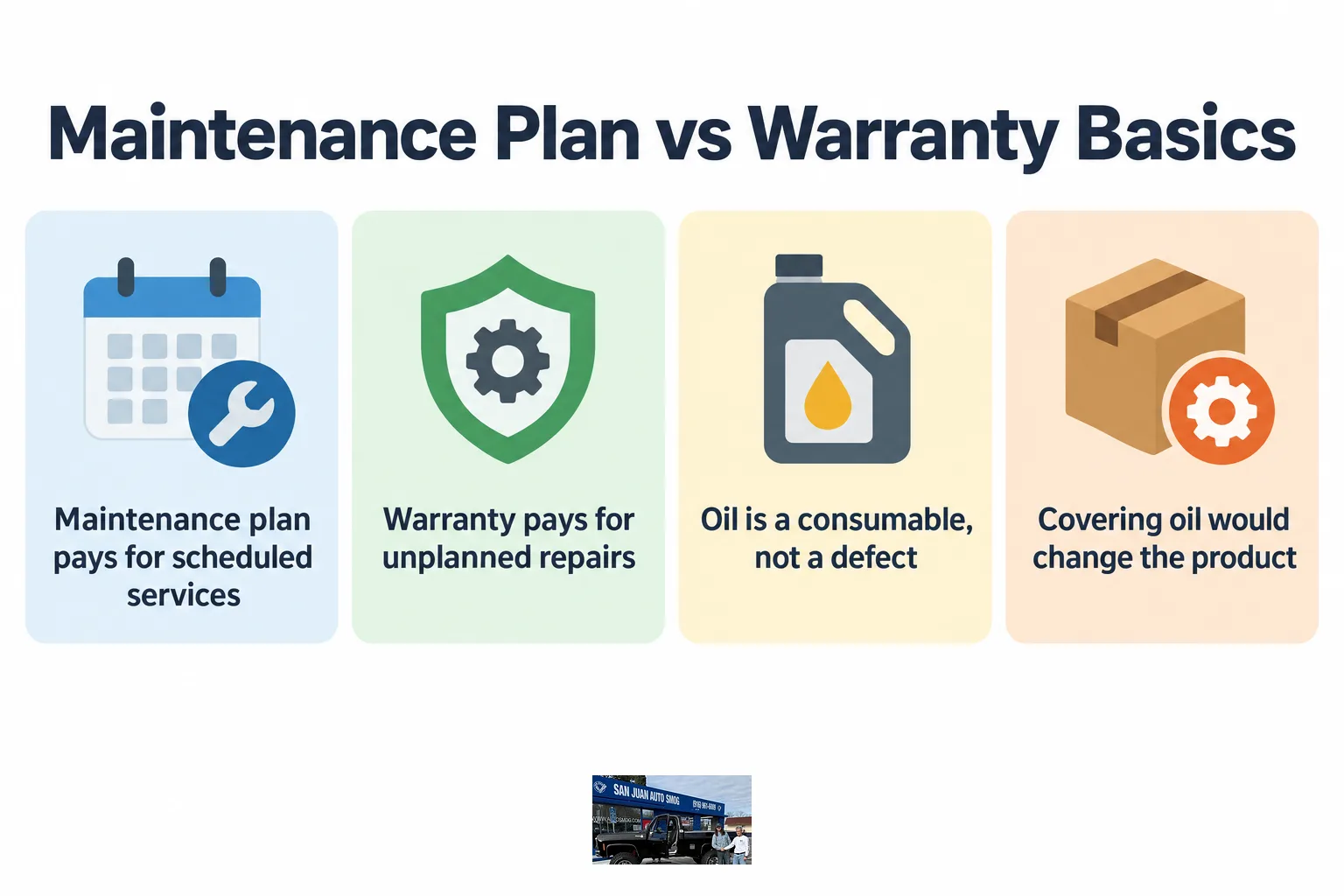
A maintenance plan pays for scheduled services; a warranty pays for unplanned repairs. A maintenance plan is essentially prepaid or budgeted coverage for the things your manufacturer tells you to do on a schedule — oil changes, filter swaps, inspections. A warranty, whether it's the factory bumper-to-bumper coverage or an extended warranty purchased later, is there for when something fails that shouldn't have.
Why doesn't a warranty cover oil changes?
Warranties are designed around defects and failures, not consumable upkeep. Oil is a consumable — it wears out by design, on a known schedule, regardless of whether anything is wrong with the car. Covering it would turn a warranty into a maintenance plan, which is a different product with a different price.
How Many Years Can a Car Last If Well Maintained?
A well-maintained car can often run well past 150,000-200,000 miles, with oil changes as the single biggest factor under your control. Engine longevity depends on a mix of driving conditions, build quality, and how consistently fluids and wear parts get attention, but oil changes sit at the center of that list because engine wear accelerates fast once oil breaks down.
What besides oil changes affects how long a car lasts?
Coolant condition, transmission fluid, timing belt or chain service, and tire and brake upkeep all play a role. A multi-point inspection during a routine visit is one practical way to catch small issues — a slow leak, a worn belt — before they turn into expensive repairs.
Should I Change My Oil Every 6 Months or Every 5,000 Miles?
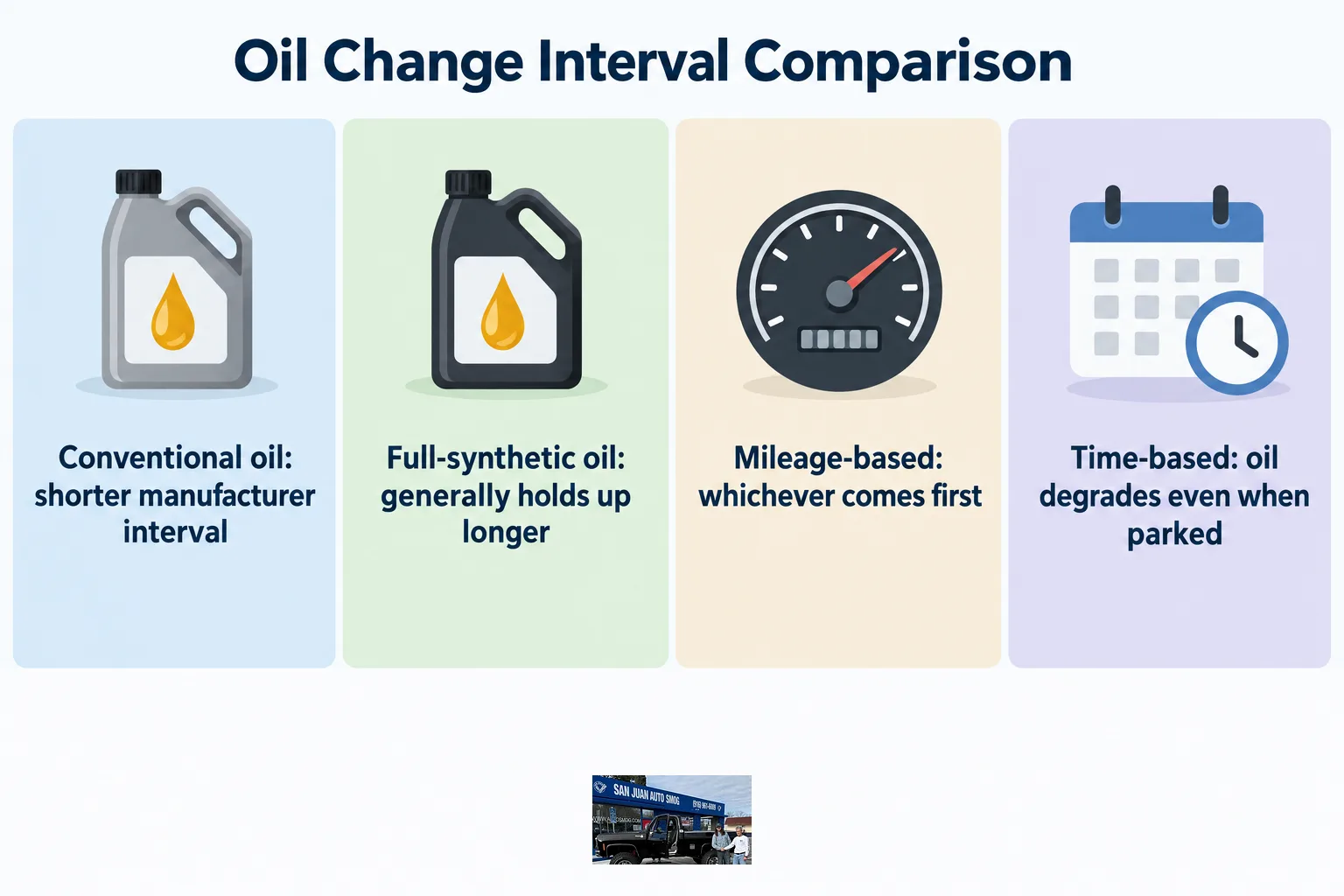
Follow whichever comes first, based on your owner's manual, not a single rule of thumb. Manufacturers set intervals by miles and by time because oil degrades from heat and chemical breakdown even if a car sits mostly unused. A car driven 3,000 miles in six months and a car driven 3,000 miles in two months both need attention, just for different reasons.
Does full-synthetic oil change the interval?
Full-synthetic oil generally holds up longer than conventional oil, which is part of why many manufacturer intervals have stretched out over the years. The exact number still depends on your specific vehicle, so the owner's manual — not a general rule — is the final word.
What Is the 30-60-90 Rule for Car Maintenance?
It's a shorthand for checking different systems at 30,000, 60,000, and 90,000-mile marks, not an official standard. At these intervals, drivers commonly look at filters, fluids, brakes, belts, and tires together rather than one at a time, since several wear items tend to reach the end of their life around the same mileage.
What typically gets checked at these mileage points?
Air and cabin filters, brake pads, tire rotation, and fluid levels are common checkpoints. A fluid check alongside these mileage markers can catch a slow coolant or transmission fluid loss before it becomes a bigger repair.
Is It Okay to Wait 2 Years Between Oil Changes?
No — two years is far beyond any manufacturer interval and risks real engine damage. Oil breaks down chemically over time regardless of mileage, and once it does, it stops protecting metal surfaces from friction the way it should. The result is often sludge buildup, which restricts oil flow and accelerates wear on parts that are expensive to replace.
What happens if oil sits too long without being changed?
Old oil loses viscosity and its additive package degrades, so it lubricates less effectively even though the engine still runs. Over enough time, this shows up as increased engine wear, lower fuel efficiency, and in some cases, damage that a simple oil change can no longer undo.
- Check your owner's manual interval. Confirm the mileage and time interval your manufacturer actually recommends, since it varies by make, model, and oil type.
- Track the shorter of miles or months. Whichever limit you hit first — mileage or time — is when the oil change is due.
- Book the change before symptoms show up. Waiting for a warning light or rough idle means the oil has likely already been overdue for a while.
Keep Your Oil Change Schedule Simple
Figuring out exactly when an oil change is due, and separating that from what a warranty will or won't cover, is easier with a shop that keeps pricing clear from the start. San Juan Auto Smog offers a full-synthetic oil change, and appointments are recommended to get the timing right for your vehicle.
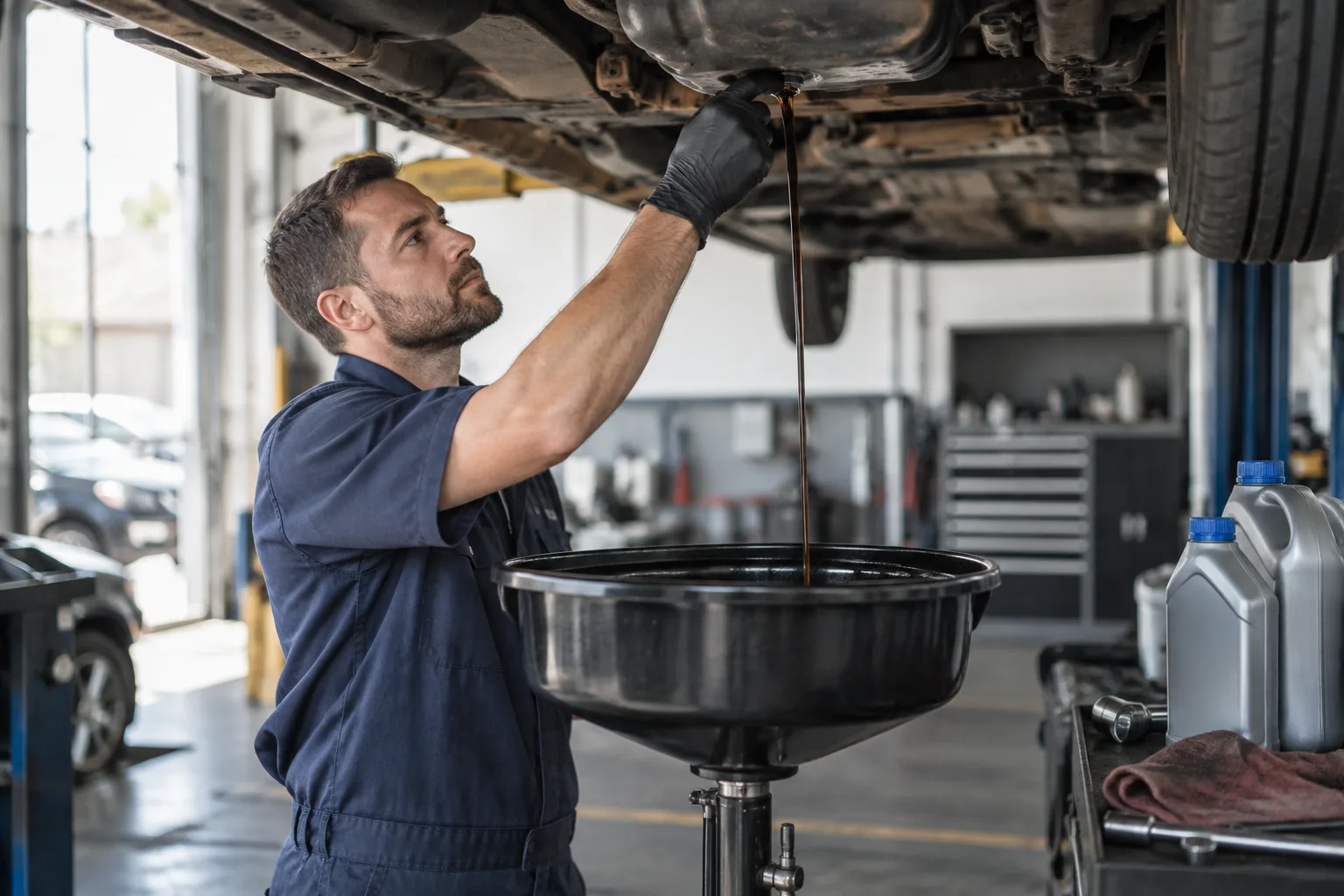
Since smog checks and oil changes often come due around the same time, pairing them in one visit is worth considering if your registration renewal is also approaching.
See current smog check and oil change combo pricing to book both in a single appointment.
Frequently Asked Questions
Does a bumper-to-bumper warranty cover an oil change?
No. A bumper-to-bumper warranty covers defects and failures in parts and systems, not routine consumable services like oil changes.
Does an extended warranty cover oil changes?
Generally not. Extended warranties extend repair coverage beyond the factory warranty period but typically still exclude scheduled maintenance like oil changes.
What does a maintenance plan actually include?
It varies by provider, but a maintenance plan is built around scheduled services — oil changes, filter replacements, inspections — rather than unexpected repairs.
How do I know my manufacturer's recommended oil change interval?
Check your owner's manual or the manufacturer's maintenance schedule, since the interval depends on your specific engine and oil type, not a single industry-wide number.
Can I combine an oil change with a smog check?
Yes, many shops offer both in one visit to save a trip, and bundling the two is often cheaper than booking them separately.
More articles
- Smog Repair in Sacramento: What Happens After a Failed Test
- Best Smog Shop for Quick Turnaround in Orangevale
- Car maintenance for hot Sacramento summers: checks that matter
- Is It Safe to Drive With the Oil Light On? What to Do
- Who Handles Diesel Smog Checks Near Sacramento?
- Local Auto Repair and Maintenance in Gold River