What Oil Does My Car Take? Where to Look and What to Read
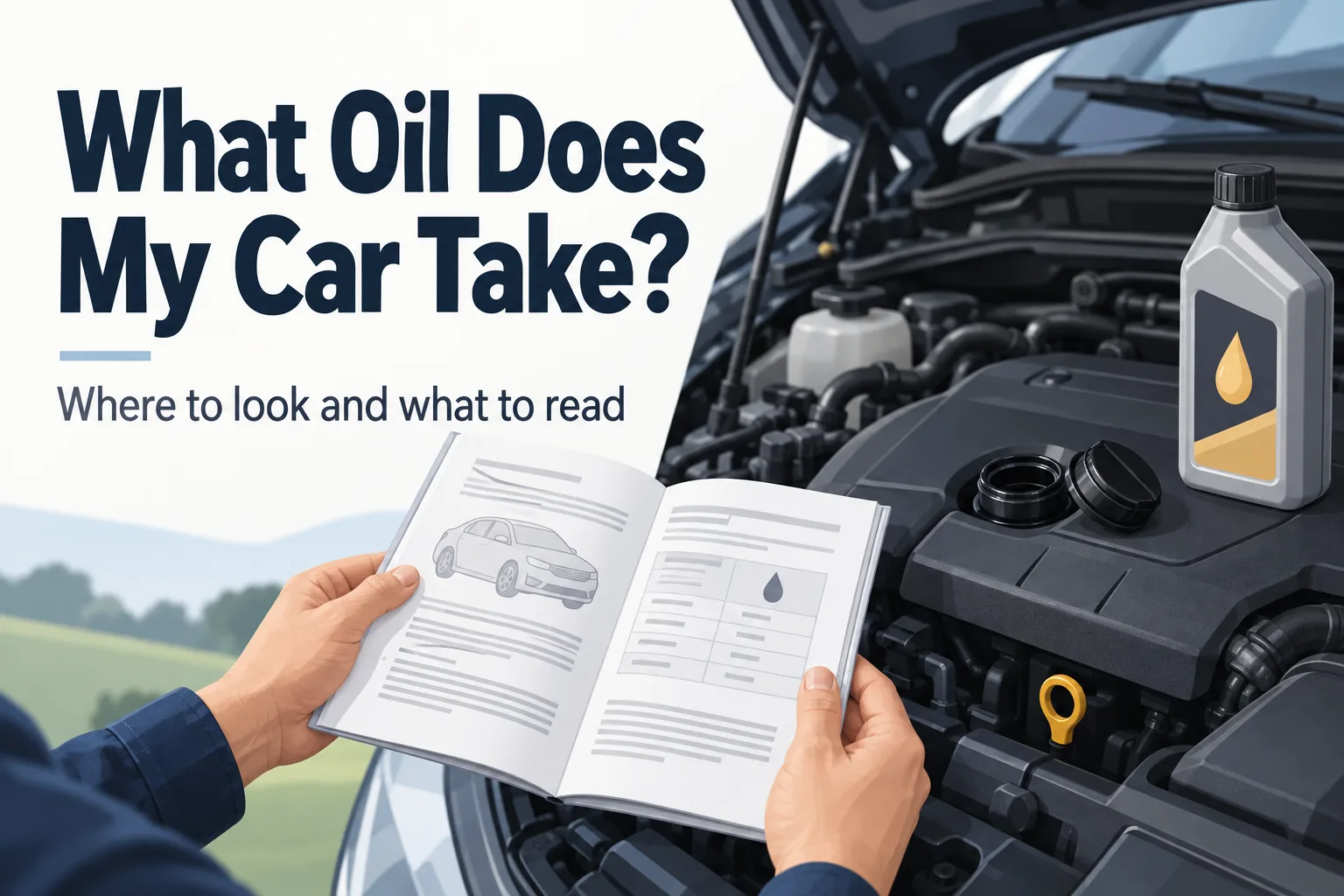
Your car takes whatever oil the manufacturer specifies, and the owner's manual is the quickest place to find it. Look in the maintenance or specifications section. You'll get a viscosity grade (something like 5W-30), the quality standard the oil must meet, and how much oil the engine holds.
No manual? Check the oil filler cap on top of the engine, which often has the viscosity grade printed on it. Between the two, you can usually settle this in a few minutes without calling anyone.
Here's where to look, what the markings on an oil bottle mean, and what to do when your situation isn't straightforward, like an older engine or a manual that lists more than one option.
Key Takeaways
- Start with the owner's manual, because it names the viscosity grade, the required oil standard and the oil capacity for your exact engine.
- If you can't find the manual, check the filler cap on the engine, but treat it as a hint and confirm it against the manual when you can.
- Match all three things on the bottle: viscosity grade, the API service rating, and any manufacturer approval your manual calls for.
- Don't pick oil by brand name or by what the last owner used, since a previous owner may have run the wrong oil.
- If you want a second set of eyes, read our guide on what kind of oil your car needs and bring your questions to the shop.
Table of Contents
How do I find out what oil my car takes?
Read the owner's manual first, because the manufacturer's specification is the one that counts. Everything else, including the filler cap, a parts-store lookup or a forum post, is just a way to double-check it.
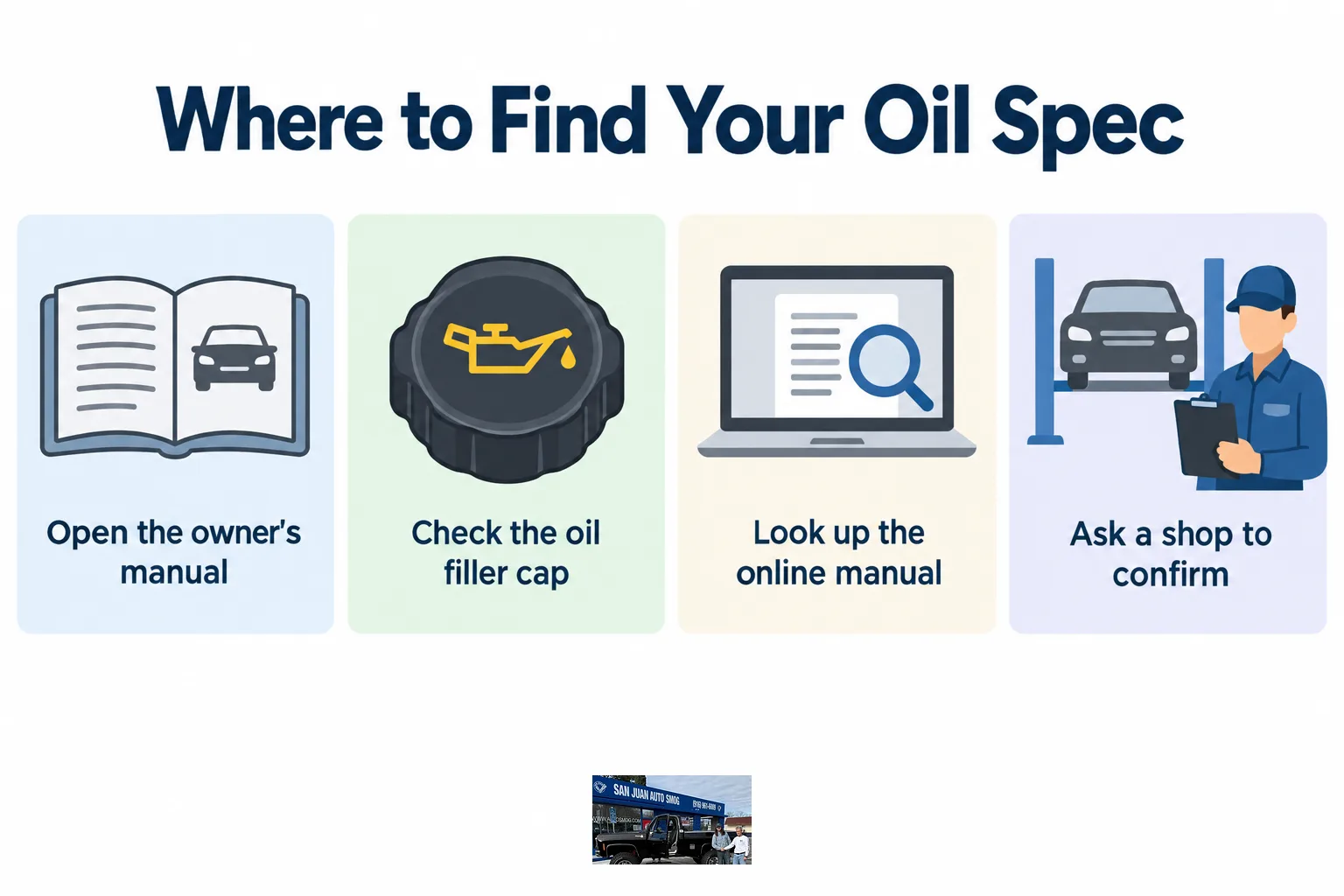
Here is the order that works for most drivers:
- Open the owner's manual. Look in the index under “engine oil,” “lubricants” or “capacities.” The listing usually gives viscosity, the required standard and the capacity.
- Check the oil filler cap. Pop the hood and find the cap on top of the engine. Many caps print the viscosity grade, such as 0W-20, right on them.
- Read the bottle that's already in your garage. If you know the last oil change used the right oil, the label shows what that was. Be sure of that first, though.
- Look up the manufacturer's online manual. If your paper manual is gone, most manufacturers publish owner's manuals on their websites. Search with your exact year, make, model and engine.
- Ask a shop to confirm. Give them the year, make, model and engine size, and ask them to check it against the spec before they pour anything in.
What if I can't find the manual or the cap is worn?
Use the manufacturer's online owner's manual for your exact year and engine. Still stuck? A shop that does oil changes can look up the specification for you before the work starts.
Is the sticker on the door jamb the oil spec?
Usually not. That sticker typically covers tire pressure and load limits. Some vehicles do have an oil or service sticker under the hood or on the windshield, but it often shows the last service, not the required oil.
What do the numbers and letters on an oil bottle mean?
The bottle tells you three things: how thick the oil flows (viscosity), the quality standard it meets, and the base oil type. The first two have to match your manual.
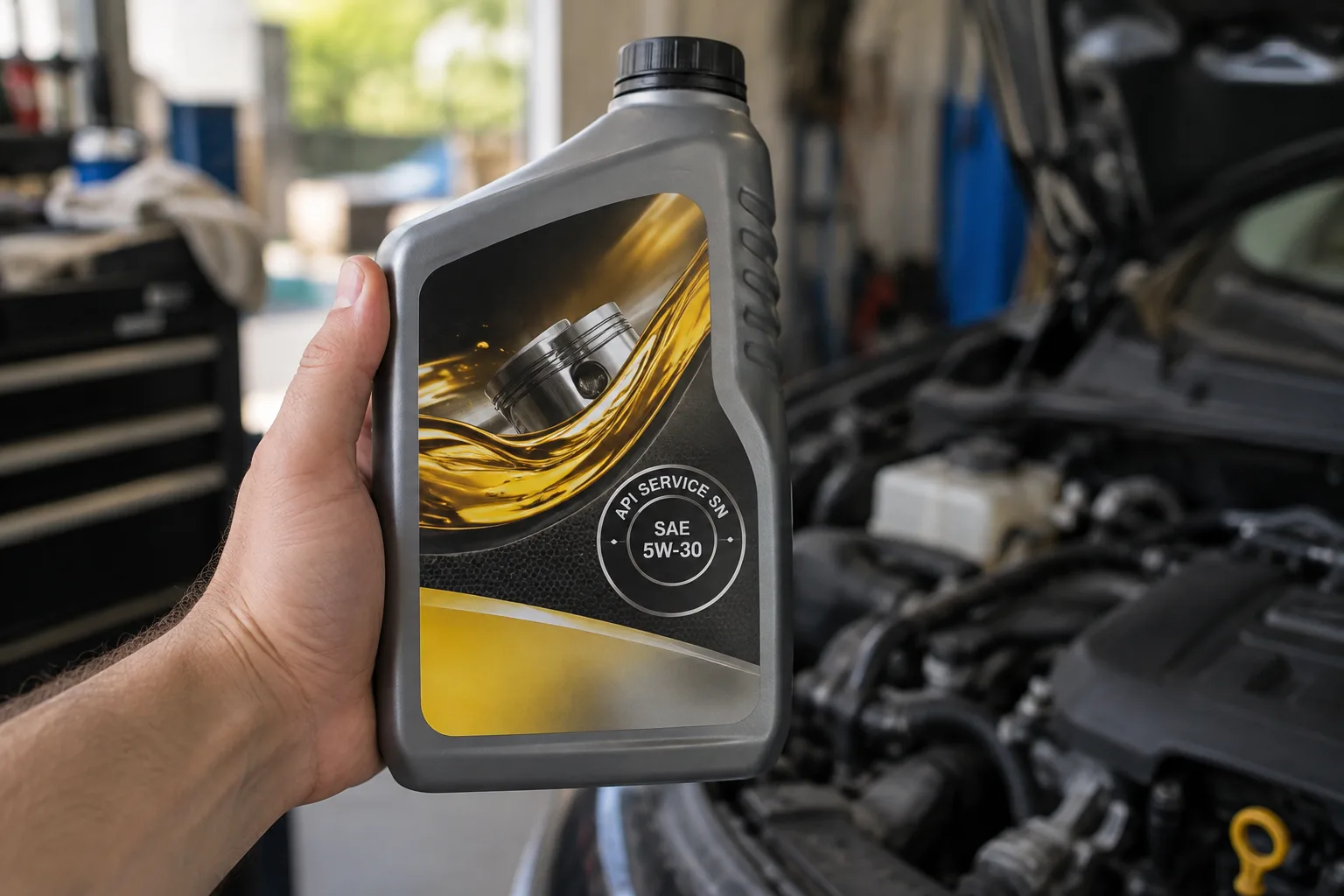
Viscosity looks like 5W-30. The number before the W (for winter) describes how the oil flows when cold. The second number describes its thickness at engine operating temperature. SAE International sets the grades, and your manual picks the one your engine was designed around.
The quality standard comes from the American Petroleum Institute. Look for its round “donut” symbol, which shows the service category, such as SP. The same symbol also shows the viscosity grade. Your manual names the category it needs, or a newer one that supersedes it.
Does my car need full synthetic oil?
Only your manual can say for sure. Many modern engines call for synthetic or full-synthetic oil, and some list it as the only option. Others permit conventional or a synthetic blend. If the manual says synthetic is required, conventional oil is not a safe substitute.
What are manufacturer approvals?
Some manuals ask for more than the API rating. They name a specific manufacturer standard the oil must meet, and the bottle will say it meets that standard. If your manual lists one, the bottle needs to list it too. Matching the viscosity alone won't cut it.
Can I use a different oil than the manual says?
Stick with what the manual specifies unless it lists alternatives. Engines are built around a given oil's flow, additives and protection, and a different oil can change how well the engine is protected.
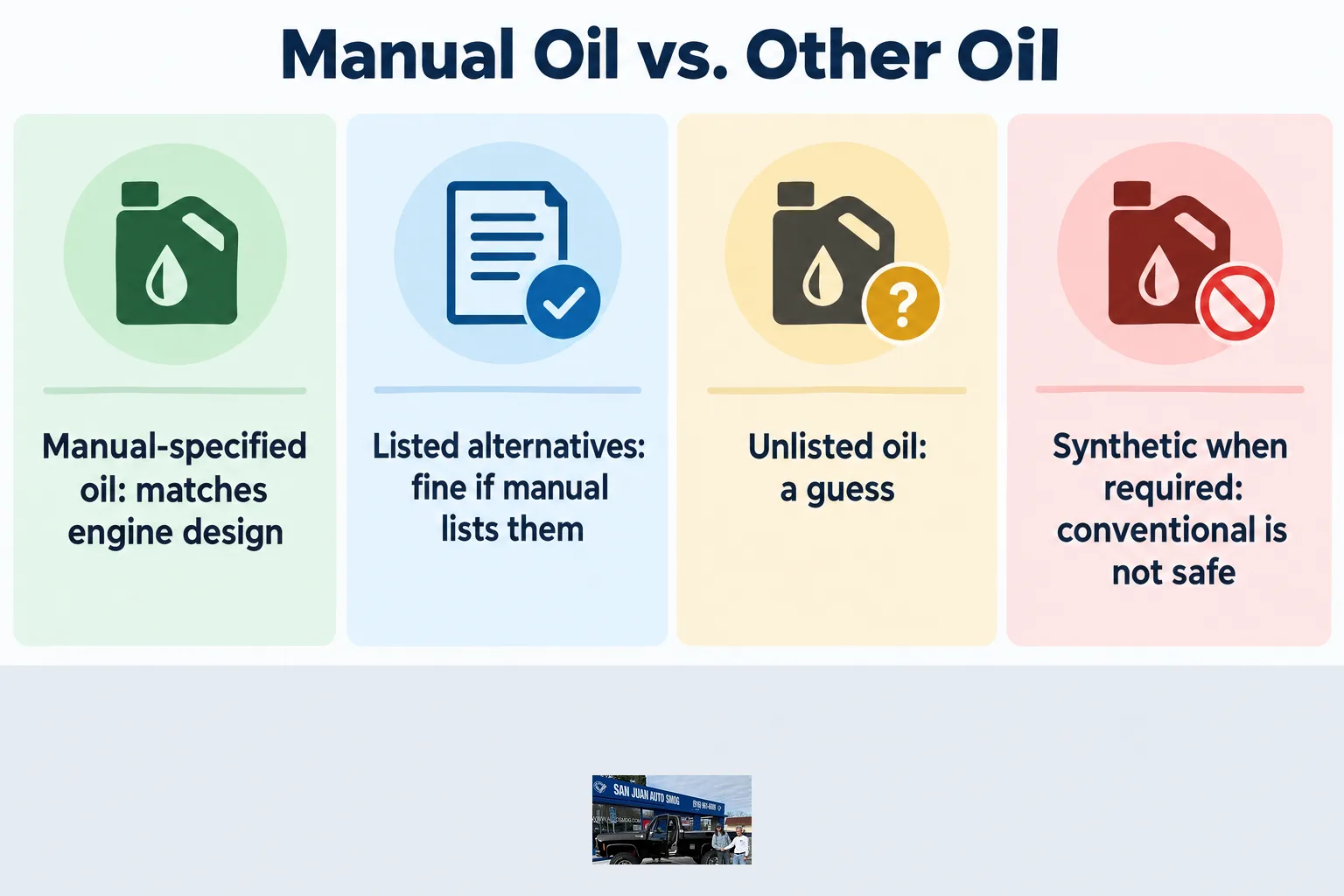
Some manuals do give a range, for example a preferred viscosity plus an acceptable one for certain temperatures. Either one listed is fine. Anything not listed is a guess.
Does using the specified oil affect my warranty?
Warranty terms differ, so read your warranty booklet. Following the manufacturer's oil specification and keeping service records is the safest way to stay on solid ground. Our post on whether an independent mechanic voids your warranty goes further on that question.
What if the last owner used something else?
Ignore it and follow the manual. A previous oil choice tells you what they bought, not what the engine requires.
Does an older or high-mileage engine need a different oil?
Start with the manual, then decide whether a high-mileage formula fits within what it allows. Older engines still need the specified viscosity and standard, and a high-mileage oil can meet both.
High-mileage oils are made for engines with a lot of miles on them, often with added seal conditioners. They come in the standard viscosity grades, so you can pick one that matches your manual. Our post on high-mileage synthetic oil for older engines explains what these formulas are meant to do.
How much oil does my engine hold?
The capacity is in your manual, usually listed with and without a filter change. Use that number rather than guessing, and check the dipstick after filling, since too much oil is as wrong as too little.
What if I've missed an oil change?
Don't put it off. Check the dipstick for level, and book the change soon. Our guide on what to do if you miss an oil change covers the next steps.
Take the Next Step With Your Oil Change
Once you know what your car takes, the next question is who puts it in. San Juan Auto Smog does full-synthetic oil changes at 4701 San Juan Ave in Fair Oaks, and an appointment is recommended. Bring your year, make, model and engine, plus your manual's spec if you've found it.
Pricing is laid out up front. The Good Package is $110.99 and includes a full-synthetic oil change with up to 5 quarts of oil and a standard filter. The Premium Package starts at $174.99 and adds a tire rotation and brake inspection. The Best Package is $204.99 and adds a multi-point inspection, fluid check, brake check and tire rotation.
Smog check due too? Do both in one visit. The Smog + Oil Combo takes $45 off, which is cheaper than booking them separately. The smog check is STAR-certified, and walk-ins are welcome for 2000 and newer vehicles. See the combo offer for details, or book a full-synthetic oil change in Fair Oaks.
Frequently Asked Questions
What oil does my car take if I don't have the manual?
Look for the viscosity grade printed on the oil filler cap, then confirm it using the manufacturer's online owner's manual for your exact year and engine. A shop can also look up the specification before an oil change. Don't guess based on a similar model.
Is 5W-30 the same as 5W-20?
No. Both have the same cold flow rating, but the second number differs, and that one describes thickness at operating temperature. Use whichever your manual lists for your engine.
Can I mix different oils?
Topping off with a small amount of a different oil beats running low, but it's not ideal. Use oil that meets your manual's specification, and do a full change with the correct oil at your next service.
Does my car need full synthetic oil?
Check your owner's manual. Many newer engines require synthetic or full-synthetic, while others list conventional oil as acceptable. If the manual says synthetic is required, don't substitute conventional oil.
Do I need an appointment for an oil change at San Juan Auto Smog?
An appointment is recommended for oil changes, and you can book by text or call. Walk-ins are welcome for smog checks on 2000 and newer vehicles.
Can I get an oil change and a smog check in the same visit?
Yes. Both get done in one visit, and the combo takes $45 off, which beats booking them separately.
More articles
- Avoid Buying a Lemon Used Car in Fair Oaks With Careful Checks
- After-work smog check in Gold River: hours and requirements
- San Juan Auto Smog vs Smogcheckdeals: a fair, side-by-side comparison
- Fair Oaks Auto Service Ratings, Reviews and Repair Options
- Cheapest smog check for a 1995 car in Gold River?
- Simple Maintenance Checks to Improve Gas Mileage