Diesel Smog Check in Fair Oaks: What You Need to Know
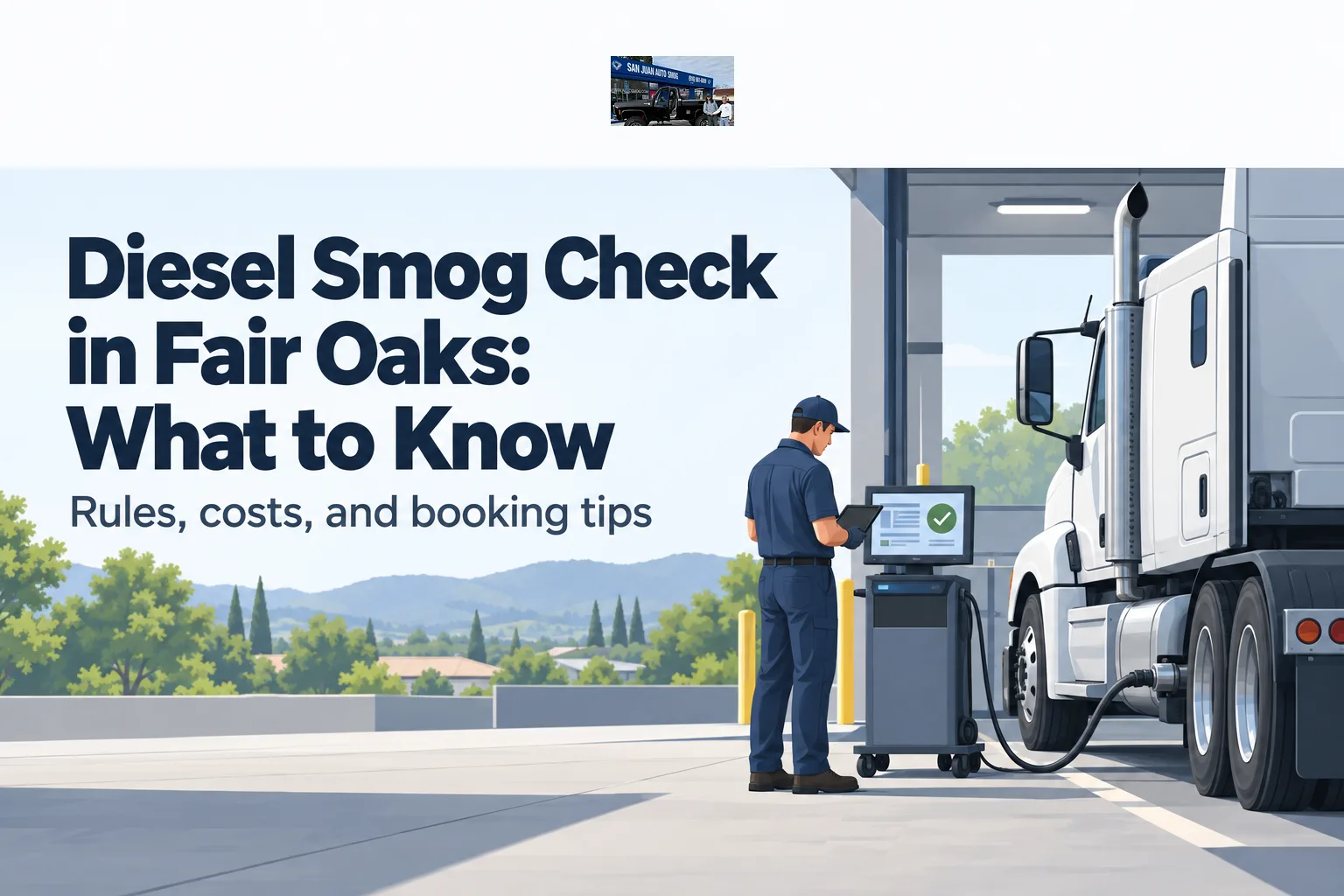
A diesel smog check in Fair Oaks works differently than a standard gas-vehicle test, and not every diesel is even required to get one. Weight, model year, and vehicle type all decide whether your truck, van, or RV needs testing — and if it does, whether it needs a tailpipe test, a visual inspection, or an OBD check.
If you drive a diesel pickup, work van, or motorhome and your DMV renewal notice mentions smog, the details below walk through what applies to your vehicle and how to get it done without wasted trips.
Appointments are strongly recommended for diesel, RV, van, and heavy truck testing, since these vehicles often take longer and need specific equipment or bay space that a shop has to schedule for.
Key Takeaways
- Diesel smog requirements depend on gross vehicle weight rating (GVWR) and model year, not just fuel type.
- Heavier diesels and most pre-1998 diesels are commonly exempt from the tailpipe portion, but rules vary by vehicle class.
- Appointments are recommended for diesel, RV, van, and heavy truck testing — call ahead rather than walking in.
- Bring your DMV renewal notice and registration so the station tests against the correct requirement for your vehicle.
- Pricing depends on vehicle type, so check the diesel smog check page or call for a quote before you book.
Table of Contents
Which Diesel Vehicles Actually Need a Smog Check?
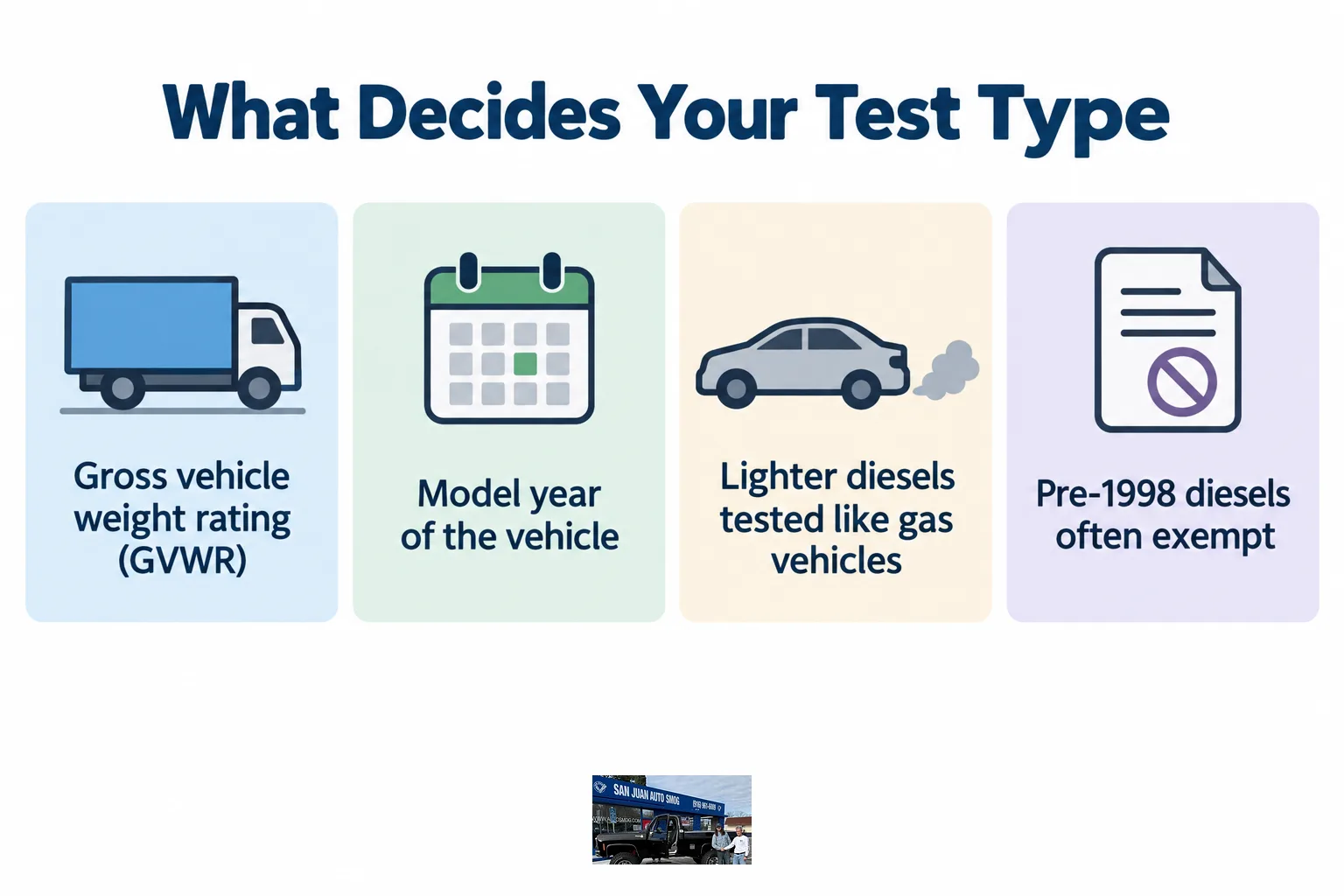
Most diesel vehicles under 14,000 pounds GVWR built in 1998 or later still need a biennial smog check in California, while heavier trucks and older diesels often follow different rules. California's Bureau of Automotive Repair sets these thresholds, and they shift the kind of test your vehicle gets rather than whether it's tested at all.
Does GVWR change the type of test?
Yes. Lighter diesel pickups and vans are typically tested the same way as gas vehicles of similar weight, often through the OBD system on newer models. Heavier diesels move into different inspection categories, and some heavy-duty trucks are tested under separate state emissions programs rather than the standard smog check.
Are older diesels exempt?
Some pre-1998 diesel vehicles are not subject to the same tailpipe testing as newer ones, but exemption rules are specific and depend on model year and use. If you're not sure where your vehicle falls, bringing your registration and DMV notice to the appointment lets the station confirm it against the correct requirement rather than guessing.
What Should You Do Before Booking a Diesel Smog Appointment?
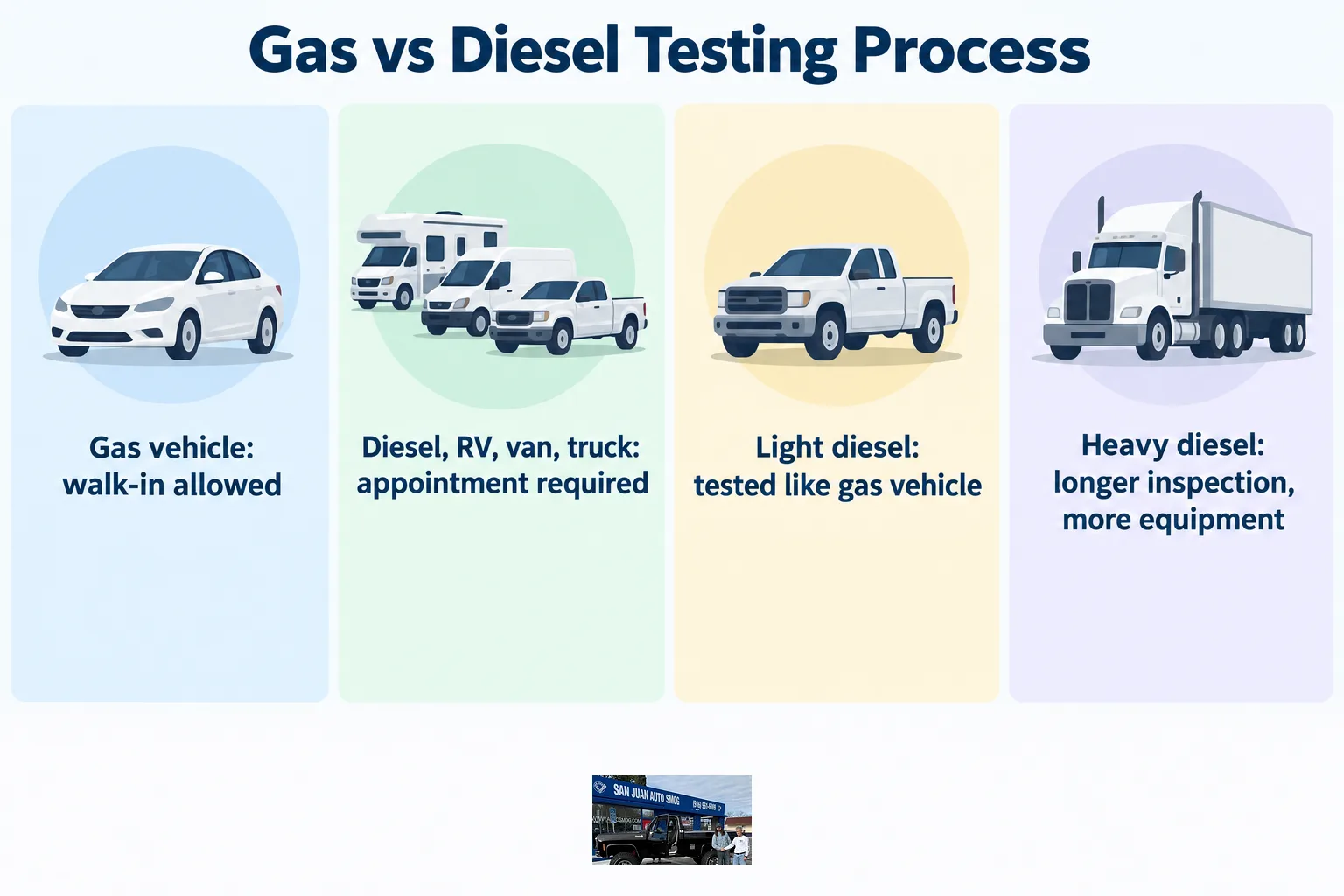
Confirm your vehicle's weight class and model year, then book ahead rather than planning to walk in. Diesel, RV, van, and heavy truck testing takes more time per vehicle than a standard walk-in gas car test, so stations schedule these appointments to make sure there's enough bay time and the right equipment ready.
- Check your DMV renewal notice. It tells you whether your vehicle needs a regular smog check, a STAR station, or falls under a different program.
- Confirm your GVWR. This number, usually on a door-jamb sticker, decides which test category your diesel falls into.
- Call or text ahead. Diesel, RV, van, and heavy truck smog checks run on appointment, so confirm a time rather than driving over unannounced.
- Bring your paperwork. Registration and the DMV notice let the station match the test to what your vehicle actually needs.
Can an RV or motorhome use the same process?
RVs and motorhomes generally follow the same weight-and-year logic as other diesel vehicles, but their size means they need dedicated bay space and appointment scheduling. If you're prepping a motorhome for testing, the RV and motorhome smog check page covers what to expect for that vehicle type specifically.
How Much Does a Diesel Smog Check Cost?
Diesel smog pricing depends on your vehicle's weight class and test type, so there's no single flat rate across all diesels. A light-duty diesel pickup tested like a passenger vehicle costs differently than a heavy work truck or RV that needs a longer inspection.
Because of that range, the fastest way to get an exact number for your vehicle is to call or text ahead rather than estimate from a general price list. If you're also comparing how diesel pricing stacks up against a standard gas-vehicle test, the smog check cost breakdown for Fair Oaks explains what typically drives the price up or down.
Does combining services save money?
If your diesel is also due for an oil change, booking both in one visit is usually cheaper than scheduling them separately, and it saves a second trip. The smog and oil change combo applies this way, though it's one coupon per visit and certificate or state fees are added separately.
Take the Next Step With Your Diesel Smog Check
San Juan Auto Smog is a STAR-certified smog check station that tests RVs, vans, heavy trucks, and many diesel vehicles, with appointments recommended for all of them so the right bay time and equipment are ready when you arrive. The shop has completed more than 35,000 services since 2018 and is rated 4.7 from over 2,100 reviews across platforms, with transparent pricing quoted up front rather than added on after the test.
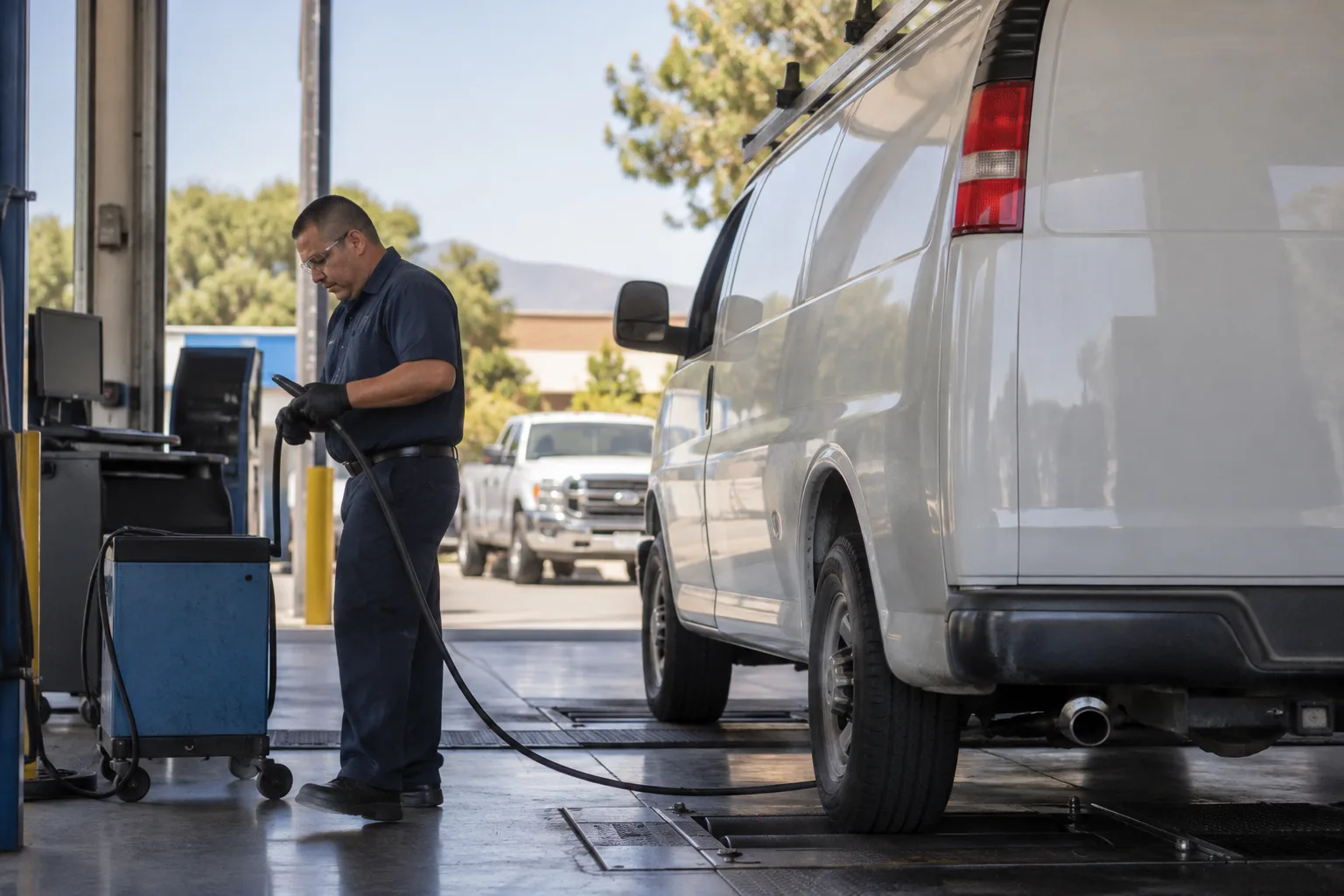
If your gas vehicle is 2000 or newer, walk-ins are welcome and no appointment is needed. For a diesel, RV, van, or heavy truck, calling ahead means the right slot is waiting instead of a reschedule.
Book or ask about pricing for your vehicle on the diesel smog check page.
Frequently Asked Questions
Do all diesel trucks need a smog check in California?
Most diesel trucks under 14,000 pounds GVWR built in 1998 or later need a biennial smog check, but heavier trucks and some older diesels follow different state programs or exemptions. Checking your GVWR and model year against your DMV notice is the fastest way to confirm which applies to your vehicle.
Can I walk in for a diesel smog check?
Walk-ins are welcome for 2000-and-newer gas vehicles, but diesel, RV, van, and heavy truck smog checks are recommended by appointment because they take more time and need specific bay setup. Calling or texting ahead avoids a wait or a turned-away visit.
How much does a diesel smog check cost in Fair Oaks?
Pricing depends on the vehicle's weight class and test type, so there isn't one flat diesel rate. Calling or texting for a quote on your specific vehicle gets you an exact number before you book.
Is an RV smog check the same as a diesel truck smog check?
Both follow the same general weight-and-year rules used for diesel vehicles, but RVs and motorhomes need more bay space and time because of their size. Appointments are recommended for both, and bringing your DMV notice helps confirm which test category your vehicle falls under.
What should I bring to a diesel smog appointment?
Bring your current registration and your DMV renewal notice if you received one, since these confirm which test type your diesel needs. If you're unsure of your vehicle's GVWR, the door-jamb sticker usually lists it.
More articles
- Full Synthetic Oil Change Near You in Fair Oaks
- Need a Smog Check on Saturday? Fair Oaks Has You Covered
- Compare Smog Check Prices Near Fair Oaks the Smart Way
- Gross Polluter Retest Near Fair Oaks: What to Expect
- STAR Smog Check in Fair Oaks: What You Need to Know
- How Long Smog Check Take? | Orangevale