Gross Polluter Retest Near Fair Oaks: What to Expect
A gross polluter retest is the follow-up smog inspection you need after your vehicle fails by a wide margin on emissions, not a minor fail. California's Bureau of Automotive Repair classifies a car as a gross polluter when its tailpipe readings exceed certain limits by a large amount, and that classification changes what happens next, including where you can test, what you owe the DMV, and whether repair assistance is available.
If your DMV paperwork or smog printout says “gross polluter,” the retest itself isn't complicated, but skipping the right steps first usually means a second failed test and a second fee.
Key Takeaways
- A gross polluter fail means your emissions exceeded the limit by a wide margin, not just slightly over.
- Repairs almost always have to happen before the retest, since the same readings will fail again otherwise.
- California's Consumer Assistance Program may cover up to $500 toward repairs for eligible drivers after a failed Test-Only smog, per bar.ca.gov/cap.
- A gross polluter smog retest can be done at a STAR-certified station once repairs are complete.
- Walk-ins are welcome for 2000 and newer vehicles, though an appointment is worth booking if your car needs special handling.
Table of Contents
What does a gross polluter classification actually mean?
It means your vehicle's emissions test results came back far above the legal limit, not just marginally over. This label gets applied automatically by the state's testing software based on your tailpipe or OBD readings, and it triggers extra requirements beyond a routine retest.
Does gross polluter status change where I can get tested?
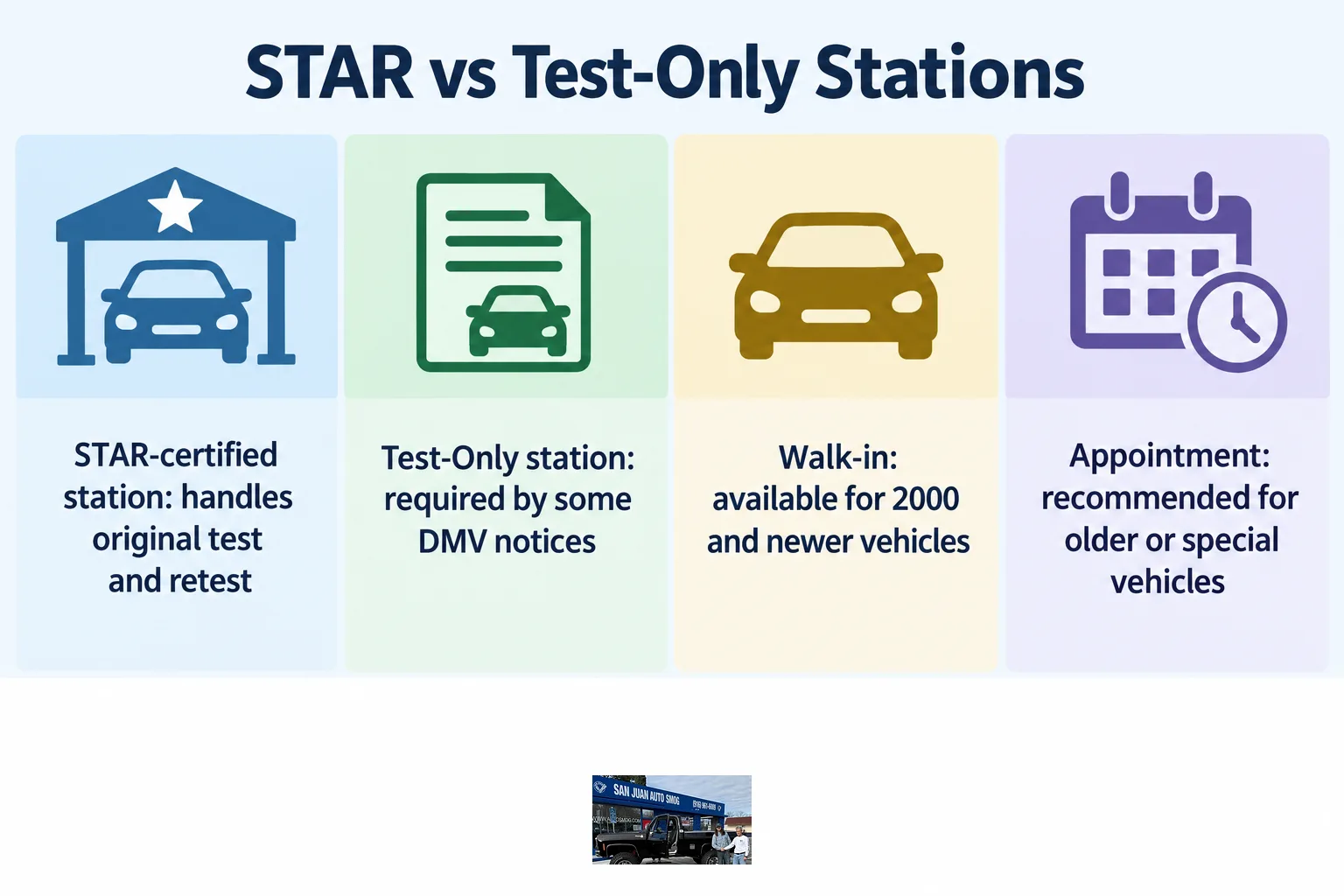
In many cases, yes. Some gross polluter vehicles are directed by the DMV to a Test-Only station rather than any STAR-certified shop, so check your notice before you assume a walk-in retest is an option.
Will my registration be affected while this gets sorted out?
Your DMV renewal stays pending until you pass, and depending on your notice, there may be a required waiting period or repair step before a retest counts. The notice itself tells you which path applies to your vehicle.
What has to happen before the retest?
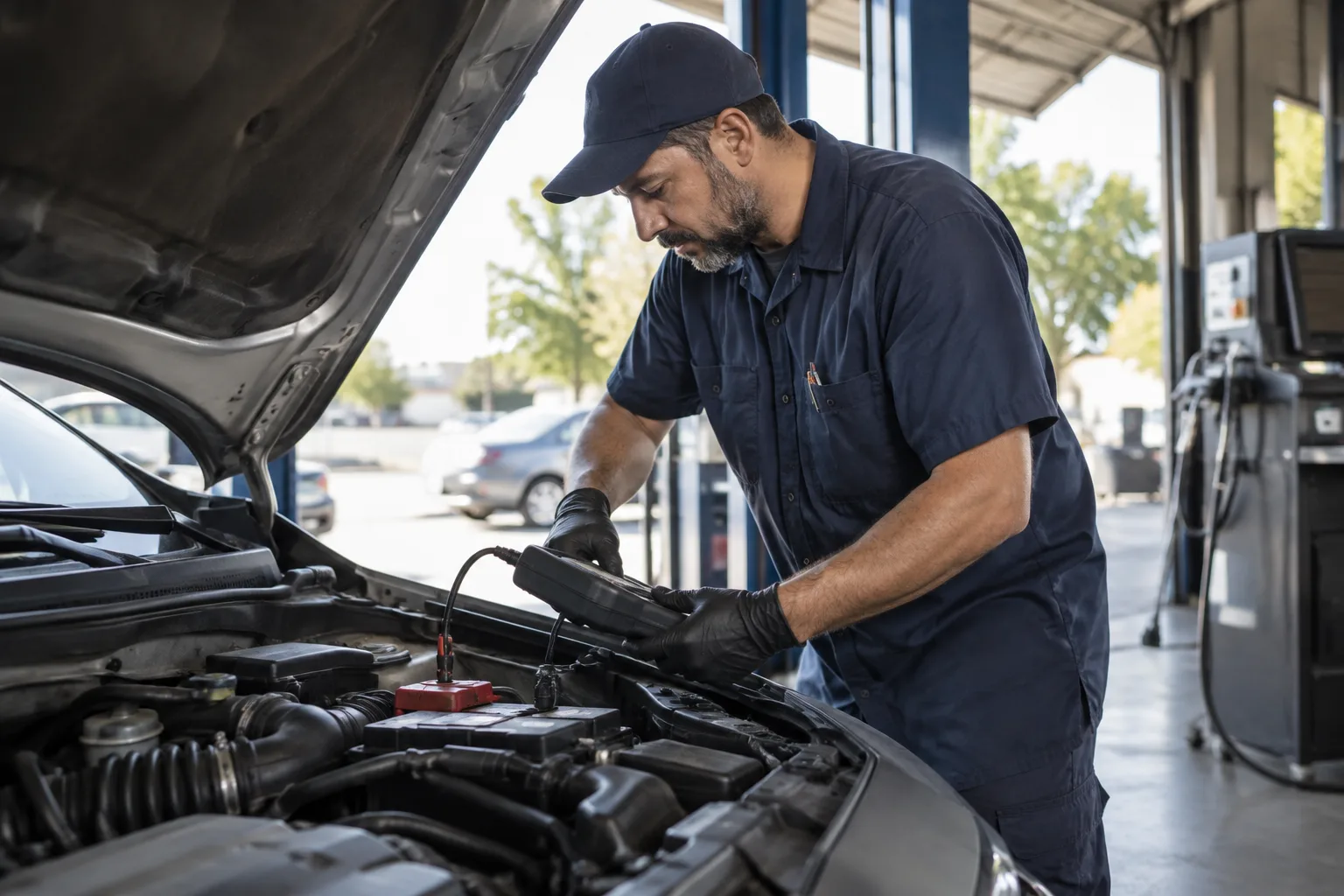
The underlying problem has to be fixed first, because the retest reads the same tailpipe or OBD data that failed the first time. Common culprits behind a gross polluter fail include a failed catalytic converter, a stuck-open EGR valve, a bad oxygen sensor, or a fuel system issue rich enough to push hydrocarbon and CO readings way past normal.
How do I know which repair is actually needed?
The original smog printout lists which pollutants failed and by how much, and a qualified repair shop uses that along with any stored OBD codes to target the right component instead of guessing. Replacing parts without that information tends to produce another failed test.
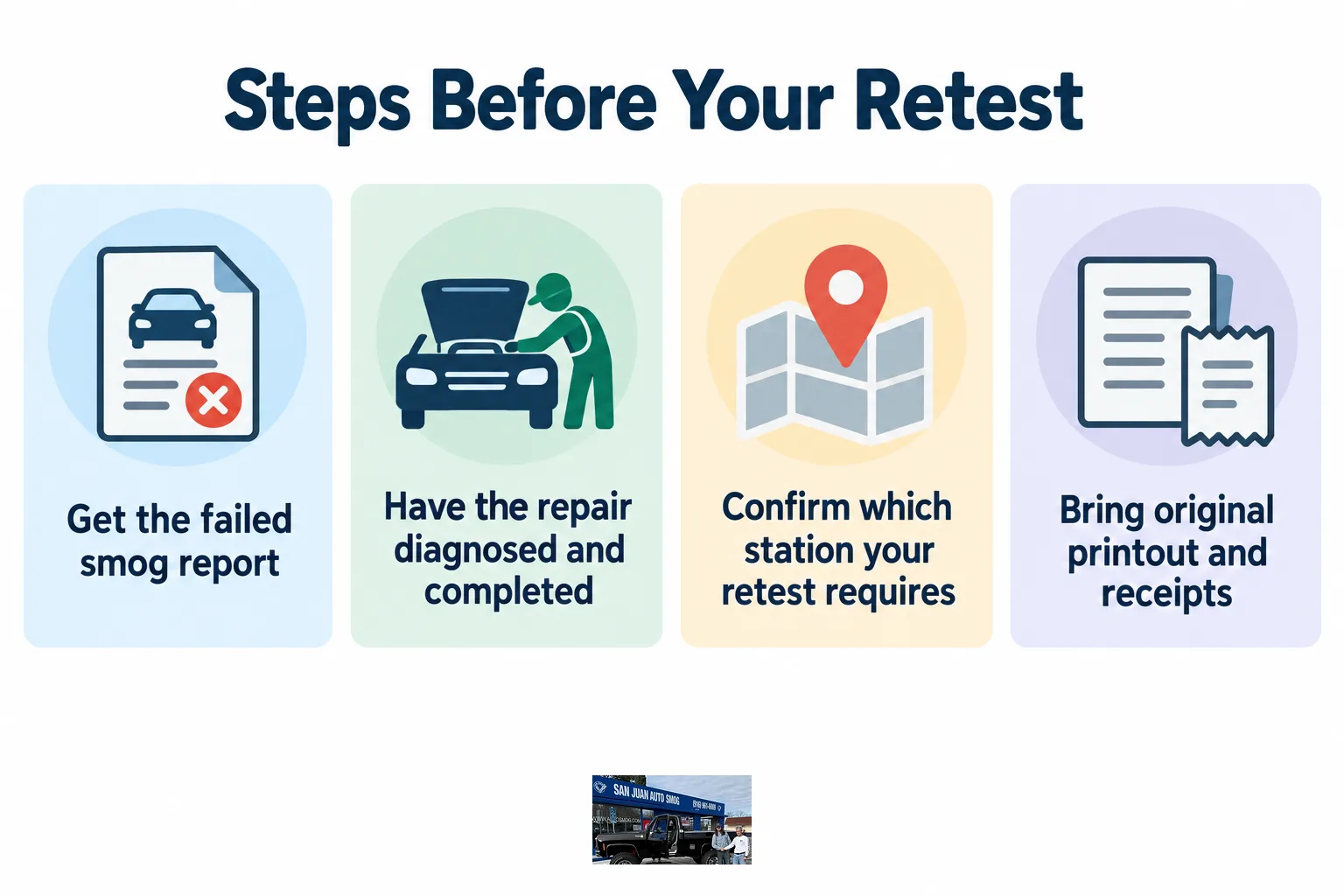
- Get the failed smog report. It lists exact readings and which pollutants exceeded the limit.
- Have the repair diagnosed and completed. A shop that can read the specific failure data is more likely to fix it on the first attempt.
- Confirm which station your retest can happen at. Some gross polluter cases require a Test-Only station per the DMV notice.
- Book the retest. Bring the original failed printout and any repair receipts with you.
Is there financial help for gross polluter repairs?
Yes, California's Consumer Assistance Program may cover up to $500 toward repairs for eligible drivers after a failed Test-Only smog. Eligibility depends on income and vehicle registration status, and the state outlines the current rules at bar.ca.gov/cap.
Does CAP cover the retest fee too?
CAP is aimed at repair costs rather than the retest fee itself, so check the program's current terms directly on the Bureau of Automotive Repair's site before assuming what's included. Some drivers also qualify for a retirement option instead of repair, which the same program outlines.
Where can I get the retest done near Fair Oaks?
A STAR-certified station that handles both the original test and the retest keeps the process in one place. That matters for a gross polluter case because the technician running your retest benefits from seeing the original failure data and knowing what was repaired.
What should I bring to the retest appointment?
Bring the original failed smog certificate or printout, any repair invoices, and your DMV renewal notice if the vehicle was directed to a specific station type. Having all three on hand avoids a second visit just to retrieve paperwork.
Take the Next Step With Your Gross Polluter Retest
San Juan Auto Smog is a STAR-certified smog check station in Fair Oaks, CA, rated 4.7 from 2,122 reviews across platforms, with walk-ins welcome for 2000 and newer vehicles. For 1999 and older vehicles, RVs, vans, and heavy trucks, an appointment is recommended so the right equipment and time are set aside for your retest.
Pricing on a smog check depends on vehicle type, so a quick call or text gets you a real number before you show up, and a free retest within 60 days applies to all 2000-and-newer vehicles outside select promotions. If you also need an oil change, the smog + oil combo saves $45 when both are done in one visit.
See current details and book your gross polluter retest at San Juan Auto Smog.
Frequently Asked Questions
What is a gross polluter retest?
It's the follow-up emissions test required after a vehicle fails its original smog check by a wide margin rather than a minor amount. The retest checks whether the repair brought emissions back under the legal limit.
Can I just retest without repairing anything first?
Retesting without repairing the underlying issue almost always produces the same failure, since the readings that caused the gross polluter classification haven't changed. Repair first, then retest.
Does a gross polluter fail mean I have to go to a Test-Only station?
Some gross polluter vehicles are directed to a Test-Only station by the DMV notice, while others can retest at any STAR-certified shop. Check the specific notice you received for your vehicle.
How much does the $500 repair assistance cover?
California's Consumer Assistance Program may provide up to $500 toward eligible repairs after a failed Test-Only smog, based on income and registration criteria. Current eligibility rules are posted at bar.ca.gov/cap.
Is the smog check cost different for a gross polluter retest?
Smog pricing depends on vehicle type rather than classification, so a quick call or text gets an exact figure for your vehicle. See general pricing factors on the smog check cost page.
Do I need an appointment for a gross polluter retest?
Walk-ins are welcome for 2000 and newer vehicles, but an appointment is worth booking if your vehicle is 1999 or older, or if your DMV notice requires a specific station type. Booking ahead also helps if repairs were recently completed and timing matters for your registration deadline.