Brake Pad Replacement Cost vs. a Brake Check: What Do You Actually Need?

What if a brake noise calls for a closer look, not an immediate pad replacement? It’s reasonable to want clear evidence before approving work, especially when estimates vary. The cost to replace brake pads vs check them depends on what the inspection finds and whether other parts, such as the rotors, also need attention.
A brake check is a practical first step when you’re unsure. It assesses pad condition and visible concerns in the braking system, helping you understand what may need attention. The findings, not the noise alone, should guide your next decision. This article explains what a check can reveal, what it can’t establish on its own, and which factors affect a replacement estimate. You’ll also learn how tire condition and brake fluid fit into routine maintenance.
Key Takeaways
- A brake check assesses the system; pad replacement is a specific repair that should follow inspection findings.
- To understand the cost to replace brake pads vs check them, distinguish the assessment from the parts and labor involved in any recommended work.
- Squealing, grinding, pulling, vibration, or a brake warning light are reasons to arrange an assessment, not proof of a specific fault.
- Review the findings before deciding on next steps, and consider tire condition and brake fluid as part of ongoing maintenance.
Table of Contents
Brake pad replacement vs. a brake check: what are you paying for?
A brake check assesses pad condition and visible concerns in the braking system. Brake-pad replacement is repair work: removing worn pads and installing new ones when inspection findings support that step. A brake check assesses condition; replacement changes parts.
A squeal, grinding sound, or change in how your car stops is a reason to arrange an assessment, but symptoms alone can’t confirm pad wear or identify every possible brake concern. The inspection may point to another component that needs attention. Keep the assessment and any repair decision separate, and ask which finding supports each recommendation.
What does a brake check look for?
A brake check assesses pad condition and visible parts of the braking system for signs of wear or other concerns. It helps clarify what may need attention, but it should not be treated as a guarantee that every issue has been diagnosed. Ask the technician to explain what was observed, what could not be assessed visually, and why any next step is recommended.
What does brake-pad replacement involve?
Replacement addresses worn pads. It won’t automatically resolve a concern with another brake component, and additional findings may need a separate assessment. Vehicle design and the condition of related parts affect the work involved, so an estimate may include more than pads. Check whether it identifies any additional parts or labor separately.
Understanding the cost to replace brake pads vs check them starts with separating assessment from repair. If your vehicle is also due for its California smog inspection, see our Sacramento smog checks page, a separate service from brake work.
Brake check vs. brake-pad replacement: compare the scope and cost factors
A brake check and pad replacement serve different purposes. One gathers information; the other is repair work. Knowing the difference makes it easier to compare the cost to replace brake pads vs check them and tie a recommendation to your vehicle’s actual condition.
ServicePurposeTypical findingsWhat you learn Brake checkAssess brake conditionPad wear or visible concernsWhether further attention may be needed Pad replacementInstall new pads when indicatedWorn pads, with possible related concernsWhat repair work is recommendedInspection findings and vehicle-specific work determine a useful estimate. The vehicle’s make and model, brake design, parts selected, and labor all affect the work involved. A pad-only recommendation differs from a quote that also includes separately identified work on rotors or other brake components. A clear estimate should explain each item rather than grouping unrelated work under a general “brake job.”
Why can brake-pad replacement estimates differ?
Brake systems vary by vehicle, so the parts and steps involved can differ too. Two cars with similar symptoms may need different work. Compare estimates by looking at what each includes, not just the total. An estimate should distinguish pad replacement from additional work and explain the finding that supports each item.
What should a clear estimate explain?
Look for the recommended work, the inspection findings behind it, the parts involved, and the labor. If a line item is unclear, ask for its purpose before authorizing the work. The FTC’s auto repair basics guide also suggests getting a written estimate and keeping your paperwork. You should be able to connect each recommendation to a specific finding and understand which work addresses worn pads versus another concern.
If your brake condition is uncertain, a Fair Oaks brake check can help you understand the findings and consider your next step.
How to decide whether your brake pads need replacement
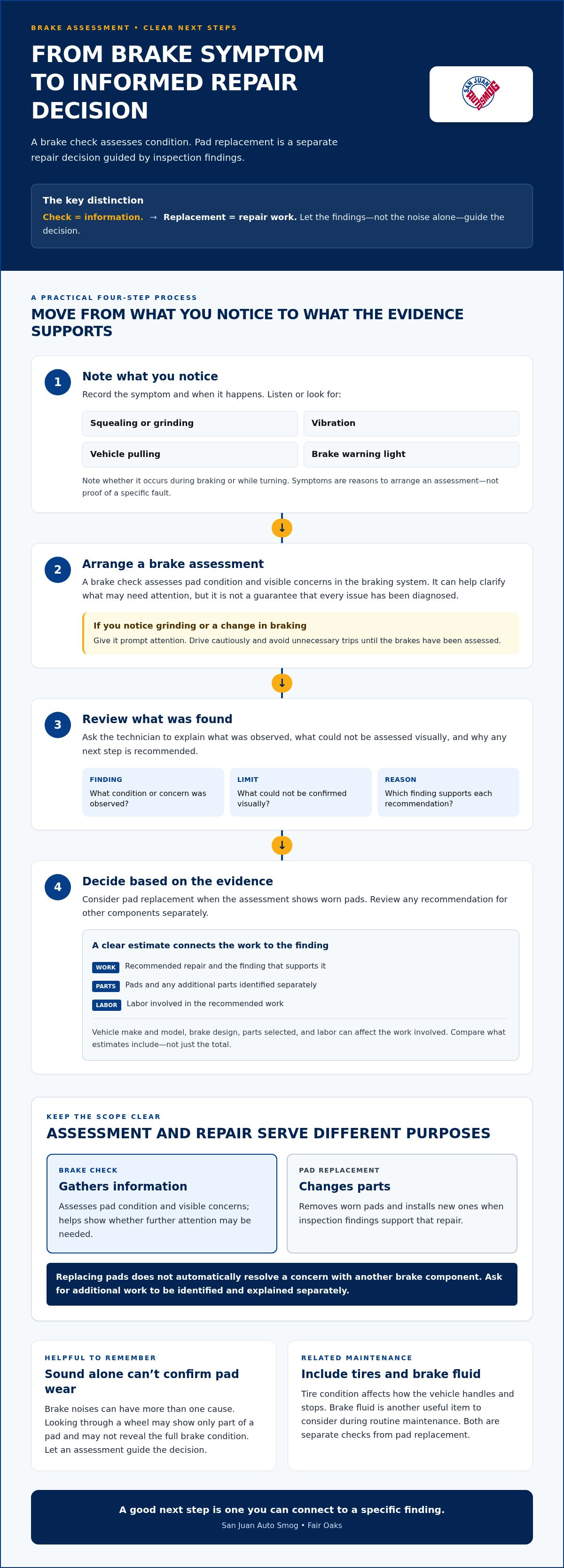
Use symptoms to decide when to seek an assessment, not to diagnose the problem yourself. A practical next step is to:
- Note what you notice. Record whether you hear squealing or grinding, feel vibration, notice the vehicle pulling, or see a brake warning light. Note when it happens, such as during braking or while turning.
- Arrange an assessment. Grinding or a change in braking deserves prompt attention. Drive cautiously and avoid unnecessary trips until the brakes have been assessed. It’s also worth checking NHTSA’s recall lookup for any open safety recalls on your vehicle.
- Review the findings. Ask what was observed and which findings support any recommended work.
- Decide based on the evidence. Consider pad replacement if the assessment shows worn pads, and review any other recommended work separately.
This process can help you understand the cost to replace brake pads vs check them without treating a noise or warning light as proof that pads are the cause. A brake check in Fair Oaks can help clarify the condition before you decide on next steps.
Can you tell pad wear by listening or looking?
Not reliably. Brake noises can have more than one cause, and sound alone doesn’t establish pad thickness. Looking through a wheel may show part of a pad, but it may not reveal the full condition of the brakes. Let an assessment guide the decision rather than relying on sound or a partial view.
What related maintenance should you consider?
Tire condition affects how the vehicle handles and stops, while brake fluid is another useful item to consider during routine maintenance. These are separate checks from pad replacement. For a broader look at vehicle condition, consider a Fair Oaks multi-point inspection alongside the brake assessment.
Get a clear brake-check next step in Fair Oaks and Sacramento
If you’re unsure about your brakes, start with an assessment. Consider replacement after reviewing the findings and understanding what work they support. That distinction makes the cost to replace brake pads vs check them easier to evaluate: the check helps clarify your vehicle’s condition, while replacement is a separate repair decision.
San Juan Auto Smog provides brake checks in Fair Oaks, giving drivers a practical way to discuss what they’re noticing and understand the inspection findings. If your vehicle is also due for emissions testing, Sacramento smog checks are available as a separate service.
When does a broader maintenance visit make sense?
A brake concern can be considered alongside tire condition and fluid levels as part of routine vehicle care. If you’re also due for scheduled maintenance, a professional oil change package can include a multi-point inspection, fluid checks, and tire rotation. Keeping routine service organized makes it easier to track what has been checked and what may need attention later.
What should drivers in nearby communities do next?
Drivers in Fair Oaks, Carmichael, Sacramento, Citrus Heights, Orangevale, and Gold River can note details such as when a noise occurs or whether the vehicle pulls or vibrates. Share those observations during a brake check, review the findings, and ask for the reason behind each recommendation. That gives you a clearer basis for deciding what work to approve.
For a practical next step, schedule a brake check in Fair Oaks and use the findings to understand your vehicle’s condition.
Choose a clear next step for your brakes
A brake check helps clarify what your vehicle may need when pad condition is uncertain. Squealing, grinding, pulling, vibration, or a warning light are reasons to seek an assessment, not proof that the pads are the cause. Review the findings before deciding whether replacement or other work is appropriate. The cost to replace brake pads vs check them depends on whether the inspection supports repair and what work is recommended.
San Juan Auto Smog provides brake checks and multi-point inspections in Fair Oaks and nearby Sacramento communities. A broader inspection can also help you consider tire condition and fluid checks as part of ongoing vehicle care.
If you’ve noticed a change in how your car sounds or stops, start with an assessment and use the findings to make an informed decision. Schedule a brake check in Fair Oaks to discuss what the inspection finds and choose your next step with confidence.
Frequently Asked Questions
Is a brake check the same as replacing brake pads?
No. A brake check assesses pad condition and visible brake-system concerns. Pad replacement is repair work that installs new pads when the findings support it. A check may identify wear or another concern that needs attention, but it doesn’t replace parts. Review what was found and why before deciding which next step makes sense for your vehicle.
How much does it cost to replace brake pads compared with a brake check?
The cost to replace brake pads vs check them depends on your vehicle and the work involved, so one figure won’t apply to every driver. A check assesses condition, while a replacement estimate should describe the parts and labor for your vehicle. If other components need attention, those items should be explained separately so you understand what each recommendation covers.
Can I tell if my brake pads need replacing by listening to them?
No. Squealing or grinding can be a reason to arrange an assessment, but sound alone can’t confirm pad thickness or identify the source of a noise. Vibration or pulling also doesn’t diagnose a brake problem by itself. Looking through a wheel may not show the full condition, so rely on an assessment rather than sound or appearance alone.
What happens if I only get my brakes checked and do not replace the pads?
A brake check gives you information, but it doesn’t repair worn pads. If the assessment finds that replacement is needed, the pads remain worn if you don’t proceed with the repair. Ask the technician to explain the findings and whether they call for prompt attention. Grinding or a noticeable change in braking deserves prompt assessment; drive cautiously while arranging it.
Should tires and brake fluid be checked when I have my brakes inspected?
Yes. Tire condition and brake fluid are useful related maintenance considerations, though they’re separate from replacing brake pads. Tire condition affects how the vehicle handles, and a fluid check helps you understand its condition. San Juan Auto Smog provides brake checks and multi-point inspections for drivers in Fair Oaks, Carmichael, Sacramento, Citrus Heights, Orangevale, and Gold River.
For a clear next step, schedule a brake check in Fair Oaks.
More articles
- How Much Is a CA Smog Test? | Citrus Heights
- How Much Is a Smog Check? | Sacramento
- Brake Check in Fair Oaks: Signs Your Brakes Need Attention
- Car Care for Commuters in Carmichael: A Practical Checklist
- Pre-Purchase Inspection in Citrus Heights: Know What You’re Buying
- Is an Oil Change Covered Under Warranty? What Drivers Need to Know